
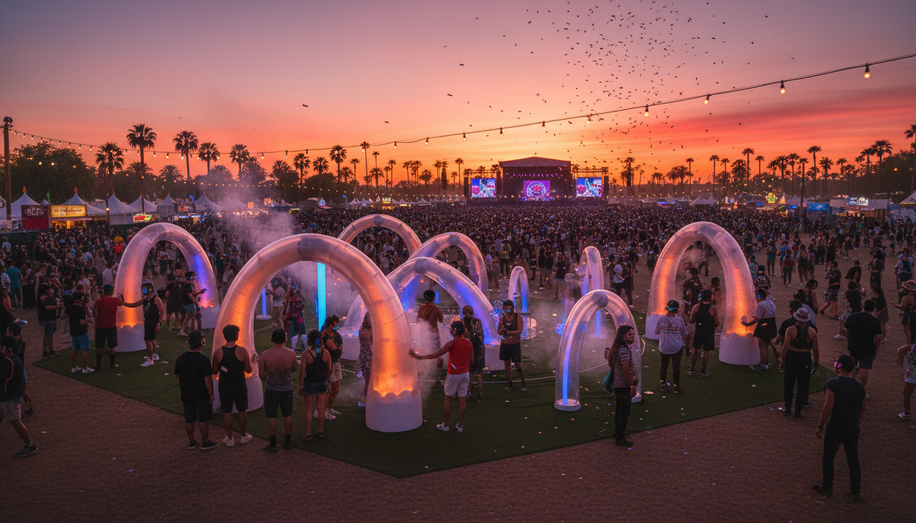

The convergence of out-of-home advertising and experiential events represents one of the most dynamic shifts in modern marketing. Pop-up experiences have emerged as a powerful vehicle for brands seeking to transcend traditional OOH limitations by creating immersive, time-bound activations that drive both immediate engagement and sustained brand impact.
Pop-up experiences function as temporary brand events or stores that materialize in high-traffic outdoor locations before vanishing as quickly as they arrived. What distinguishes them from conventional OOH advertising is their ability to transform passive observation into active participation. Consumers no longer simply view advertisements; they see, touch, and interact with products or join unique activities in real-world settings. This transition from static messaging to dynamic engagement fundamentally reshapes how brands communicate value and build loyalty.
The effectiveness of this hybrid approach stems from several interconnected factors. First, the immersive nature of pop-up experiences creates stronger emotional connections than traditional billboard advertising. Visitors can physically interact with offerings, generating memories and personal investment that passive viewing cannot replicate. Second, the limited-edition nature of pop-ups generates urgency. Consumers understand that opportunities exist temporarily, prompting immediate action rather than deferred consideration. Third, these activations are inherently shareable. Visitors frequently photograph and record their experiences, amplifying brand visibility across social media platforms and extending reach far beyond physical attendees.
Recent case studies from Indian markets illustrate the strategic sophistication of contemporary pop-up executions. Tanishq’s mobile pop-up stores in smaller cities combined local accessibility with jewelry trials, directly addressing consumer hesitation while building community engagement. Fevicol’s Kumbh Mela stunt featuring a giant wearable T-shirt transformed product attributes into memorable spectacle, while PhonePe’s moving truck pop-ups with witty insurance advertisements maintained consistent brand visibility across street-level exposure. These examples demonstrate how brands strategically integrate product messaging with experiential moments that resonate within specific cultural contexts and geographic markets.
The technical components of successful pop-up experiences merit particular attention. Contemporary activations increasingly incorporate augmented reality and digital screens, creating layered interactions that merge physical and digital touchpoints. Simultaneously, sustainability considerations have become central to brand strategy, with companies selecting eco-friendly materials and renewable energy sources for their installations. Data-driven placement methodology ensures that pop-ups appear where target audiences concentrate naturally—near parks, festivals, and shopping districts—rather than relying on intuition alone.
Strategic design elements compound these advantages. Well-designed pop-up tents customized with company logos, colors, and marketing messages serve as eye-catching advertisements while providing functional shelter and branded environments. The versatility of these structures accommodates diverse configurations, sizes, and functionalities, including digital displays and interactive elements that extend engagement capabilities. Complementary signage—including directional indicators, promotional materials, and photo backdrops—guides visitor flow while reinforcing brand identity and messaging.
The measurable impact of this approach justifies the investment required. Pop-up outdoor events frequently boost foot traffic and sales by double or more, with effects persisting beyond the activation period. Digital outdoor ad spending, including interactive pop-ups, grew nearly twenty percent in 2023, with momentum continuing through 2024 and into 2025. Community-focused integration amplifies these results; partnerships with local artists, educational offerings, and community sponsorships position brands as lifestyle enablers rather than mere vendors.
For OOH professionals, the strategic imperative is clear: the future belongs to brands that synthesize traditional out-of-home infrastructure with experiential activation. Pop-up experiences represent not a departure from OOH advertising but rather its evolution—a more sophisticated, audience-centric iteration that demands both creative vision and operational precision. As consumer preferences continue shifting toward authentic, participatory brand interactions, mastering this hybrid approach becomes essential for competitive differentiation and sustained marketing effectiveness.
This evolving landscape necessitates advanced tools for strategic execution and measurement. Blindspot empowers OOH professionals with precise location intelligence for optimal pop-up placement and comprehensive audience analytics to maximize engagement, while its robust ROI measurement and real-time tracking capabilities ensure operational precision and quantifiable impact for every experiential campaign. Discover how to master this hybrid approach at https://seeblindspot.com/