
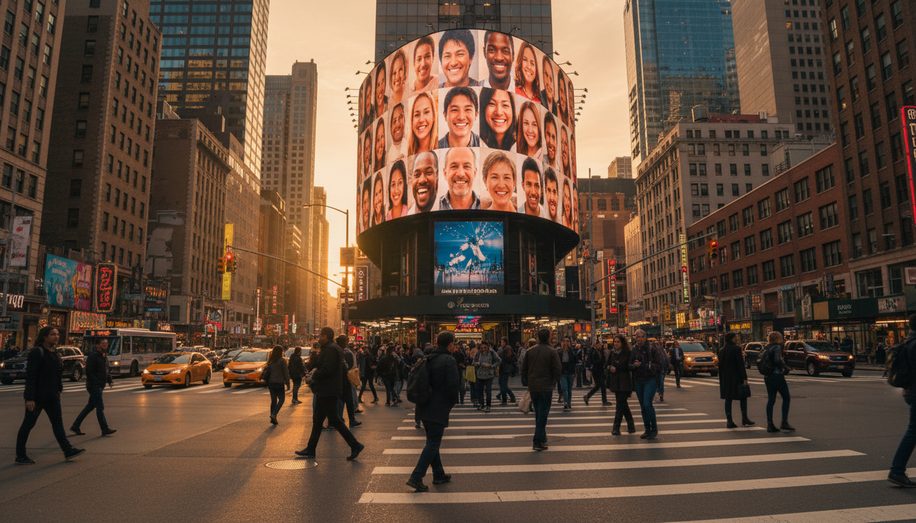

Out-of-home advertising has long been a cornerstone of marketing strategy, but the industry is experiencing a significant shift toward inclusivity. As consumer expectations evolve and awareness of accessibility grows, brands increasingly recognize that inclusive OOH advertising is not merely a ethical imperative—it’s a business opportunity that expands market reach and strengthens brand loyalty.
The case for inclusive billboard design begins with a fundamental insight: traditional outdoor advertising often unintentionally excludes substantial audience segments. People with visual impairments, mobility limitations, or cognitive differences have historically struggled to engage with OOH campaigns designed with only fully able-bodied audiences in mind. By implementing inclusive design practices, advertisers can transform this landscape, creating advertisements that communicate effectively to everyone, regardless of their abilities.
Broadening the potential audience represents perhaps the most immediate commercial benefit of accessible OOH advertising. When brands design billboards that accommodate diverse needs—including varying levels of sight, color vision, and cognitive abilities—they access previously untapped customer segments. This expanded reach translates directly into increased brand awareness and sales potential. More importantly, it signals to consumers that the brand values their patronage, fostering emotional connections that transcend typical transactional relationships.
The practical implementation of inclusive OOH design draws on established principles of universal design, which emphasizes creating products and experiences accessible to the broadest possible audience from inception rather than as an afterthought. This approach suggests several actionable strategies for advertisers. Clear symbols, simple icons, and universally recognized visuals that transcend language and cultural barriers form the foundation of effective inclusive design. High-contrast colors and bold typography enhance legibility for individuals with low vision, while avoiding cluttered compositions ensures that core messages remain digestible across diverse cognitive abilities.
Beyond visual considerations, innovative brands are incorporating multi-sensory elements to increase accessibility and memorability. Coca-Cola’s Braille billboard in South Africa exemplifies this approach, featuring the phrase “Share a Coke” in Braille alongside a tactile image of a bottle, allowing visually impaired consumers to engage through touch. Similarly, Pepsi’s audio-enhanced billboard at a London bus stop incorporated sound elements triggered by touch interactions, enabling visually impaired individuals to experience the advertisement through auditory engagement. These campaigns demonstrate that accessibility innovations can enhance the advertising experience for all viewers, not merely accommodate specific populations.
Guide Dogs UK’s high-contrast billboard campaign further illustrates how prioritizing accessibility reinforces an organization’s core mission while advancing advertising effectiveness. By designing with clear, legible elements visible from a distance, the campaign simultaneously raised awareness about visual impairment and modeled best practices for accessible design.
The reputational dividend of inclusive advertising extends beyond immediate customer engagement. Consumers increasingly value brands that prioritize diversity and accessibility, with research indicating that such commitment fosters brand loyalty and positive associations. In a competitive marketplace where consumer expectations continue shifting toward social responsibility, brands that embrace inclusive OOH advertising gain measurable advantages. This positioning becomes particularly powerful when brands transparently communicate their accessibility initiatives through complementary marketing channels, strengthening their reputation as socially conscious entities.
Legal considerations also incentivize the adoption of inclusive OOH practices. As awareness of accessibility requirements expands, businesses face growing pressure—and in many jurisdictions, legal requirements—to ensure their marketing reaches diverse audiences. Implementing accessible billboard design aligns with evolving regulatory standards while future-proofing advertising campaigns against shifting compliance landscapes.
The transition toward inclusive OOH advertising reflects broader industry maturation. Rather than viewing accessibility as a constraint limiting creative expression, forward-thinking brands recognize it as a catalyst for innovation. Testing designs with individuals possessing various abilities, utilizing contrast-checking tools, and integrating feedback into iterative refinement processes yield advertisements that resonate more powerfully across diverse audiences.
As the out-of-home advertising industry continues evolving, inclusive design will increasingly become standard practice rather than differentiator. Brands that pioneer these approaches today position themselves as leaders in accessibility innovation, capturing market share while demonstrating genuine commitment to reaching all consumers.