
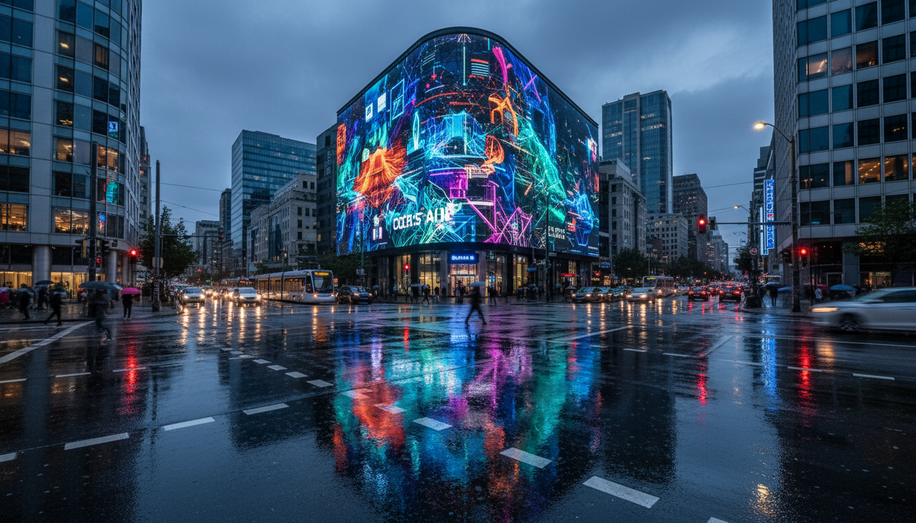

In the bustling streets of global cities, where billboards once relied on static visuals to capture fleeting glances, artificial intelligence is injecting a pulse of dynamism into out-of-home (OOH) advertising, fundamentally reshaping the creative development process. No longer confined to pre-planned designs, creatives now evolve in real time, adapting to weather patterns, traffic flows, and audience moods, turning every digital screen into a responsive canvas. This shift, driven by machine learning and generative tools, promises not just efficiency but a renaissance in how brands craft messages that resonate amid urban chaos.
At the heart of this transformation is AI’s ability to personalize content at scale, a feat unimaginable in traditional OOH workflows. Agencies like Worldcom OOH highlight how AI connects audience data with consumer contexts, messages, and media placements, effectively converting cities into vast distribution channels for tailored campaigns. In Mexico City, for instance, platforms from companies such as BM Outdoor use predictive models to analyze mobility, geolocation, and even rush-hour peaks along major arteries like Periférico, dynamically switching creatives from broad awareness to targeted promotions. A heatwave triggers ads for chilled beverages; a traffic jam prompts quick-service restaurant deals. This real-time optimization, powered by dynamic DOOH, boosts ad recall by up to 40 percent compared to static formats, according to the Out-of-Home Advertising Association of America’s 2025 trends report.
Generative AI takes this further by accelerating the ideation-to-execution pipeline. Where human teams once spent weeks brainstorming, iterating, and testing visuals, algorithms now generate layouts, headlines, and imagery in seconds, informed by vast datasets of past campaigns. MarketsandMarkets projects AI-powered advertising to grow at 29.6 percent annually through 2026, reaching $13 billion, with OOH channels like airports, bus shelters, and retail screens leading the charge through creativity-enhancing tools. McKinsey data underscores the payoff: brands personalizing communications via generative AI see 40 percent revenue lifts, as messages align precisely with viewer preferences. For younger demographics, this is particularly potent; HubSpot finds 66 percent of Gen Z and 63 percent of Millennials receptive to AI-generated ads, provided they’re disclosed as sponsored.
Programmatic DOOH amplifies these capabilities, automating not just creative generation but buying, scheduling, and optimization across networks of screens. Billups, a specialist in the space, layers nearly two decades of campaign data with advertiser inputs, social media signals, and even satellite imagery to refine placements—spotting issues like obstructing tree branches via AI analysis for swift corrections. This creates agile loops where creatives are A/B tested in real time, scaled based on performance metrics like foot traffic or conversions, and refined with audience feedback. In Las Vegas or Monterrey, the result is campaigns that feel intuitively human, yet operate with machine precision, blending data intelligence with standout visuals as seen in services from Imaginuity.
Yet, AI’s role in creative development isn’t about replacement—it’s augmentation. While tools excel at media planning, automated layouts, and real-time analytics, they falter in injecting emotional depth or cultural nuance. Graphis Ads emphasizes that AI suggests copy and visuals efficiently, but the “soul” of OOH—the bold metaphors, viral ideas, and heartfelt narratives—demands human imagination. In Delhi or Mumbai’s crowded markets, heat maps guide placements, but it’s designers who craft visuals that pierce the noise. This hybrid approach is evident in StackAdapt’s DOOH evolution, where AI handles targeting and scaling, freeing creatives for storytelling.
Challenges persist, particularly around privacy and balance. As AI harvests mobility and preference data for hyper-personalization, the industry must safeguard consumer rights, a point stressed by Worldcom OOH amid its innovation push. Ethical guardrails ensure transparency, especially with Gen Z’s wariness of undisclosed AI content. Moreover, over-reliance risks homogenizing designs; without human oversight, algorithms might churn soulless iterations lacking the spark that makes a billboard memorable.
Looking ahead, AI-driven creative promises to elevate OOH from interruptive spectacle to conversational partner. In programmatic ecosystems, machine learning will forecast not just audience paths but emotional triggers, generating content that anticipates needs—perhaps promoting umbrellas before rain or event tie-ins during festivals. Brands embracing this, from FLO Advertising in Las Vegas to BM Outdoor’s networks, report measurable lifts in engagement and ROI. As urban screens proliferate in shopping centers, cinemas, and transit hubs, the creative process becomes iterative and inclusive, democratizing high-impact design for smaller players.
Ultimately, AI is not automating creativity away but supercharging it, enabling OOH to thrive in a fragmented attention economy. By fusing predictive power with human ingenuity, the medium is poised for its most vibrant era, where every glance yields connection, not just exposure.
As OOH enters this AI-driven era of unparalleled dynamism and personalization, platforms like Blindspot become indispensable, providing the programmatic DOOH campaign management and real-time performance tracking necessary to execute and optimize these sophisticated strategies. Blindspot further empowers brands with precise audience measurement and ROI attribution, ensuring that every contextually relevant message not only connects with viewers but also delivers measurable business impact, solidifying OOH’s position as a powerful, intelligent medium. Discover how at https://seeblindspot.com/