
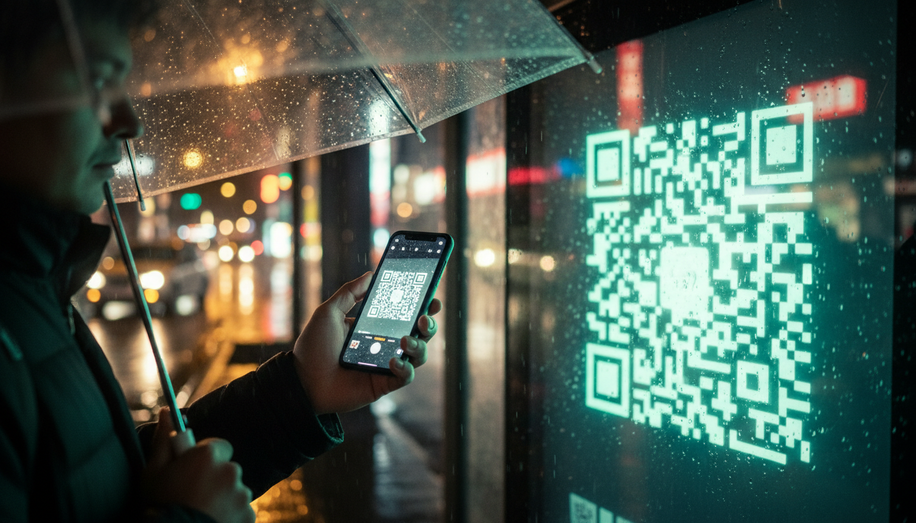

The outdoor advertising landscape is undergoing a fundamental transformation. What was once a one-way communication channel—a billboard or poster delivering a static message to passive viewers—has evolved into an interactive ecosystem where consumers actively engage with brands. At the center of this shift lies a deceptively simple tool: the QR code.
Once dismissed as a novelty, QR codes have become essential to out-of-home advertising strategy. Over 94 million U.S. consumers used smartphone QR scanners in 2025, with projections reaching 102.6 million by 2026. This explosive adoption reflects a broader consumer comfort with mobile technology and a fundamental change in how people interact with outdoor media. The numbers tell a compelling story: QR codes on out-of-home advertising increase response rates by 2x to 4x compared to traditional print codes, with some campaigns achieving conversion rates between 0.5% and 4% depending on placement.
The primary value of QR codes in OOH advertising lies not in novelty, but in measurable engagement and lead generation. By transforming billboards, transit ads, and posters into interactive touchpoints, brands can instantly guide viewers from the physical world into digital funnels. A consumer waiting at a pedestrian intersection or riding public transit can scan a code and access product demonstrations, exclusive offers, app downloads, or direct contact channels—all within seconds. This seamless bridge between physical and digital experiences represents a fundamental reimagining of what outdoor advertising can achieve.
The data collection capabilities of QR codes have proven particularly valuable for data-driven marketers. Each scan captures information about when, where, and how audiences engage with content, providing real-time insights previously impossible to obtain from traditional outdoor media. Advertisers can measure not just impressions, but actual consumer actions: the number of scans, the geographic location and time of day each scan occurred, and the conversion actions taken afterward. This transparency makes billboard performance trackable and accountable in ways that benefit both agencies and brands.
Real-world results demonstrate the tangible impact of this approach. Boehringer Ingelheim’s programmatic digital out-of-home campaign for its Frontpro Antiparasitic pet product across Spanish cities, which incorporated dynamic QR codes, achieved a 254% boost in positive brand perception. The campaign strategically placed ads near pet stores and in shopping malls where target consumers frequented, allowing location-based data to drive both digital engagement and foot traffic to retail locations.
Beyond direct conversions, QR codes on outdoor advertising influence broader consumer behavior patterns. Consumers exposed to out-of-home advertising are 48% more likely to visit a physical store, and 65% search online after seeing an OOH ad, with 40% visiting a website or searching for a brand within minutes of exposure. When QR codes are present, this digital follow-through becomes measurable and actionable. Geo-fenced retargeting campaigns following QOH exposure with QR codes have demonstrated conversion increases of 20% to 30%, allowing brands to maintain engagement as consumers move through their decision-making journey.
Industry leaders recognize this potential. Close to 90% of senior advertising executives believe QR codes will become more important over the next two years. This isn’t mere optimism—it reflects the practical advantages QR codes provide in an increasingly data-conscious marketing environment. Unlike traditional billboard metrics focused solely on impressions, QR codes enable performance measurement that informs strategic decisions and budget allocation.
The effectiveness of QR codes in OOH campaigns depends on execution. Success requires fast-loading, responsive landing pages with clear messaging, thoughtful design, and strategic placement in high-visibility locations. When these elements align, QR codes transform passive impressions into interactive, measurable experiences that drive genuine business results.
As consumer smartphone adoption continues to rise and brands seek greater accountability in advertising spending, QR codes have transitioned from experimental technology to essential infrastructure in the outdoor advertising toolkit. They represent the tangible future of out-of-home media—where engagement is measurable, interactions are trackable, and the distance between seeing an ad and taking action collapses into mere seconds.