
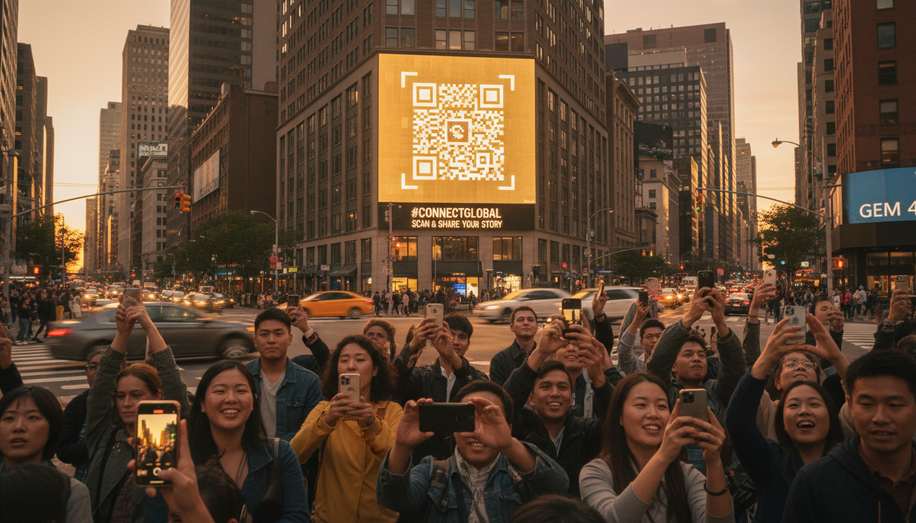

In the bustling streets of modern cities, out-of-home (OOH) advertising captures fleeting glances from commuters and pedestrians, transforming static billboards into dynamic sparks of conversation. When seamlessly integrated with social media, these physical touchpoints evolve into powerful engines of engagement, driving users from the real world to digital platforms where stories unfold and amplify. This fusion not only extends a campaign’s reach but creates a cohesive narrative that resonates across channels, turning passive viewers into active participants.
The magic lies in deliberate strategies that bridge the offline-online divide. QR codes stand out as a simple yet transformative tool, embedded directly into OOH creatives to whisk users to landing pages, exclusive offers, or interactive content with a smartphone scan. A billboard promoting a concert, for instance, might feature a prominent QR code linking straight to ticket sales, providing instant measurability through scan data while streamlining the path to conversion. This immediacy capitalizes on the mobile devices in every passerby’s pocket, blending the tangibility of OOH with social media’s interactivity.
Hashtags take this integration further, serving as digital threads that weave street-level exposure into online buzz. By prominently displaying a branded hashtag on a digital billboard or static poster, brands invite immediate participation—encouraging drivers or walkers to post about the ad on Instagram or TikTok. No longer mere reach boosters, these tags foster instant recognition and trackable performance, allowing marketers to monitor conversations in real time. Coca-Cola’s iconic “Share a Coke” campaign exemplified this, plastering personalized names on billboards and urging shares with #ShareACoke, which exploded into a global viral phenomenon as users documented their finds.
Selfie spots elevate the concept, designing OOH installations as irresistible photo backdrops that beg for social sharing. Imagine a vibrant bus shelter or park bench sculpted into an artistic frame, complete with a call-to-action like “Snap your story here with #StreetToScreen.” These interactive elements turn public spaces into content farms, where user-generated content (UGC) organically multiplies reach. Passersby snap selfies, tag the brand, and propel the campaign virally, as seen in Spotify’s Wrapped billboards that humorously showcased user stats, prompting millions to repost their personalized summaries online. The result? A local ad becomes a nationwide—or global—sensation, with UGC fostering authentic community ties that paid posts alone can’t replicate.
Geo-targeting adds precision to this synergy, aligning social media ads with OOH placements for a relentless, multi-touch experience. A billboard near a shopping mall can trigger Instagram or Facebook promotions within a five-mile radius, retargeting those who’ve encountered the physical ad. Digital out-of-home (DOOH) takes it up a notch, with real-time updates linking to live Twitter feeds, Instagram photos, or even fan-submitted images, creating a feedback loop of relevance. Brands like those leveraging Ocean Outdoor’s neuroscience-backed insights have found that DOOH exposure primes audiences to engage more positively with social content, boosting metrics like brand likeability and relevance.
Measurement and optimization seal the deal, turning intuition into data-driven success. Tools track hashtag usage, QR scans, and geotagged shares, while platforms like StreetMetrics layer in impressions and demographics from OOH views. This enables A/B testing—experimenting with ad variants digitally before scaling to billboards—and retargeting hot leads across channels. Clear Channel Outdoor highlights how digital OOH aggregates hashtags and reposts UGC, quantifying lifts in followers and interactions that static media overlooks.
Real-world triumphs underscore the potential. Beyond Coca-Cola and Spotify, campaigns like those from Vigyapan Mart clients demonstrate ROI spikes through contests where selfies with billboards win prizes, blending fun with metrics. The key to cohesion? Unified visuals, messaging, and timing—launch social amplification precisely as OOH goes live, ensuring the story flows unbroken from street to screen.
Challenges persist, from ensuring QR accessibility in motion to combating hashtag fatigue, but the rewards outweigh them. In an era where 70% of social media happens on mobile—often amid commutes—this integration captures audiences on the go, doubling engagement over siloed efforts. Brands that master it don’t just advertise; they orchestrate movements, where every billboard view sparks a share, every scan fuels a story, and physical presence ignites digital firestorms. As OOH evolves with DOOH’s dynamism, the streets have become storytellers, inviting the world to join the narrative.