
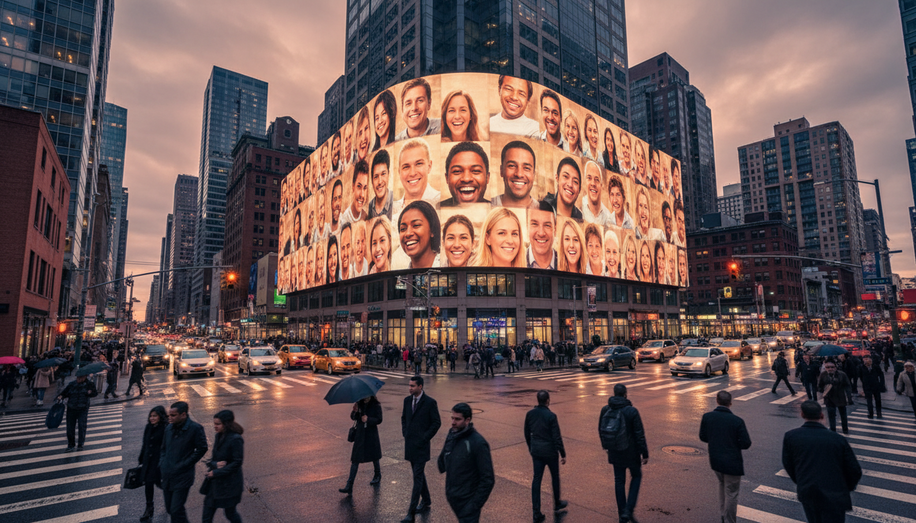

In the fleeting world of out-of-home (OOH) advertising, where a billboard has mere seconds to capture a driver’s gaze amid rush-hour chaos, emotional intelligence emerges as the secret weapon for designs that linger in the mind long after the traffic light turns green. Far beyond striking visuals or clever taglines, crafting OOH campaigns that resonate demands a deep understanding of psychological principles—tapping into the limbic brain, the emotional core that drives decisions more powerfully than logic alone. By evoking specific feelings like joy, nostalgia, or even fear, advertisers foster connections that transcend mere awareness, turning passive passersby into loyal advocates who form lasting memories.
At its heart, emotional intelligence in OOH creative involves empathy: grasping the audience’s inner world and mirroring it back through imagery and messaging. Consider the construction industry’s billboards in places like Reno, where ads don’t just tout roofing services but pierce deeper anxieties—”Your roof leaks, your fence warps, your home fails you”—amplifying emotional pain before offering relief. This “sell the pain before the cure” tactic, as marketer Sabri Suby advocates, builds trust in community-driven markets by humanizing the brand, making viewers feel seen rather than sold to. Psychological research backs this: emotional messaging cuts through ad saturation, anchoring feelings of safety, pride, or belonging that bypass rational filters and imprint on memory.
Colors, fonts, and layouts serve as subtle emotional conductors in this symphony. High-contrast hues evoke urgency or warmth—red for FOMO in limited-time offers, blues for aspirational calm in real estate campaigns—while bold, readable typography ensures the message lands in three seconds flat. In Mexico’s bustling OOH scene, real estate billboards deploy family-centric imagery of modern living to stir longing for an elevated lifestyle, proving that aspirational cues forge bonds stronger than data dumps. Similarly, humor proves a masterstroke; witty surprises arouse the most favorable responses, building awareness faster than straightforward pitches by sparking joy or curiosity on the emotional canvas.
Real-world examples illuminate these principles in action. A Müller’s yoghurt campaign zoomed in on a delectable close-up, not just showcasing product but igniting sensory craving through aesthetic allure—an exercise in empathy that made viewers taste the indulgence from afar. Humor-driven executions, like those blending wit with local landmarks such as the glowing Reno Arch at dusk, transform billboards into mini-dramas, encouraging emotional, rational, or cultural responses that elevate recall. Positive storytelling amplifies this: ads highlighting genuine benefits—family security or social good—outperform misleading ones, as viewers’ brains favor honest narratives that align with their values.
Yet emotional resonance isn’t guesswork; it’s rooted in rigorous psychology. Emotional triggers like nostalgia or empathy activate the brain’s reward centers, enhancing brand recall and behavioral influence over fact-heavy alternatives. AI now supercharges this intelligence, analyzing sentiment from consumer data or even facial recognition to pinpoint triggers—joy for beverages, surprise for entertainment—that tailor messages with precision. In the UK, Global’s campaigns weave relatable narratives into billboards, tapping curiosity or empathy to create “powerful moments” that shift everyday perceptions and drive action.
For OOH creators, the challenge lies in self-regulation amid high-stakes deadlines, channeling emotional awareness to empathize with clients’ visions and translate them into visuals that pulse with authenticity. Integrate calls to action like QR codes or “text for inspection” to funnel these feelings into measurable engagement, especially in high-dwell zones like expanding urban districts. Avoid manipulation; true emotional advertising is translation—rendering universal human experiences into recognizable truths that build integrity over noise.
The payoff is profound: campaigns that don’t just advertise but connect on a visceral level yield superior ROI, rebranding neighborhoods and capturing mindshare in competitive landscapes. As OOH evolves with mobile tie-ins—hashtags bridging billboards to Instagram conversations—these emotionally intelligent designs foster two-way dialogues, turning one-glance encounters into enduring relationships. In an era of fleeting digital distractions, mastering this deeper resonance ensures billboards don’t vanish in the rearview but echo in the heart, proving that the most effective ads are those felt, not just seen.
Yet, for emotional intelligence to truly elevate OOH, it must be strategically deployed and rigorously measured. Platforms like Blindspot bridge this gap, offering advanced audience measurement and location intelligence to ensure emotionally resonant campaigns reach precisely the right viewers in the most impactful settings, moving beyond guesswork to data-backed empathy. By tracking real-time performance and ROI, Blindspot empowers creators to validate their emotional strategies, ensuring that deeply felt advertisements translate directly into tangible business results and enduring brand connections. Learn more at https://seeblindspot.com/