
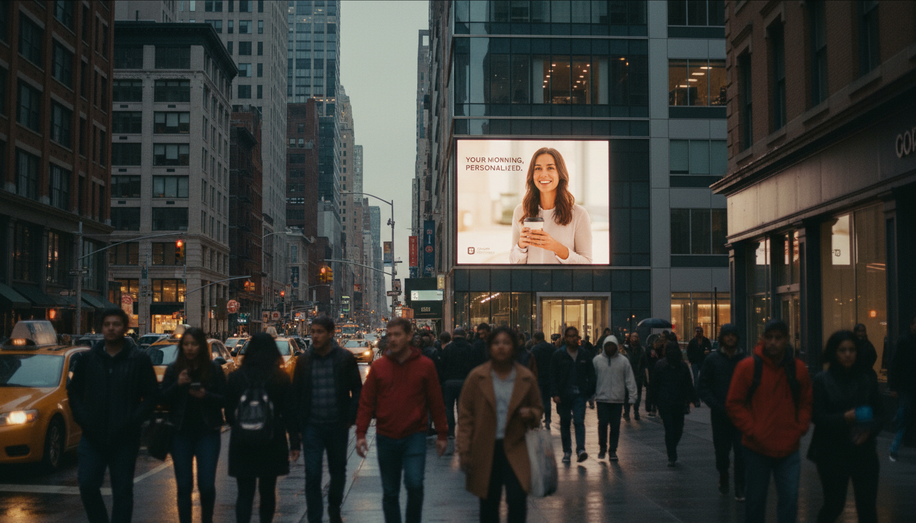

Out-of-home advertising has long relied on broad demographic targeting and location-based assumptions to reach audiences. However, the integration of first-party data is fundamentally transforming how brands approach OOH campaigns, enabling marketers to move beyond generalized audience profiles toward precise, behavior-driven targeting that rivals digital channel effectiveness.
First-party data represents information that brands collect directly from their own customers through owned channels such as websites, mobile apps, CRM systems, and email databases. Unlike third-party data sources, which are often less reliable and increasingly restricted by privacy regulations, first-party data provides brands with a trustworthy foundation for understanding actual customer behavior and preferences. For OOH campaigns, this distinction is critical. Brands can now leverage browsing history, purchase records, demographic information, and location signals collected through their digital properties to inform which outdoor audiences to target and with what messaging.
The strategic advantage of applying first-party data to OOH lies in audience segmentation precision. Rather than assuming that all individuals near a highway billboard fit a single demographic profile, brands can now identify specific customer segments within OOH environments. A sporting goods retailer, for example, can use purchase history from its website to identify customers who bought camping equipment, then target digital billboards in proximity to hiking trails and outdoor recreational areas with messaging specifically tailored to that segment. This approach transforms OOH from a broad awareness medium into a targeted engagement channel.
Personalization represents another key benefit of this data integration. When brands understand that a particular audience segment has shown interest in specific products or services through digital interactions, they can craft OOH creative that speaks directly to those demonstrated interests. A hunting gear retailer might serve different creative to customers who previously browsed bow accessories versus those interested in fishing equipment, ensuring that each segment encounters messaging relevant to their documented preferences. This level of relevance increases the likelihood of audience engagement and conversion, as consumers see messaging that resonates with their actual needs rather than assumed interests.
The efficiency gains are equally compelling. By focusing OOH media spend on audiences most likely to convert—identified through first-party customer data—brands can substantially improve return on ad spend and reduce wasted impressions. Rather than paying to display advertisements to broad audiences where engagement rates may be marginal, marketers concentrate resources on delivering messages to proven customer segments. This precision targeting also enables effective retargeting strategies within the OOH environment, allowing brands to re-engage prospects who visited their websites or engaged with their products but did not complete a purchase.
Implementation requires thoughtful strategy. Brands must build comprehensive customer profiles that synthesize data from multiple owned channels, creating a unified view of customer behavior and preferences. This foundation enables audience segmentation by location, purchase history, and demonstrated interests—the building blocks of effective OOH targeting. Integration across channels proves essential, as brands leverage insights from digital interactions to inform OOH placements and creative strategies.
Privacy compliance remains paramount. Effective first-party data strategies must incorporate consent-first activation mechanisms and ensure alignment with regulations including GDPR and CPRA. Brands that collect and manage first-party data responsibly build trust with consumers while establishing a sustainable competitive advantage as third-party data sources become increasingly restricted.
As the OOH industry evolves, the convergence of first-party data and outdoor advertising represents a significant inflection point. Brands that successfully integrate their proprietary customer data into OOH strategies gain the ability to deliver relevant, timely, and personalized messages to precise audience segments at scale. This shift elevates OOH from a medium defined by demographic assumptions and broad reach toward one characterized by meaningful, measurement-driven engagement—positioning out-of-home advertising as a sophisticated channel worthy of significant media investment alongside increasingly expensive digital channels.