
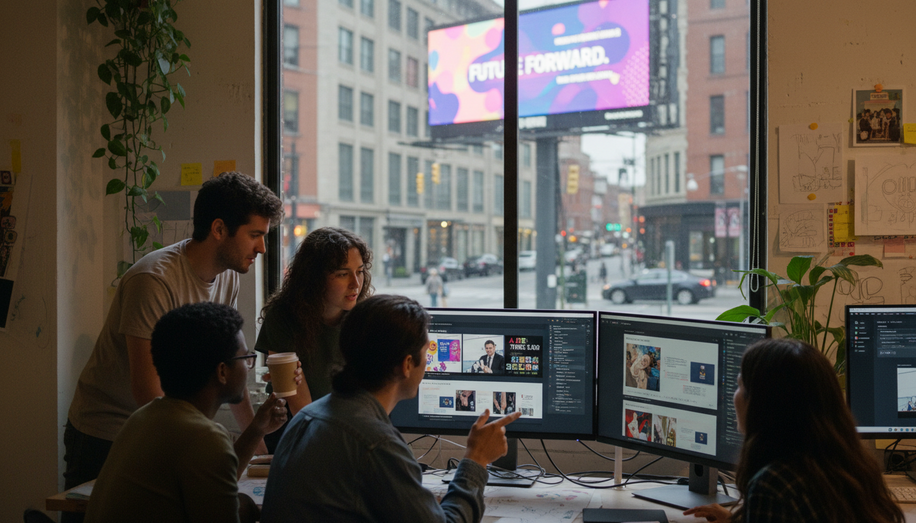

In the fast-evolving landscape of programmatic digital out-of-home (DOOH) advertising, creative teams are pushing beyond mere automation to craft campaigns that pulse with real-time relevance and adaptability. As programmatic platforms mature in 2026, powered by AI and consolidated supply-side systems, the focus has shifted from static placements to dynamic strategies where versioning, adaptability, and A/B testing transform screens into living canvases that respond to audiences on the move.
Creative adaptation begins with versioning, where teams produce multiple creative assets tailored to contextual triggers like weather, time of day, or location data. Samsung Malaysia’s campaign exemplifies this, deploying 105 dynamic versions via dayparting—night-specific ads from 6 p.m. to 6 a.m. when target audiences congregated most densely—leveraging programmatic DOOH’s automation for precision without manual intervention. This isn’t guesswork; AI now generates and optimizes variations at scale, handling compliance checks and brand safety while accelerating ideation, allowing creatives to evolve from experimentation to core strategy. For Cadbury’s Creme Egg “Hunt the Winning Eggs” promotion, real-time data updated messaging on remaining eggs found, adjusting based on proximity to discovery sites, blending environmental factors with live sales figures to create an immediate, engaging narrative that boosted recall.
Adaptability takes this further, enabling campaigns to morph across diverse screen formats and environments. Programmatic buying grants access to everything from high-traffic city billboards to elevator displays in gyms or malls, demanding designs that scale seamlessly—bold visuals for large formats, concise calls-to-action for smaller ones. Location-based targeting amplifies this: geo-fencing near retail stores or transit hubs triggers hyper-localized messaging, such as promoting coffee to commuters via semantic AI that links morning routines, cafe clusters, and traffic patterns. In multi-channel integrations, like Dell’s effort combining pDOOH with mobile and desktop, DOOH acts as a priming catalyst, lifting purchase intent by six points and doubling click-through rates by making subsequent digital touchpoints more effective. Creative teams must now design for this synergy, ensuring assets feed into omnichannel ecosystems where first-party data from loyalty programs informs moment-driven messaging without intrusiveness.
A/B testing, once cumbersome in out-of-home, has become a powerhouse in programmatic DOOH, fueled by machine learning’s real-time optimization. Platforms enable rapid iteration: serve Variant A (sunny-day promotion) against Variant B (rainy-day alternative) based on weather APIs, then auto-scale winners using performance metrics like engagement or attribution data. Dynamic Creative Optimization (DCO) elevates this, responding simultaneously to inputs like sports scores, pollen counts, or behavioral patterns, creating “living campaigns” that feel bespoke on a mass scale. Broadsign notes that as workflows streamline, execution grows faster and cheaper, with AI not just selecting but generating test variants, turning DOOH into a self-optimizing loop of inventory forecasting, dynamic pricing, and traffic shaping. Research underscores the payoff: 76% of DOOH viewers take action, driven by interactive, eye-catching creatives that bridge physical spectacle to mobile responses.
Yet, this creative evolution demands new workflows. Teams layer audience signals—demographics, movement patterns, event triggers—with programmatic tools to avoid over-narrowing reach, balancing precision with frequency. For global brands, multi-market campaigns now routine at 37% of some platforms’ revenue, require versioning that scales across borders, using curated deals for cohesive ID-based buying. Regulatory shifts, like the UK’s enforceable restrictions on less healthy food ads from early 2026, force adaptive compliance, where AI flags issues pre-flight.
Challenges persist: over-reliance on data can dilute emotional impact, so creatives emphasize storytelling amid the tech. Still, successes like contextual DCO prove its cost-effectiveness, placing ads only where relevance peaks. Looking ahead, as pDOOH spend surges into billions, creative strategies will define winners—those who treat automation as a canvas, not a crutch, maximizing every impression’s potential.
The result? Campaigns that don’t just advertise but activate, turning passive passersby into engaged participants through relentless, intelligent adaptation. In programmatic DOOH’s amplification era, creative teams hold the reins, proving human ingenuity amplifies tech’s promise.