
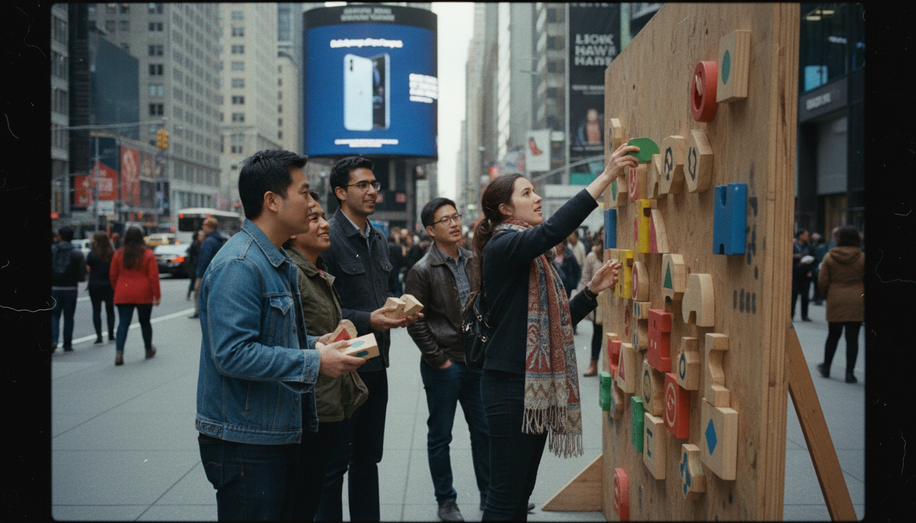

In the bustling streets of urban landscapes, where digital screens dominate the skyline, non-digital interactive out-of-home (OOH) advertising stands out by demanding physical engagement rather than passive glances. These campaigns transform static billboards into playgrounds of puzzles, movable parts, and tactile surprises, coaxing pedestrians to touch, twist, pull, or solve their way into a brand’s story. By stripping away screens and sensors, they tap into a primal urge for hands-on discovery, fostering deeper connections in an era of swipe-and-scroll fatigue.
Consider the clever mechanics of cut-out billboards, where advertisers literally bite into the structure to invite interaction. A candy company might sculpt a portion of the billboard into jagged teeth marks, as if a giant has chomped through it, encouraging passersby to mimic the act with their own hands or pose for photos. This simple structural experiment turns a flat surface into a prop, sparking curiosity and shareable moments without a single wire or pixel. Similarly, HOKA’s 2025 Manhattan activation for the Mafate X trail shoe converted a city block into a Joshua Tree-inspired desert complete with rocky terrain, native flora, and wind effects. Between running sessions on a central treadmill, the space doubled as a massive 3D billboard, but the real draw was the tactile immersion—visitors felt the grit underfoot and heat on their skin, blurring the line between ad and adventure.
Puzzles elevate this further, turning advertisements into brain teasers that reward solvers with brand insights or prizes. Guerrilla marketing tactics often deploy these in unexpected public spaces, like sidewalks branded with temporary installations that challenge walkers to align pieces or decode messages. One enduring example is the structural play seen in environmental campaigns, where billboards incorporate nature-infused elements—shadows cast by strategically placed cutouts during daylight or wind-activated flaps that reveal hidden messages. These demand physical presence: a pedestrian must stand in the right spot at the right time, tilting their head or body to unlock the full narrative. In Germany’s “Trick or Tree?” initiative, billboards evoked Halloween eeriness with retro visuals, but the non-digital twist lay in tactile prompts urging viewers to imagine a barren future, prompting on-site actions like pledging tree-planting via physical donation boxes nearby.
Movable parts add kinetic energy, making OOH feel alive and responsive. Coca-Cola’s electro-kinetic sign on Times Square, evolving since the 1920s, uses robotic 3D elements that shift and morph without digital displays, drawing crowds who watch bottles “pour” or logos reshape in real time. Though kinetic, its non-digital core relies on mechanical ingenuity—levers, gears, and hydraulics that invite onlookers to time their passage for the perfect reveal. Bench ads take this to street level, integrating panels with pull-tabs or rotating dials that dispense samples or flip to show personalized messages. A clothing brand might embed a fabric swatch that passersby can rub between fingers, feeling the texture while a movable arm swings to compare “before” and “after” fits.
Tactile elements push boundaries by engaging the sense of touch directly. No Cosmetics in Berlin mastered this with A-frames featuring peelable stickers revealing vegan icons, allowing pedestrians to scratch and sniff ingredient samples right on the sidewalk. The physical act of peeling creates a mini-unboxing experience, memorable enough to linger in muscle memory long after the walk ends. HOKA’s desert block echoed this by letting runners grip real rocks mimicking the shoe’s terrain, while Tim Tam’s UK campaign wafted scents from perforated billboards, pulling chocolate lovers close to inhale and perhaps mimic a “dip” with nearby mock treats.
These strategies thrive on surprise and scarcity. Guerrilla projections, though light-based, pair with physical cutouts on buildings that audiences trace with hands, turning architecture into a giant etch-a-sketch. Street furniture like phone booths or transit wraps incorporate sliders that shift to animate scenes—imagine a bus shelter where pulling a lever makes a coffee cup “steam” via paper folds, promoting a café chain. The key is accessibility: elements must be intuitive, durable against weather and vandals, and inclusive for all ages and abilities.
Challenges persist—weather can jam mechanics, and high-traffic areas risk overuse—but successes prove the payoff. HOKA’s activation went viral through organic shares, not algorithms, as participants posted their sweaty triumphs. Reebok’s speed-challenge billboard, though sensor-aided, inspired purely mechanical clones worldwide, where runners timed themselves against painted speed lines. Brands like KitKat ditched taglines for instantly recognizable, touchable breaks—perhaps a billboard with a breakable wafer segment that crumbles on pull.
Ultimately, non-digital interactive OOH reclaims attention by making bodies the interface. In a world of endless feeds, these campaigns remind us that the most engaging ads are the ones we can’t ignore—or resist touching. They don’t just advertise; they activate, turning every passerby into a participant and every street into a stage.