
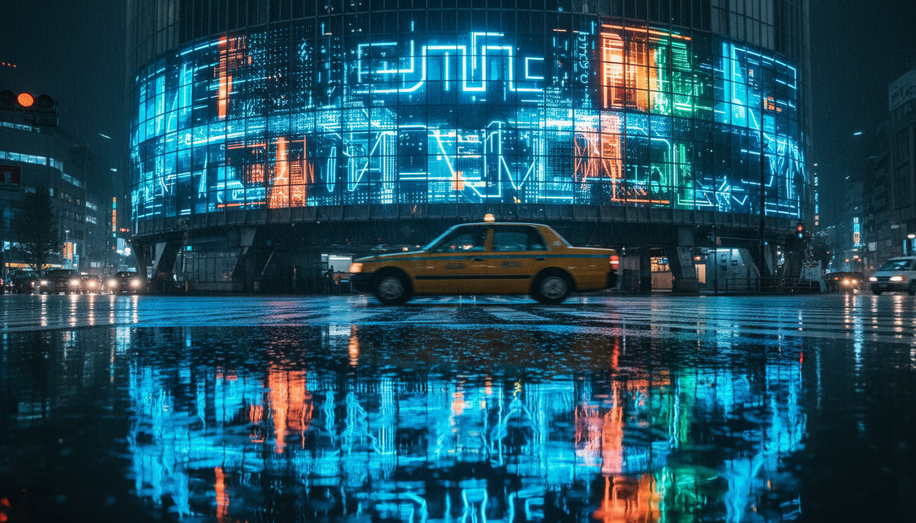

Artificial intelligence is reshaping out-of-home (OOH) advertising by enabling unprecedented levels of creative optimization, where data-driven A/B testing, rapid iteration, and predictive insights turn static billboards into dynamic, high-impact messages. In the realm of digital out-of-home (DOOH), AI analyzes vast datasets—from weather patterns and foot traffic to audience demographics and real-time events—to refine creatives on the fly, ensuring brands deliver the right message at the right moment. This shift from one-size-fits-all campaigns to hyper-personalized experiences is not just theoretical; it’s delivering measurable results, like the 60% surge in website visits that storage company PODS achieved with an AI-powered billboard traversing New York City’s neighborhoods.
Consider PODS’ campaign, a collaboration with agency Tombras using Google’s Gemini AI platform. Mounted on a moving truck, the digital billboard generated over 6,000 unique headlines in 29 hours, adapting to local conditions such as 73-degree weather prompting “Spend the day at Coney Island, not hauling boxes” or subway delays urging quick storage solutions. This feat, impossible without AI, exemplifies dynamic creative optimization (DCO), where algorithms mix headlines, images, colors, and calls-to-action in real time based on contextual triggers like time, traffic, or nearby events. No longer confined to looped videos, DOOH screens now react intelligently: promoting winter coats only in chilly weather or fitness ads near gyms during peak hours, slashing wasted impressions and aligning content with audience reality.
At the heart of this revolution lies accelerated A/B testing, powered by AI’s ability to process campaign data at scale. Companies like Billups leverage nearly two decades of historical data, layered with social media insights and satellite imagery, to run simultaneous tests on subtle variations—such as logo size or color schemes—and identify winners in hours rather than weeks. In one case, AI-generated heat maps revealed a high-fashion brand’s logo was too small to capture attention; enlarging it led to consistently better performance metrics. Similarly, AI tools dissect consumer engagement data to pinpoint which creative elements—vibrant visuals, concise messaging, or bold layouts—drive the most interaction, feeding those learnings back into future iterations for continuous refinement. A WARC/JCDecaux study underscores the payoff: DOOH campaigns with AI-optimized creatives saw up to 20% higher engagement.
Predictive analytics takes this further, forecasting ad performance before launch. Machine learning models ingest factors like historical exposure rates, weather forecasts, and foot traffic patterns to recommend optimal placements and creative tweaks. For media operators, this means smarter inventory management, allocating prime billboard slots to high-potential campaigns while preempting issues like obstructing tree branches spotted via street-view AI analysis. Brands benefit from simulated outcomes: an AI platform might predict a digital billboard’s success for a retail push during sunny weekends, based on prior data, allowing preemptive adjustments. Automaker Kia, for instance, harnessed AI-driven ads at electric vehicle charging stations to boost sales by 8%, proving how predictive insights link exposure to tangible conversions like foot traffic and purchases.
Charel MacIntosh, Global Head of Business Development at AI marketing firm Clinch, emphasizes AI’s role in making DOOH “smarter, more dynamic, and performance-driven.” It powers creative automation across thousands of screens, personalizes via programmatic buying, and ties impressions to accountability through advanced analytics. Billups’ Ben Spooner adds that AI accelerates everything from A/B tests to environmental audits, drawing on layered datasets for decisions once reliant on human guesswork. Even audience analysis via non-invasive facial recognition on DOOH screens estimates demographics and expressions, triggering tailored creatives—like youthful messaging for passing students—without storing personal data.
These advancements democratize OOH for smaller players, who can now deploy sophisticated campaigns without massive budgets or long contracts. AI handles the heavy lifting: real-time triggers launch ads only under ideal conditions, such as high crowd density on sunny days, maximizing ROI. Cross-channel integration amplifies this, as AI syncs DOOH with mobile or social data for cohesive narratives. Yet challenges remain, including data privacy concerns and the need for quality training datasets to avoid biased predictions. Still, as platforms like Canva AI and Adobe integrate generative tools, creatives are evolving from artisanal crafts to algorithmically perfected assets.
The proof is in the outcomes. PODS’ hyperlocal barrage didn’t just generate headlines; it embedded the brand into the city’s pulse, driving engagement that static ads could never match. As AI matures, OOH advertisers who embrace testing, learning, and perfecting through these tools will dominate urban landscapes, turning every glance into a conversion opportunity. To truly capitalize on this AI-powered revolution, platforms like Blindspot become indispensable, offering the crucial tools for real-time campaign performance tracking, precise audience measurement, and programmatic DOOH campaign management. By integrating location intelligence and robust ROI attribution, Blindspot empowers advertisers to not only select optimal placements and dynamically adapt creatives but also to demonstrate tangible business outcomes, ensuring that every glance truly transforms into a conversion opportunity in this new era of data-driven perfection. https://seeblindspot.com/