
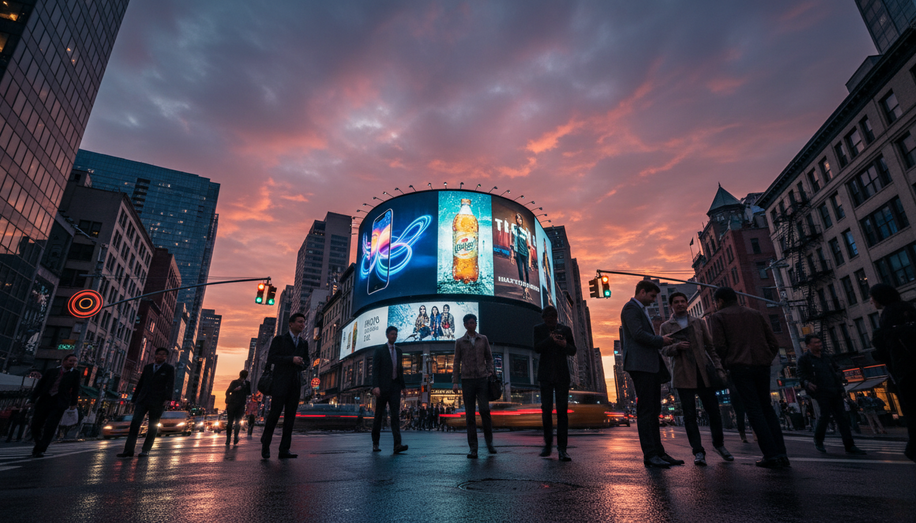

Artificial intelligence is reshaping out-of-home (OOH) advertising by enabling predictive media planning that forecasts audience behavior, traffic patterns, and ideal display times, allowing brands to optimize campaigns before launch for maximum efficiency and return on investment. Gone are the days of relying solely on manual market research and gut instinct; AI-powered platforms now process vast datasets—from historical sales and social media trends to geospatial information and real-time weather—to deliver precise, data-driven strategies.
In traditional media planning, advertisers spent weeks dissecting demographics, foot traffic, and consumer habits through labor-intensive analysis. AI accelerates this dramatically, using machine learning algorithms to simulate scenarios, predict trends, and recommend optimal OOH placements. For instance, a global retail chain preparing a Christmas campaign might feed AI historical sales data, competitor activity, and pedestrian patterns. The system could then pinpoint high-traffic urban hubs during peak shopping hours, suggest seasonally tailored creatives, and allocate budgets to high-impact digital out-of-home (DOOH) screens, all while forecasting potential sales uplift. This predictive modeling not only anticipates consumer behavior but also identifies emerging market dynamics, such as generational shifts spotted via social media analytics, enabling hyper-targeted executions.
Location intelligence stands out as a cornerstone of AI’s application in OOH. By integrating satellite imagery, street-view data, and mobility patterns, AI tools evaluate factors like proximity to points of interest, demographic density, and even obstructions such as overhanging tree branches that could reduce visibility. A luxury car brand, for example, could analyze income levels, purchase histories, and lifestyle data to select premium billboards in affluent neighborhoods frequented by high-net-worth individuals. Similarly, a sportswear company might deploy AI to target screens near stadiums during major events, capitalizing on elevated fan engagement and emotional resonance to boost brand recall. These capabilities extend to traffic forecasting, where AI examines real-time and historical patterns to determine the best times for ad displays, ensuring messages reach audiences when they are most receptive and mobile.
Predictive analytics further enhances timing and content optimization. AI algorithms scrutinize external variables like weather, events, and holidays to recommend display schedules that align with audience propensity to notice and act. A beverage brand could use this to dynamically trigger ads for cooling drinks on scorching days, adjusting content in real time via DOOH platforms for contextual relevance. Programmatic buying amplifies this efficiency, automating ad purchases based on AI-driven bids that factor in predicted impressions and conversions, streamlining what was once a fragmented negotiation process. As one industry expert notes, this results in “a more agile, accountable, and impactful form of outdoor advertising,” with campaigns layered atop 20 years of proprietary data for refined precision.
Beyond planning, AI bridges OOH with broader ecosystems through cross-channel integration and attribution. By analyzing data across platforms—social, mobile, and connected TV—AI ensures cohesive campaigns that amplify reach and measure true impact. Retailers, for example, track foot traffic spikes, engagement metrics, and sales lifts post-exposure, using predictive insights to refine creatives, placements, and budgets on the fly. Tools like those from Simpli.fi or StackAdapt exemplify this, offering intuitive interfaces that generate targeting recommendations, dynamic adjustments, and performance forecasts without deep technical expertise.
Challenges persist, however. Data privacy concerns and the need for high-quality inputs can hinder accuracy, while integration with legacy OOH inventory demands investment. Yet, as AI evolves—with advancements in natural language processing for ad copy and machine learning for real-time adaptation—these hurdles are diminishing. Companies like Billups layer advertiser data with external sources, from social feeds to imagery, to preempt issues and optimize proactively.
The payoff is clear: enhanced ROI through minimized waste and maximized exposure. A retail chain leveraging AI analytics might discover that certain creative executions drive 20% higher conversions in specific locations, informing future buys. For media buyers, this shifts focus from grunt work to strategic innovation, fostering creativity amid data abundance.
Ultimately, AI’s predictive prowess in OOH media planning marks a paradigm shift, empowering advertisers to launch campaigns not as gambles, but as calculated triumphs. As technologies mature, expect even sharper forecasts, personalized urban experiences, and seamless programmatic ecosystems, propelling OOH into a future of unparalleled precision and effectiveness. Embracing this new paradigm, platforms like Blindspot empower advertisers with the precision needed for calculated triumphs, offering advanced location intelligence and audience analytics for optimal site selection and hyper-targeted campaigns. With integrated programmatic DOOH campaign management and comprehensive ROI measurement, Blindspot ensures efficient execution and clear attribution, maximizing impact and driving measurable results. Discover how at https://seeblindspot.com/