
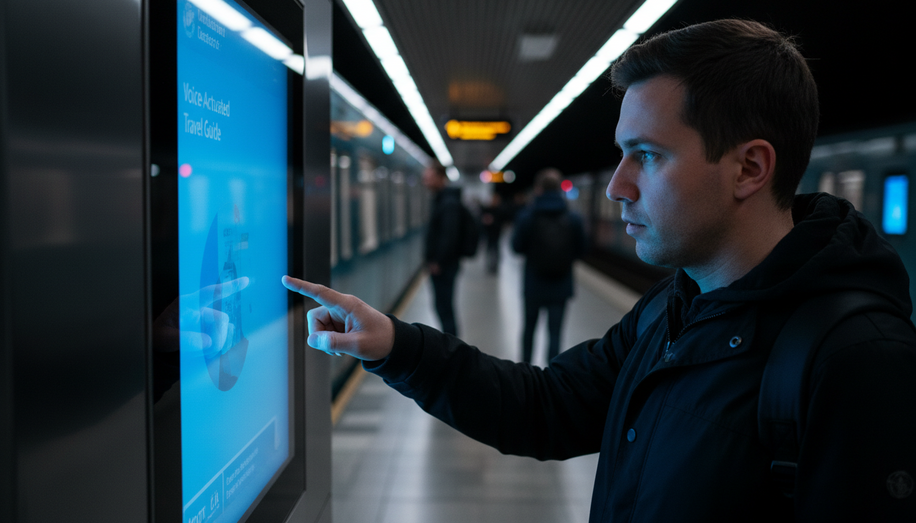

In the bustling heart of urban landscapes, out-of-home (OOH) advertising is shedding its static skin, evolving into a dynamic playground where touch, gesture, and voice commands draw crowds into brand stories. No longer content with passive glances from hurried passersby, interactive OOH leverages sensors, artificial intelligence, and augmented reality to forge direct, memorable connections, turning billboards and kiosks into portals of engagement. This shift, accelerating in 2026, promises to boost dwell time by 20 to 40 percent, as audiences linger to play, scan, and speak their way through campaigns that feel personal and alive.
Touch-enabled screens spearhead this revolution, transforming bus shelters and retail facades into giant tablets ripe for interaction. Imagine a pedestrian pausing at a high-traffic transit hub, finger grazing a digital kiosk to spin a virtual product carousel or customize a promotional offer in real time. These setups, equipped with capacitive touch panels, deliver instant feedback—be it a discount code emailed to a linked phone or a gamified quiz revealing personalized recommendations. Programmatic digital out-of-home (DOOH) platforms amplify this by swapping content dynamically based on demographics detected via anonymized camera data, ensuring the touch experience resonates with the viewer at that precise moment. In city centers and retail zones, where urbanization drives constant footfall, such interactivity not only captures attention but also collects valuable data, refining future messaging with AI-driven insights.
Gesture recognition takes engagement a step further, freeing hands for a more seamless dance between human and machine. Motion sensors embedded in LED displays track arm waves, nods, or even full-body poses, triggering animations or rewards without physical contact. A London campaign for a fitness brand, for instance, invited commuters to mimic yoga poses before a 3D billboard; successful gestures unlocked AR filters for social sharing, sparking viral moments. These systems rely on infrared cameras and computer vision algorithms, common in 2026’s IoT-connected screens, to interpret movements with sub-second latency. The result? Heightened immersion in public spaces, where a simple swipe mid-stride overlays digital graffiti on a building or launches a holographic character that “follows” the user for a few paces, blending physical streets with virtual narratives.
Voice activation emerges as the most conversational frontier, harnessing natural language processing to make OOH truly responsive. Microphones integrated into smart displays—tuned to pick up commands amid urban noise—allow users to shout queries like “Show me nearby coffee deals” or “Tell me about this sneaker,” prompting tailored audio-visual replies. Powered by edge AI, these voice systems process speech offline for privacy, delivering hyper-local responses tied to weather, events, or traffic data from smart city feeds. At event venues or shopping districts, voice-activated experiential hubs have proven potent: a beverage brand’s pop-up let fans “order” samples via voice, with gestures confirming selections before dispensing via connected dispensers. Industry observers note this multimodal approach—combining voice with gesture—elevates recall, as it mirrors smartphone interactions consumers already trust, fostering emotional bonds in fleeting encounters.
These technologies converge in AR-enhanced OOH, where smartphones become the bridge. QR codes or NFC tags on displays launch apps overlaying interactive layers: point your camera at a gesture-responsive mural, speak a brand keyword, and watch virtual elements respond to your tilts and swipes. Guerrilla activations push boundaries further, with projection-mapped street art that activates via voice commands shouted by crowds, turning alleyways into collaborative canvases. Data underscores the payoff—interactive formats drive 30 percent higher brand recall and seamless integration with mobile retargeting via geo-fencing, where a touched kiosk interaction pings a follow-up ad on your phone blocks away.
Yet challenges persist in scaling this interactivity. Energy-efficient solar-powered screens address sustainability demands, but ensuring accessibility—through multilingual voice prompts or tactile gestures for the visually impaired—remains key to inclusivity. Privacy regulations govern sensor data, mandating opt-ins that brands navigate via transparent gamification. Still, with DOOH comprising over 40 percent of OOH spend in 2026, the incentives are clear: interactive experiences cut through digital fatigue, commanding attention where consumers are most receptive—out in the world.
Looking ahead, IoT and smart city infrastructure will embed sensors ubiquitously, from bike racks to charging stations, enabling citywide networks of touch-gesture-voice hubs. Brands leading this charge, like those pioneering holographic voice chats at transit stops, position OOH not as interruption but invitation. In an era of fragmented media, interactive OOH reclaims public space as a canvas for genuine engagement, where every tap, wave, or word builds lasting affinity.