
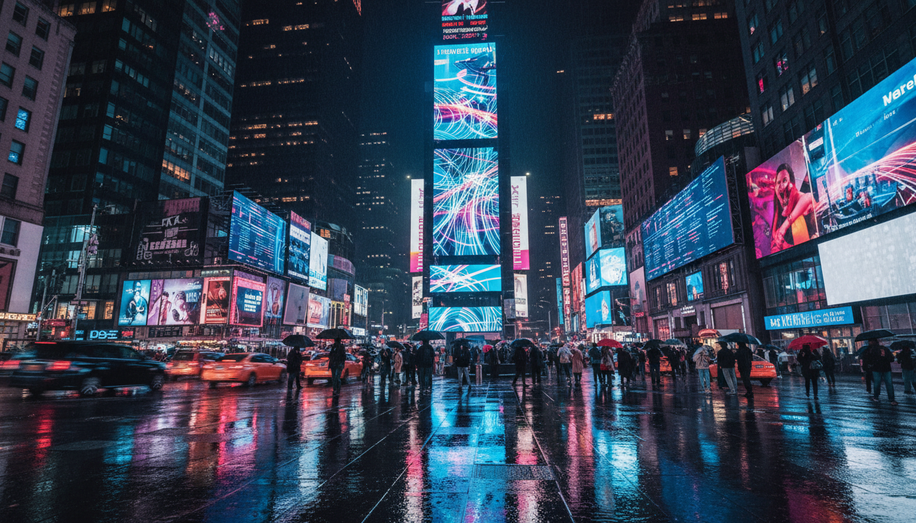

Artificial intelligence is reshaping the landscape of out-of-home (OOH) advertising, positioning itself as an indispensable creative partner that refines visuals, sharpens headlines, and forecasts campaign success with unprecedented precision. Gone are the days when OOH designers relied solely on intuition and manual iteration; machine learning algorithms now dissect vast datasets—from audience demographics and traffic patterns to historical performance metrics—to generate optimized creatives tailored for billboards, posters, and digital signage.
At the heart of this transformation lies AI’s ability to analyze multifaceted data inputs, including viewer behaviors, location-specific factors like weather and foot traffic, and past ad metrics such as click-through and conversion rates. Tools like those in Adobe Creative Cloud, Canva, Glorify, and AdCreative exemplify this shift, employing machine learning to produce visuals and copy that resonate deeply with targeted audiences. For instance, these platforms ingest audience profiles—demographics, interests, even real-time mobility data—and output designs predicted to capture fleeting roadside attention, where viewers have mere seconds to absorb a message.
Visual optimization stands out as one of AI’s most immediate impacts. Traditional OOH design often falters when concepts viable on screens fail at monumental scales, where typography blurs at distance and compositions lose punch amid urban clutter. AI billboard mockup generators, such as Artificial Studio’s, address this by instantly placing uploaded creatives into hyper-realistic urban environments, simulating scale, lighting, and context to validate readability and hierarchy before production. Designers can iterate rapidly, testing contrast levels or focal points that ensure headlines pop against bustling cityscapes, eliminating costly reprints and bridging the gap between digital prototypes and physical impact.
Headlines and messaging receive equally sophisticated enhancement. Generative AI platforms like ChatGPT, Jasper, or Amazon Ads’ agentic AI tool kickstart ideation by probing trends—”What’s hot in OOH right now?”—or benchmarking competitors, then crafting concise, punchy copy optimized for brevity and persuasion. Amazon’s tool, for example, draws on retail insights to propose multiple concepts, complete with taglines and rationales, before evolving them into storyboards with editable visuals, animations, and voiceovers—adaptable for OOH’s static yet bold formats. This process not only accelerates brainstorming but predicts engagement by modeling how phrasing influences recall in high-speed viewing scenarios.
Predictive performance modeling elevates AI from mere generator to strategic oracle. By correlating design attributes—color schemes, image dominance, text legibility—with real-world outcomes, machine learning forecasts metrics like impressions and conversions. Predictive traffic analytics, a proven powerhouse, leverages GPS and DOT data to pinpoint billboard placements where target demographics peak, ensuring creatives don’t just shine but strike at optimal moments. Campaigns scale effortlessly: AI automates variations for A/B testing across locations, monitors live results, and refines in real time, as seen in dynamic DOOH platforms where algorithms swap elements based on unfolding audience responses.
Efficiency gains are profound. What once demanded teams of designers, photographers, and analysts now unfolds in minutes, slashing costs and timelines. Broadsign’s AI Assistant, for instance, automates creative approvals by flagging compliance issues in seconds, freeing media owners from rote reviews. Creatify and similar generators churn unlimited image and video variants, empowering freelancers and agencies to pitch persuasively with mockups that convey real-world sizzle, sans heavy software.
Yet, AI’s prowess demands human oversight. While algorithms excel at data-driven patterns, they thrive when guided by brand nuance and cultural savvy—reviewing outputs for revisions remains crucial. High-quality inputs yield superior results: crisp source images and precise audience briefs prevent generic pitfalls. Best practices include embedding clear calls-to-action, prioritizing scannable text, and continuous monitoring to adapt to variables like seasonal shifts.
Forward-thinking OOH professionals are already reaping rewards. Agencies use these tools to launch hyper-targeted campaigns that outperform legacy methods, with ads not just seen but acted upon. As machine learning evolves, expect deeper integrations—like real-time personalization on digital billboards—further blurring lines between creator and machine. AI isn’t replacing the creative spark; it’s amplifying it, turning OOH into a predictive powerhouse where every pixel and phrase is engineered for maximum effect.