
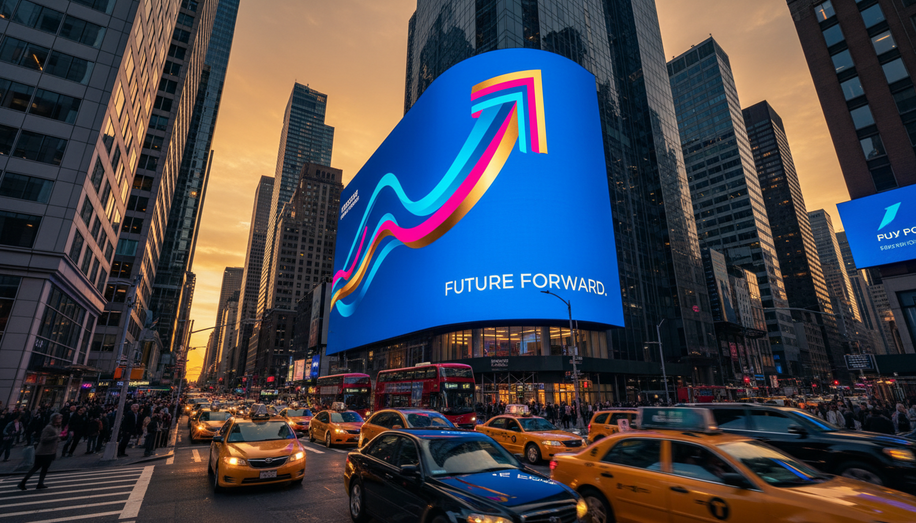

In the competitive landscape of out-of-home (OOH) advertising, success hinges not on chasing raw impressions but on mastering the art of budgeting, negotiation, and vendor selection to deliver tangible returns on investment. Businesses that treat OOH as a strategic lever rather than a line-item expense can unlock substantial gains, as evidenced by research showing that even modest reallocations—such as boosting OOH from 1% to 2% of media spend in automotive campaigns—can generate millions in additional revenue without expanding overall budgets. This measured approach allows marketers to optimize performance by trimming oversaturated channels like TV and digital, where diminishing returns set in quickly, and redirecting funds to OOH’s high-impact visibility.
Strategic budgeting begins with clear objectives tied to measurable outcomes, ensuring every dollar aligns with business goals like brand awareness or foot traffic. For small businesses, starting small proves effective: a daily budget of just $20 enables testing in single locations during peak hours, scaling to $100 or more for broader coverage once data reveals winners. High-traffic spots command premium rates, but their cost per thousand impressions (CPM), averaging around $5, remains among the lowest across media, making OOH exceptionally efficient. Location data is paramount—90% of impressions stem from just 10% of sites—so prioritizing audience demographics, traffic patterns, and contextual relevance prevents waste. Niche placements, targeting receptive locales like neighborhoods near a new café, often yield superior ROI by minimizing irrelevant exposure, while blending them with high-traffic billboards creates a balanced portfolio.
Timing amplifies efficiency further. Focusing spend on high-traffic windows, such as rush hours or seasonal peaks, maximizes eyes on ads without inflating costs. Flexible digital OOH (DOOH) platforms shine here, with real-time bidding updating rates every 10 minutes and pay-per-play models ensuring payment only for delivered plays. Programmatic DOOH takes this further, leveraging audience data, weather, and behavior for dynamic adjustments, while remnant inventory—unsold premium slots—offers top-tier space at discounted rates, stretching budgets dramatically. A phased rollout, like $75 daily in month one for testing, then ramping to $133 by month three for expansion, builds on proven performers.
Negotiation elevates budgeting from tactical to transformative. Savvy buyers leverage full-service agencies or one-stop shops that bundle OOH with cross-platform strategies, securing volume discounts and insider access to remnant deals. Timing matters: buying non-premium inventory on tight turnarounds nets mass exposure at rock-bottom prices, ideal for scaling quickly. Armed with metrics—impressions, CPM, website traffic—marketers push for performance-based terms, such as bonuses for exceeding guaranteed plays or flexibility to shift underperforming units. In a fragmented market, pitting vendors against each other on specifics like audience guarantees or extension options extracts concessions, but relationships built on repeat business yield the deepest discounts. Integrating OOH with digital amplifies leverage; studies show this combo lifts incremental return on ad spend to $2.00, an 80% boost over digital alone.
Vendor selection seals the deal for optimal ROI. Prioritize partners with proven local knowledge, innovative edges like programmatic capabilities, and transparent analytics—essential for post-campaign attribution. Full-service providers streamline execution, from creative to measurement, often negotiating better rates through established networks. Evaluate based on track record: do they access premium remnant inventory, deliver verifiable metrics, and adapt to events or seasonality? Interactive elements, like QR codes, can triple social engagement and boost recall by 45%, so vendors offering dynamic content integration stand out. Avoid siloed operators; those fostering cross-media synergy ensure OOH complements rather than competes with other channels.
Ultimately, businesses mastering these elements—incremental budgeting shifts, data-driven timing, aggressive negotiation, and vetted partners—transform OOH from impression-chaser to revenue driver. Automotive brands reallocating just 1% to OOH captured 75% of optimization gains; retail grocery saw 61% from a 6% bump. Whether testing at $20 daily or negotiating remnant goldmines, the formula is clear: precision over volume, strategy over spend. In an era of fragmented attention, OOH’s unskippable presence, wielded smartly, delivers the efficiency edge competitors overlook.