
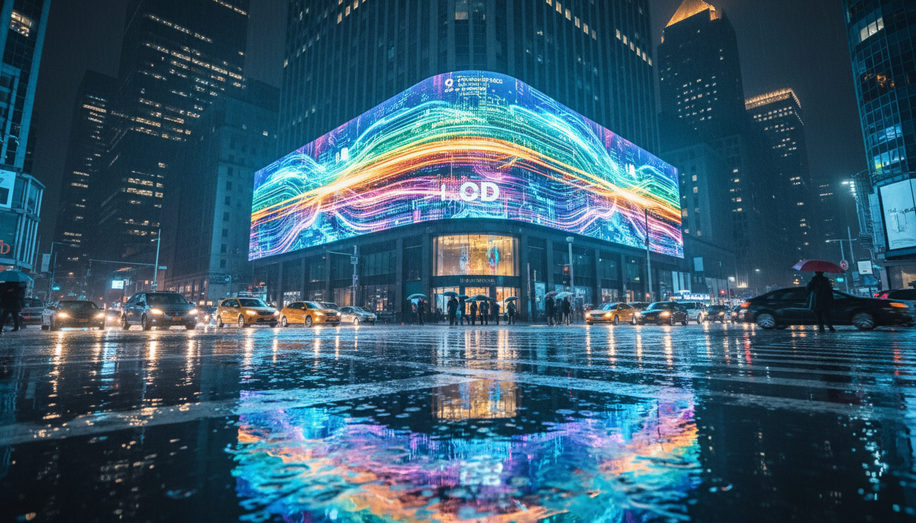

In the bustling streets of Mexico City, where rush-hour traffic pulses along Periférico and Insurgentes, artificial intelligence is quietly revolutionizing out-of-home (OOH) advertising. Machine learning models now sift through mobility data, weather patterns, and geolocation signals to predict peak audience receptivity, dynamically shifting messaging from broad awareness to targeted promotions at precisely the right moment. This predictive power marks a seismic shift for OOH, transforming static billboards into responsive canvases that anticipate consumer needs rather than merely broadcasting to them.
At its core, AI’s influence on OOH planning hinges on predictive analytics, which harness historical data—foot traffic, demographics, sales trends, and even competitor activity—to forecast optimal ad placements. A global retail chain, for instance, might deploy AI during the Christmas rush to analyze past holiday patterns, pinpoint high-traffic zones near shopping districts, and allocate budgets to those spots yielding the highest sales lift. In outdoor contexts, this means identifying not just volume but quality exposure: areas with the right demographic mix, proximity to points of interest like stadiums, or alignment with events that stir emotional connections, as a sportswear brand did by clustering ads near arenas during major games. Predictive models, from regression techniques forecasting impressions to more complex algorithms simulating scenarios, enable planners to test virtual campaigns, refine strategies, and sidestep wasteful spends.
This data-driven precision extends to audience segmentation, where AI dissects behavioral, psychographic, and generational profiles to tailor outreach. Social media trends, once siloed, now feed into OOH models, revealing how Gen Z in emerging markets favors interactive visuals while older cohorts respond to straightforward messaging. The result? Campaigns that resonate deeply, boosting engagement by aligning with real-time preferences. According to industry reports, such personalization can elevate ad recall by up to 40% over traditional static formats.
Beyond placement, AI is infiltrating creative optimization, blurring the line between human ingenuity and machine efficiency. Generative tools now assist designers in brainstorming concepts, iterating visuals, and even adapting content dynamically—think a beverage brand’s billboards that swap to icy refreshment promos when temperatures spike. Programmatic digital out-of-home (DOOH) takes this further, automating ad buys, scheduling, and tweaks via unified dashboards. In Mexico, networks like BM Outdoor leverage this for nationwide scalability, adjusting for audience density or weather without manual intervention. What emerges is a fluid ecosystem where creatives evolve in real time, tested against predictive outcomes to maximize impact.
Measurement, long OOH’s Achilles’ heel, finds redemption through AI analytics. Platforms track impressions, dwell time, and downstream effects like foot traffic or conversions, linking exposure to tangible ROI. A retail chain monitoring live data from placements can dissect which copy variants drive store visits, enabling mid-campaign pivots and proving value to skeptical clients. Advanced visualization and machine learning turn raw metrics into actionable foresight, forecasting not just performance but competitor moves, ensuring brands stay ahead. This transparency has unlocked premium pricing, with some networks reporting 35% revenue jumps from data-backed pitches.
Yet AI’s true alchemy lies in its holistic integration. Programmatic DOOH fuses predictive modeling with automation, creating agile loops of planning, execution, and refinement. Brands gain unprecedented agility: simulating budget scenarios, anticipating behavioral shifts from economic or cultural cues, and optimizing across static and digital inventories. In Latin America, this positions markets like Mexico as pioneers, where context-aware screens merge creativity with responsiveness.
Challenges persist—data privacy, model accuracy reliant on quality inputs, and the need for human oversight to infuse campaigns with authentic storytelling. Still, as algorithms mature, they democratize OOH for smaller players, leveling the field against media giants. Predictive power isn’t just enhancing efficiency; it’s reimagining OOH as a proactive medium, one that doesn’t chase audiences but draws them in with prescient relevance.
The trajectory points to deeper symbiosis. Future iterations promise hyper-local adaptations, AR overlays triggered by viewer proximity, and ethical AI ensuring inclusivity. For planners and creatives, this means less guesswork, more artistry. AI doesn’t replace intuition; it amplifies it, turning OOH from a blunt instrument into a scalpel of precision. In an era of fleeting attention, this evolution ensures outdoor advertising doesn’t just compete—it commands.