
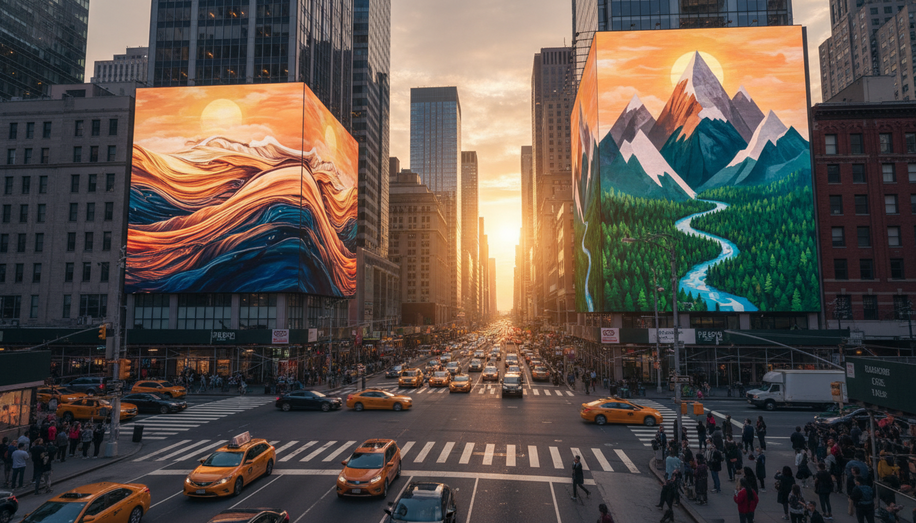

In the sprawling canvas of urban landscapes, out-of-home (OOH) advertising has evolved from static messages to dynamic sagas that unfold across cityscapes, captivating commuters and pedestrians alike. Brands are increasingly harnessing sequential placements—billboards positioned along traffic flows or digital screens programmed to rotate narratives—to craft multi-part stories that build suspense, foster emotional connections, and drive unprecedented engagement. This technique, pioneered nearly a century ago, transforms passive glances into active anticipation, turning city streets into theaters where audiences unwittingly become part of the plot.
The blueprint for modern sequential OOH campaigns traces back to Burma-Shave, the brushless shaving cream that dominated American highways from 1925 to 1966. With up to 7,000 signs scattered across nearly every U.S. state, the brand deployed sets of six rhyming billboards, spaced just right for drivers to read them in sequence. A typical series might tease: “Ben Met Anna / Made A Hit / Neglected Beard / Ben Got Rid / Of It With / BURMA-SHAVE.” Sales skyrocketed—reaching six million units by 1947 in peak years—proving the power of serialized storytelling to embed a brand in collective memory. Though the signs vanished decades ago, their legacy endures in advertising lore, with replicas still sold online and museums preserving their cultural impact.
Fast-forward to today, and digital advancements have supercharged this format. Unlike static boards, digital OOH (DOOH) networks allow precise timing, rotations, and even interactive elements, enabling narratives that evolve over hours, days, or weeks. Pearl Media highlights how brands use multi-display sequences to reveal product features incrementally or build curiosity for launches, rewarding repeat viewers with unfolding chapters. Whistler Billboards emphasizes location planning: align placements with traffic patterns, such as highway stretches spaced miles apart or urban clusters that sync with commuter routes, ensuring the story hits in the correct order. This creates associative learning, where each panel cues the next, boosting brand recall far beyond single exposures.
Consider a hypothetical HVAC campaign on a digital network: Spring brings “Stay Cool This Summer,” evolving to “Oklahoma Heat? We’ve Got You Covered” mid-season, then “Time to Warm Up Again” in fall. The brand identity persists while the message adapts, forging trust through familiarity. Concert promoters might tease “Something Big Is Coming,” pivot to “Guess Who’s Back,” and climax with “Tickets On Sale Now,” measurable via spikes in online searches post-exposure. In urban settings, where dwell times vary, pacing matters—longer intervals for highways, weekly rotations for daily commuters—to sustain momentum without overwhelming.
Real-world triumphs illustrate the saga’s potency. The 2017 film *Three Billboards Outside Ebbing, Missouri* revived Burma-Shave buzz by dramatizing a mother’s defiant sequential billboards challenging authorities over her daughter’s unsolved murder, crowning it the new icon of the format. Brands like Barona, Reliant, and the Tampa Bay Rays have since deployed similar tactics, weaving playful narratives across boards to captivate passersby. TEC Direct Media notes how sequential highways reveal story parts or product perks progressively, turning drives into immersive experiences.
Digital flexibility amplifies this in cityscapes. Disney’s 2025 Percy Jackson promo in Hollywood featured a 4D billboard splashing water synced to trailers, extending the sequential thrill into sensory immersion—though not purely narrative, it built hype across exposures. HOKA’s Manhattan “desert block” takeover for Mafate X shoes layered physical immersion with dynamic backdrops, mimicking a multi-part journey from sidewalk to trail. Even non-sequential creatives, like Killingsworth Environmental’s Clean Graffiti pests in Charlotte directing to CLTRats.com and CLTBugs.com, hint at narrative potential through clever progression.
Yet success demands precision. Traffic flow dictates sequencing: secondary roads suit slower-paced tales, as drivers digest each beat. Urban digital clusters thrive on rotation, blending with online amplification for hybrid impact. Challenges persist—overly complex plots risk confusion amid fleeting views—but data shows sequential OOH lifts direct searches and recall, outpacing static ads.
For brands eyeing citywide sagas, start small: Map audience paths, script concise emotional arcs in 4-6 parts, and test digitally for agility. As OOH evolves, sequential narratives remind us that in a fragmented media world, a well-plotted story across billboards can still stop traffic—literally—uniting strangers in shared suspense.