

In the bustling heart of any neighborhood, a small business thrives not just on quality products or services, but on the steady stream of locals who walk through its doors. Out-of-home (OOH) advertising has emerged as a potent catalyst for this foot traffic, turning passive passersby into engaged customers and fostering deeper community ties for enterprises that might otherwise struggle against digital giants. Unlike fleeting online ads vulnerable to ad blockers or short attention spans, OOH—billboards, bus shelters, digital screens—delivers persistent, unavoidable messaging that resonates in the physical spaces where people live, work, and shop.
For small businesses, the appeal lies in OOH’s ability to drive measurable store visits without breaking the bank. Research from Kantar and mobile marketing platform Kochava demonstrates that high-frequency OOH campaigns outperform connected TV and digital channels in ad awareness, brand favorability, and purchase intent, sustaining impact over 14 to 21 days rather than peaking in mere hours. Localized OOH copy, tailored to neighborhood quirks or events, boosts engagement by 20 to 45 percent, while placement near decision points like stores amplifies recall and immediate action. Restaurants, for instance, report foot traffic lifts within one to two weeks of launching OOH campaigns, as commuters and pedestrians absorb messages during daily routines.
Consider a local gym eyeing residential-area billboards: these prove especially effective, drawing in newcomers who might otherwise scroll past Instagram ads. Clinics and dental offices similarly leverage OOH for geographic relevance, placing ads on high-traffic routes to clinics where impulse decisions turn into appointments. Data underscores this: 69 percent of consumers have made a purchase triggered by OOH near points of sale, with strategic spots influencing impulse buys at scale. Gas pump screens, with their QR codes, spur quick scans and conversions at rates of 0.5 to 4 percent, bridging offline exposure to online bookings or directions.
What sets OOH apart for small outfits is its cost-effectiveness and low barrier to entry. With lower cost-per-thousand impressions (CPM) than TV or digital video, and immunity to ad fatigue—unlike repeated digital exposures that yield diminishing returns—OOH reinforces brands through multiple viewings in busy locales. The Out of Home Advertising Association of America cites a staggering 495 percent return on investment for billboards, making it feasible for mom-and-pop shops to lease space that reaches thousands repeatedly. Bluevine notes that well-placed screens or billboards build “mind share” affordably, translating to market share gains as locals encounter the same friendly message en route to work or errands.
Beyond raw numbers, OOH knits small businesses into the community fabric. A beer brand’s billboard campaign, for example, doubled category benchmarks for sales lifts, with 36 percent of purchases from new customers and a 20 percent jump in intent—proving OOH excels at attracting incremental traffic to local retailers. Similarly, a sleep tech brand saw 43 percent more online sales and 90 percent higher repeat orders from OOH-exposed audiences, showing how sustained visibility primes loyalty. For neighborhood cafes or boutiques, this means regulars return and newcomers spread word-of-mouth, strengthening ties in an era of e-commerce dominance.
Digital out-of-home (DOOH) elevates these strategies further, offering real-time tweaks for small businesses. Platforms provide analytics on impressions, engagement, and even foot traffic via mobile data, allowing owners to rotate creatives or target peak hours without hefty production costs. Adding location-based targeting hikes ROI by 15 to 40 percent, while QR codes and minimalist messaging spark viral buzz—think a coffee shop’s “Scan for 10% off your neighborhood latte.” OOH also boosts branded searches by 10 to 50 percent and app installs near activity zones, funneling digital foot traffic back to physical doors.
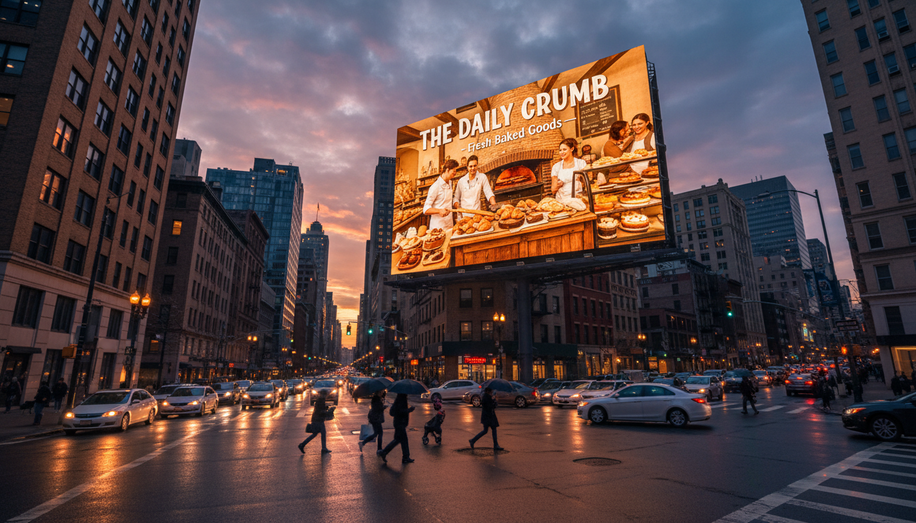
Success stories abound. In Chicago and Boston, OOH outperformed TikTok and Instagram for customer acquisition efficiency, delivering better conversions per dollar. A beverage campaign not only lifted household sales by 6.7 percent but drew in fresh faces who hadn’t considered the brand before. Small businesses emulate this by hyper-localizing: a bakery billboard touting “Fresh scones, two blocks away” or a bookstore promoting author signings with event specifics. High memory retention—even from brief views—ensures the message lingers, with OOH recall topping 80 percent versus 50 percent for digital.
Critically, OOH’s non-intrusive nature avoids annoyance, scoring lower than pop-ups or forced videos while benefiting from frequency in diverse spots. When paired with digital, it amplifies everything: offline priming leads to online orders, store visits, or repeat patronage. For community engagement, events tie-ins shine—OOH announcing block parties or charity drives positions businesses as neighborhood anchors.
Small business owners must prioritize placement and messaging. Opt for high-traffic yet relevant spots: near residential zones for gyms, retail strips for shops. Track KPIs like impressions and sales trends via DOOH dashboards to refine budgets. Start small—a single billboard or screen—to test waters, scaling with proven lifts.
In sum, OOH isn’t just advertising; it’s a local lifeline. By driving foot traffic and embedding brands in daily life, it empowers small enterprises to compete, connect, and convert—one unmissable message at a time. For small business owners seeking to harness this power, platforms like Blindspot offer the precision needed to excel. Through advanced location intelligence and programmatic DOOH campaign management, businesses can identify optimal placements and dynamically adjust messaging, ensuring every ad dollar directly translates to increased foot traffic and measurable ROI. Explore how Blindspot can empower your local enterprise to thrive: https://seeblindspot.com/