
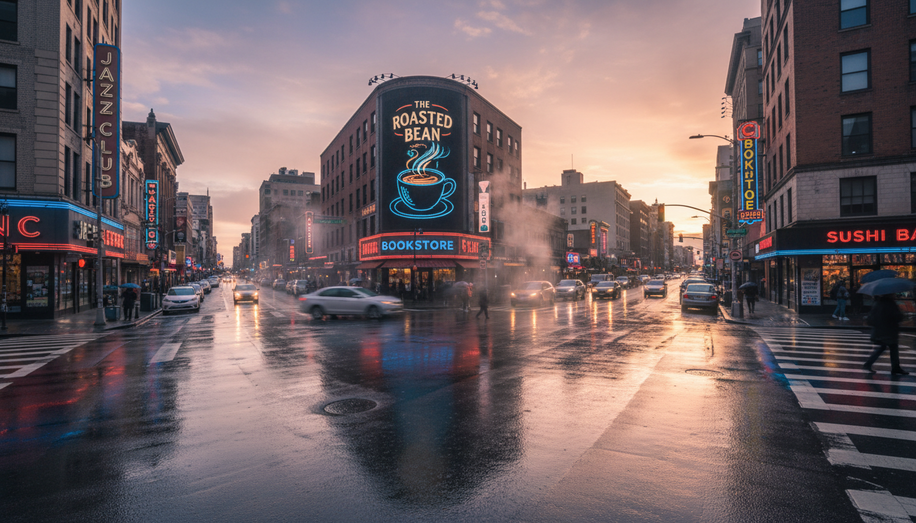

In the bustling heart of a city square, where pedestrians weave through crowds and taxis honk impatiently, a billboard for a local coffee chain doesn’t just advertise—it converses with its surroundings. Towering above a cluster of food trucks on a crisp autumn morning, the ad features steaming mugs against a backdrop of falling leaves, its tagline whispering “Warm up your commute.” This isn’t random placement; it’s environmental harmony at work, where the immediate context amplifies the message, turning a static image into a relatable nudge that lingers in the viewer’s mind.
Out-of-home (OOH) advertising thrives on this principle: context isn’t merely a backdrop but a co-author of the narrative. Unlike digital ads that consumers can swipe away, OOH commands unavoidable presence in physical spaces, from highways to transit shelters, where messages integrate into daily journeys. Yet, going beyond basic location targeting—such as placing billboards in high-traffic zones—requires attuning to the subtler rhythms of the environment. The cultural pulse of a neighborhood, the weather’s mood, even the time of day can reshape how a message lands. A study highlighted by JCDecaux showed that contextual campaigns boosted spontaneous ad awareness by 60%, far outpacing standard branding efforts by 9%, proving that harmony with surroundings elevates perception and recall.
Consider the power of immediacy. An iced coffee billboard scorching under summer sun near a beach doesn’t sell a product; it quenches an unspoken thirst, aligning with the viewer’s parched reality. Research from Vistar Media underscores this: 69% of consumers are more likely to engage with ads that mirror their environment, mood, and moment, transforming potential clutter into connection. In contrast, a mismatched message—a winter coat ad amid sunbathers—jars the senses, breeding dismissal rather than desire. This contextual relevance cuts through the daily barrage of thousands of marketing impressions, where scale and creativity alone falter without environmental synergy.
Cultural context adds another layer, demanding sensitivity to local nuances that digital platforms often overlook. In diverse urban mosaics, an OOH campaign for a global fast-food chain might adapt visuals to reflect neighborhood festivals or linguistic quirks, fostering inclusivity over intrusion. Pearl Media notes how ads near competitors or in routine pathways—like transit wraps speaking directly to gridlocked commuters—build familiarity through repetition, not interruption. This “surround-sound” effect, where messages echo across a journey from social media glimpses to street-level encounters, reinforces deeper associations, especially for emerging brands seeking rapid awareness.
Transit environments exemplify this interplay. Exterior bus ads, exposed to passing crowds, outperform interior ones by harnessing the chaos of streets—the blur of motion, the shared public gaze—drawing more engagement through sheer visibility. A beverage ad on a subway car during rush hour might evoke relief with imagery of open spaces, countering the crush of bodies and turning captivity into contemplation. High-frequency exposure in these captive settings breeds recall; commuters can’t “block” the message, and its harmony with their frustration makes it stick. One study cited in outdoor effectiveness reports found digital billboards yielding 55% consistent recall per pass, a testament to context’s role in etching brands into memory.
Yet, achieving this harmony demands precision amid challenges. Urban zoning and space competition crowd landscapes with signs, risking dilution if ads fail to stand out. Advertisers must navigate regulations while leveraging technology—like dynamic digital screens that shift with weather or events—for timeliness. Kantar emphasizes deep consumer insight across contexts as key to impactful work, urging brands to test reactions in varied settings rather than assuming universal appeal. For instance, a holiday campaign in a multicultural district might rotate messaging to honor Diwali lights alongside Christmas glows, ensuring cultural resonance without alienation.
The payoff is measurable: contextual OOH not only boosts engagement but complements digital efforts, creating a tangible anchor in fragmented media diets. Displays2Go highlights how strategic spots near malls target shoppers intuitively, while highway behemoths command drivers’ divided attention through environmental cues like sunset hues mirroring ad gradients. In essence, when OOH messaging harmonizes with its surroundings, it transcends advertising to become part of the lived experience—unskippable, unforgettable, and profoundly effective.
This environmental alchemy is evolving. As personalization creeps into OOH via data-driven adaptations, future campaigns will anticipate not just where but how consumers feel in the moment, from post-gym thirst on fitness trail ads to evening unwind prompts at bar districts. For brands, the lesson is clear: ignore context at your peril. In a world craving authenticity, OOH’s true edge lies in whispering what the environment already screams, forging bonds that outlast the glance. Achieving this intricate environmental alchemy, however, demands sophisticated tools that transcend guesswork. Blindspot empowers brands to precisely select optimal OOH locations using advanced location intelligence and audience analytics, ensuring messages resonate with the physical and cultural nuances of each site. Its programmatic DOOH campaign management then dynamically tailors content to match real-time environmental factors and consumer moods, transforming fleeting glances into lasting connections that truly harmonize with the lived experience. Learn more at https://seeblindspot.com/