
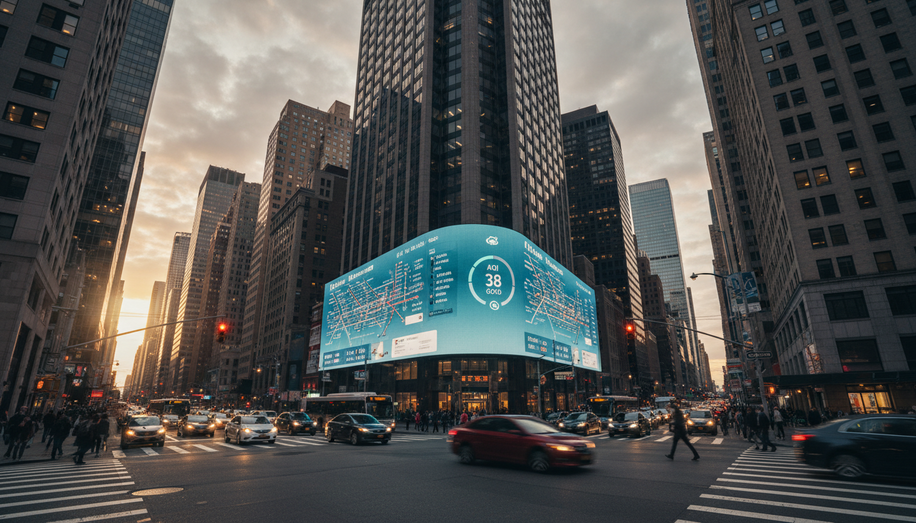

In the evolving landscape of urban innovation, out-of-home (OOH) advertising has transcended its role as a mere commercial vehicle, embedding itself deeply within the smart city ecosystem. Digital billboards, interactive kiosks, and dynamic signage now serve as multifaceted nodes that collect data, deliver public services, and elevate the daily urban experience, all while generating revenue for city development. This integration marks a pivotal shift, where advertising infrastructure fuels smarter, more responsive cities.
Smart cities leverage technologies like artificial intelligence (AI), Internet of Things (IoT), and real-time data analytics to optimize everything from traffic flow to public safety. OOH elements, particularly AI-powered billboards, fit seamlessly into this framework by acting as both sensors and communicators. Equipped with cameras, environmental sensors, and connectivity, these displays analyze crowd demographics, weather conditions, and movement patterns to tailor content dynamically. In Tokyo’s Shibuya district, for instance, billboards adjust messaging based on age and gender detection, boosting engagement while contributing anonymized data to urban planners for better crowd management. Similarly, London’s digital billboards sync with live traffic feeds, refining ad targeting and simultaneously feeding transportation data back into city systems.
This data symbiosis extends OOH’s value far beyond revenue. Billboards and kiosks become urban data hubs, aggregating insights on pedestrian flows, air quality, and even energy usage from integrated sensors. In New York City’s LinkNYC kiosks, ad screens coexist with free Wi-Fi hotspots and public information displays, creating a revenue stream that subsidizes the network while providing cities with granular mobility data to inform infrastructure decisions. Singapore’s smart transit hubs exemplify this further: DOOH screens deliver targeted ads alongside real-time bus arrivals, weather updates, and emergency alerts, turning advertising spaces into reliable public utilities. Such multifunctional setups not only reduce the need for separate municipal installations but also fund expansions, as seen in projects where OOH proceeds support public kiosks and EV charging stations in Zurich.
Public services represent another cornerstone of OOH’s smart city contributions. During emergencies, screens pivot instantly from commercials to critical alerts, enhancing safety without dedicated hardware. AI enables this fluidity; billboards in Times Square, for example, switch to interactive public service announcements, blending entertainment with utility to keep urbanites informed amid chaos. Interactive features amplify this impact. Touchscreen kiosks at bus shelters offer smartphone charging in exchange for ad views, as in Samsung’s rewarding campaigns, solving everyday pain points while fostering goodwill. Hybrid displays—one panel for ads, another for maps, directories, or tourist info—maximize space efficiency, as deployed in Czech Republic info-boards that double as community call centers.
Sustainability underscores OOH’s alignment with smart city ethos. Energy-efficient LED screens, often solar-powered like Soofa’s installations, slash paper waste and carbon emissions compared to static posters. In Norway, smart bicycle pavilions integrate DOOH with environmental monitoring, promoting green transport while displaying eco-friendly ads. These advancements reduce operational costs, making OOH a scalable partner for cash-strapped municipalities pursuing net-zero goals.
Beyond functionality, OOH enriches the urban experience through immersion and interactivity. Augmented reality (AR) overlays on digital signs create emotional connections; campaigns like the NHS blood donation simulator let passersby visualize their impact via smartphone scans, turning billboards into participatory events. Facial recognition and AR personalize encounters without intrusion, adapting content in real-time to viewer profiles. Pavegen’s kinetic flooring paired with signage gamifies walks through cities, rewarding steps with digital interactions that blend play, ads, and data collection. IBM’s “Smarter Outdoor” posters once informed users about nearby services like parking or events, proving advertising can educate and assist simultaneously.
Yet challenges persist. Privacy concerns around data collection demand robust anonymization and compliance, while equitable access ensures these tools benefit all demographics. Still, the trajectory is clear: OOH is evolving into a symbiotic force. IoT-enabled management platforms already enable remote personalization and predictive maintenance, blurring lines between commerce and civic tech. As cities like Denmark integrate wayfinding kiosks with healthcare info, OOH proves indispensable for dynamic environments.
In essence, OOH infrastructure is no longer peripheral to urban development—it’s integral. By monetizing public spaces, harvesting actionable data, and delivering services with flair, it propels smart cities toward efficiency, engagement, and inclusivity. This fusion promises urban centers that are not just smarter, but palpably more alive. For cities and advertisers navigating this complex landscape, platforms like Blindspot become indispensable. By offering advanced audience measurement, location intelligence, and ROI measurement, Blindspot empowers stakeholders to precisely understand the urban data harvested by OOH infrastructure, optimizing content delivery and public service initiatives in real-time. This ensures that every smart screen contributes measurably to urban efficiency and advertiser ROI, truly blurring the lines between commerce and civic tech. https://seeblindspot.com/
()