
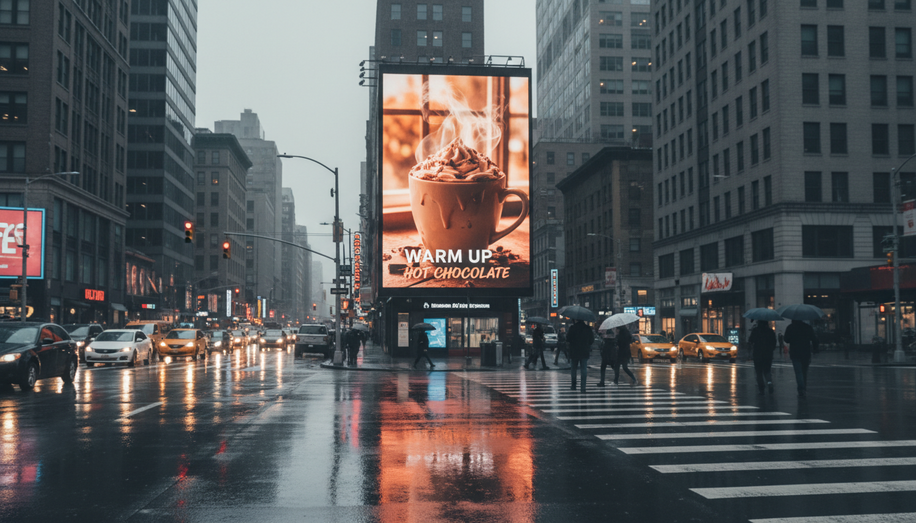

In the heart of a bustling city, a digital billboard flickers to life as rain begins to patter against the pavement. Suddenly, an image of sleek raincoats and steaming hot coffee replaces the sunny beach promotion from moments before, capturing the attention of hurried commuters who suddenly crave shelter and warmth. This seamless shift exemplifies weather-triggered out-of-home (OOH) advertising, where real-time data transforms static displays into dynamic conversations with consumers, aligning brand messages precisely with the moment’s needs.
Digital OOH, or DOOH, leverages sensors, APIs from weather services like The Weather Company, and programmatic platforms to monitor conditions such as temperature, precipitation, humidity, or forecasts. When predefined triggers activate—say, temperatures soaring above 80 degrees Fahrenheit or a cold front dipping below freezing—the content swaps instantly. A coffee chain might deploy “Warm Up Here” visuals during sudden chills, sparking a 20% sales surge as evidenced by one major brand’s campaign. Similarly, sports retailers have triggered rain jacket promotions amid storms, yielding 15% higher sales, while beverage companies capitalized on heatwaves for up to 22% lifts. These activations don’t just react; they anticipate, using forecasts to prime audiences days in advance, much like Timberland’s emails urging rainwear purchases ahead of predicted downpours.
The psychology behind this precision is rooted in relevance. Weather profoundly influences buying habits: heatwaves drive demand for sunscreen and iced drinks, while snowstorms boost coat and tire sales. By mirroring these shifts, ads evoke emotional resonance and urgency, combating ad fatigue with hyper-contextual messaging. Consumers report 90% recall for weather-activated DOOH compared to 65% for generic static creatives, as seen in Molson Coors’ hot-day campaign featuring icy visuals that spiked click-through rates by 89%. This “meeting people where they are” approach fosters trust and positive associations—a sunscreen brand shining on a sunny day reinforces protection, while an ice cream parlor tempts during scorching afternoons.
Case studies illuminate the impact across industries. Subaru partnered with The Weather Company to deploy safety messages via the Driving Difficulty Index during severe storms, enhancing driver awareness and engagement on The Weather Channel app. In retail, Pantene targeted “bad hair days” triggered by humidity or dry heat, delivering coupons and store directions that resulted in a 28% sales increase and over 600,000 social impressions. Travel giant TUI countered gloomy UK weather with sunny holiday visuals on weather sites, igniting bookings by evoking escape. Even supermarkets like ASDA’s George brand adapted dynamically: as British temperatures dropped, summer promotions pivoted to autumn gear, safeguarding turnover against unpredictable forecasts.
Fashion and lifestyle brands have pushed boundaries further. Aperol activated spritz ads during heatwaves, while Carhartt showcased rain gear in downpours, both driving store visits through programmatic DOOH. In New York City’s Times Square, Dove’s billboard used on-site sensors to morph content contextually, blending technology and creativity for viral resonance. Toyota aligned promotions with optimal outdoor conditions on weather platforms, timing messages for peak engagement. STIHL, the power tools leader, triggered Meta videos with yard prep tips during clear, sunny forecasts, empowering users precisely when they planned projects.
Implementing these campaigns requires strategic planning. Marketers first analyze industry-specific behaviors—automotive firms promote all-wheel-drive vehicles in snow, for instance—then define triggers like “above 75°F” or “precipitation probability over 50%”. Platforms such as Blindspot or Vistar Media integrate weather data seamlessly, enabling small businesses to access flexible, analytics-driven tools without massive budgets. Best practices emphasize testing creatives for emotional pull, measuring beyond impressions to sales lift and foot traffic, and layering with geo-fencing for compounded relevance.
Yet the advantages extend beyond immediate sales. Weather-triggered OOH builds long-term loyalty by positioning brands as intuitive companions. Lipton’s activations reached 6.9 million with a 12.8% video view rate at just six pence per view, proving efficiency in a crowded media landscape. It minimizes waste, ensuring ad dollars target receptive moments rather than blank stares. As climate patterns grow erratic, this adaptability future-proofs campaigns, turning weather from a wildcard into a reliable ally.
In an era of fragmented attention, weather-triggered OOH stands out by being prescient and personal. From sunshine luring beachgoers to snow urging cozy comforts, these responsive billboards don’t just advertise—they influence, one perfectly timed message at a time.