
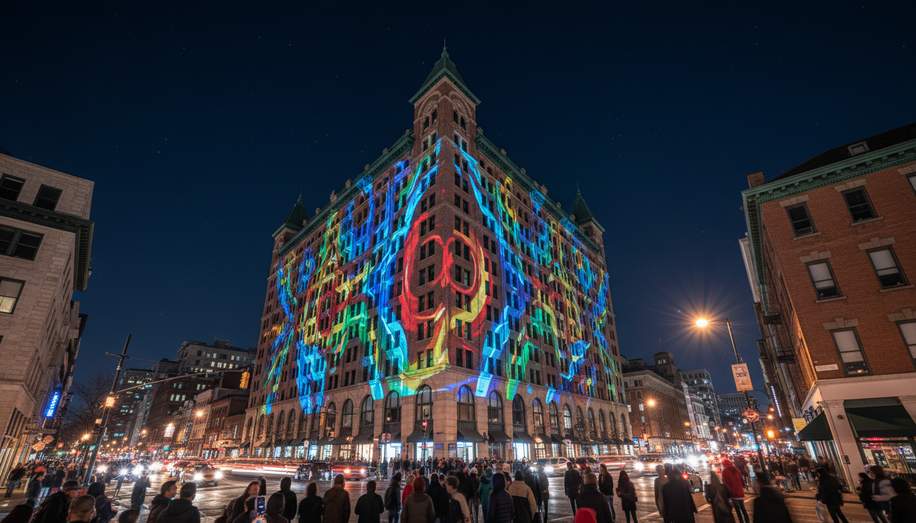

In the heart of a bustling metropolis at dusk, a towering skyscraper facade erupts in a cascade of luminous visuals, transforming cold concrete into a living narrative of swirling colors and brand storytelling. This is no ordinary billboard; it’s a large-scale light projection, a niche out-of-home (OOH) format that’s redefining urban advertising by turning architecture into immersive canvases. As traditional static displays fade into the background of 2026’s media landscape, innovators are embracing experiential light projections, guerrilla tactics, and ephemeral installations to forge unforgettable brand encounters that demand attention in real-world spaces.
Large-scale light projections onto buildings represent the pinnacle of this evolution, leveraging high-powered lasers and projection mapping to cloak entire structures in dynamic, three-dimensional spectacles. Unlike fixed billboards, these projections adapt in real time, syncing with music, weather data, or audience movements to create hypnotic displays that draw crowds and spark social media frenzy. In 2026, digital out-of-home (DOOH) technologies amplify this potential, with programmatic systems enabling instant content refreshes based on contextual triggers like time of day or local events. A beverage brand’s AR-enabled projection campaign, for instance, overlaid interactive holograms on a landmark tower, resulting in a 30 percent lift in brand recall as passersby used their phones to unlock personalized stories. These installations not only captivate but also integrate with smart city infrastructure, using IoT sensors to optimize visibility during peak foot traffic, proving that OOH can be as precise as digital targeting while rooted in physical presence.
Guerrilla marketing tactics take this innovation further, deploying surprise activations that hijack public spaces with audacious creativity. Pop-up installations, street art stencils, and flash mobs materialize without warning, turning sidewalks and plazas into branded playgrounds that encourage organic sharing. Studies highlight their potency: guerrilla campaigns boost recall by up to 30 percent by slicing through ad fatigue with sheer novelty. Consider a retailer’s guerrilla stunt in a city square, where motion-sensing projections turned park benches into interactive portals revealing product demos via AR overlays—viewers lingered 20 to 40 percent longer, scanning QR codes for exclusive offers and fueling viral TikTok challenges. These tactics thrive on impermanence, evading regulatory hurdles while embedding brands in cultural conversations. In high-dwell venues like stadiums, guerrilla elements merge with event energy: LED projections on arena exteriors during global sports spectacles gamify fan experiences, blending live stats with sponsor narratives to forge emotional ties that static ads can’t match.
Temporary installations elevate these concepts into fully immersive visual moments, blurring the line between advertisement and art installation. Brands erect pop-up pavilions or sculptural light sculptures in transit hubs and retail zones, inviting tactile engagement through touch-enabled surfaces or gamified challenges. A 2025 city-wide campaign exemplifies this: temporary hologrammatic facades on bus shelters used AR to project lifelike characters interacting with real passersby, driving foot traffic and social shares while prioritizing sustainability with solar-powered LEDs. These formats excel in personalization, harnessing real-time data for hyper-local relevance—imagine a projection shifting from sunny promotions to rainy-day deals, or tailoring messages to commuter demographics via facial recognition analytics. Interactive kiosks within installations further deepen connections, offering instant feedback loops like selfie contests that extend reach through user-generated content.
What sets these OOH innovations apart from standard billboards is their experiential core: they don’t just inform; they envelop. Traditional displays deliver one-way messages in fleeting glances, but light projections and guerrilla setups create dwell time, participation, and shareability—metrics showing 71 percent of consumers actively notice roadside OOH, with 56 percent discussing standout creatives. Integration with mobile ecosystems seals the deal: geo-fencing retargets projection viewers with app notifications, while beacons track conversions from installations to purchases. Yet challenges persist—securing permits for projections on private buildings demands negotiation, and guerrilla risks regulatory backlash—but the ROI in buzz and recall justifies the pursuit.
As urbanization accelerates and consumers crave authenticity amid digital overload, these formats position OOH as a global operating system for branding. Sustainability adds another layer: energy-efficient projections and recyclable installations align with eco-conscious audiences, turning ads into purpose-driven events. Looking ahead, AI-driven optimizations and metaverse tie-ins promise even wilder frontiers, like virtual extensions of physical projections. For advertisers, venturing beyond the billboard means crafting moments that linger in memory, proving that in 2026, the most powerful ads don’t shout—they immerse.