
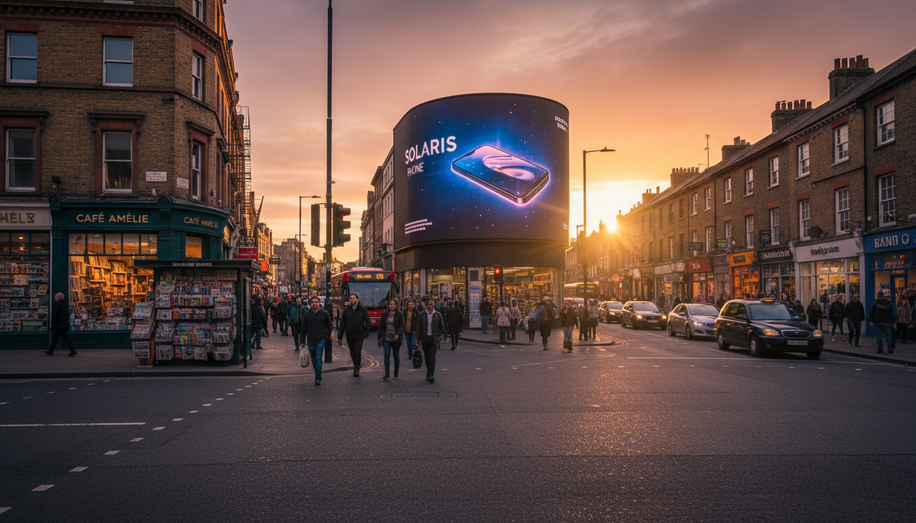

Out-of-home advertising has undergone a fundamental transformation in how marketers perceive and deploy it within their strategies. Once relegated to the upper funnel as a pure awareness driver, OOH now stands as a pivotal orchestrator of full-funnel marketing campaigns that seamlessly blend traditional media with digital channels to create cohesive consumer experiences.
The evolution reflects a broader shift in how brands think about customer journeys. Modern marketing success no longer comes from selecting individual channels in isolation—it comes from blending multiple touchpoints into a unified brand narrative. OOH serves as the anchor for this integrated approach, leveraging its unique strength in reaching consumers in high-traffic physical spaces while simultaneously amplifying the effectiveness of online and offline touchpoints.
At the awareness stage, OOH continues to excel through eye-catching visuals and memorable messaging that capture attention where consumers naturally congregate. Yet the real power emerges when these outdoor experiences trigger activity across other channels. A billboard prompts a mobile search; a transit advertisement drives an app install; a digital out-of-home display featuring a QR code becomes an interactive gateway to a brand’s digital ecosystem. This cross-channel recognition creates a reinforcement loop where consumers encounter consistent messaging across multiple platforms, strengthening brand recall and trust.
Consider the consideration stage, where purchase intent begins to crystallize. OOH advertising now leverages location-based targeting and data-driven insights to deliver specific messaging to defined audiences. Digital out-of-home technology enables longer dwell times that accommodate more detailed product information, while QR codes and geofencing capabilities allow brands to measure engagement through scans and social media interactions. When paired with complementary media like connected TV or social platforms, these DOOH experiences guide prospects toward conversion by providing multiple pathways to engage with brand content.
The conversion phase demonstrates OOH’s evolving sophistication. Brands strategically place advertisements near brick-and-mortar locations to drive store visits, effectively closing the loop between online consideration and offline purchase. In-store DOOH displays featuring promotional codes or QR links create seamless transitions from external awareness to transactional moments. This fusion of traditional outdoor presence with digital enablement transforms OOH from a passive awareness medium into an active conversion facilitator.
Integration extends beyond individual campaign stages to encompass the entire customer lifecycle. Retention-focused OOH campaigns featuring discount codes and personalized messaging encourage repeat purchases and customer loyalty. By tracking geolocation data and engagement metrics across all touchpoints, brands gain holistic insights into consumer journeys and can attribute results across the entire marketing funnel rather than isolated channels.
The cost-efficiency of OOH further enhances its appeal within integrated strategies. Research indicates that OOH delivers significantly lower cost-per-thousand impressions than many competing media formats while demonstrating superior performance in awareness metrics and comparable conversion rates with social media. This dual advantage of reach and affordability makes OOH an ideal foundation for multi-channel campaigns where budget allocation matters.
Successful integration requires intentional strategy and coordination. Brands create unified campaigns that synchronize messaging across billboards, digital displays, social media, and online platforms, ensuring consumers encounter a consistent narrative regardless of touchpoint. Hashtag campaigns bridge physical and digital spaces by encouraging social media engagement tied to outdoor experiences. Geo-targeted digital ads aligned with OOH placements create synchronized local experiences. Data integration platforms connect OOH performance metrics with online analytics systems, revealing attribution pathways that justify continued investment in outdoor media.
The transformation reflects technology’s role in modernizing out-of-home advertising. Advanced targeting capabilities, real-time measurement, and integration with marketing technology stacks have repositioned OOH from a standalone tactic to a core component of sophisticated, data-driven marketing strategies. Brands now view OOH not as competition with digital channels but as complementary infrastructure that amplifies their entire marketing ecosystem. In an era when consumer attention fragments across countless channels, OOH’s ability to capture real-world presence while triggering digital engagement makes it indispensable for marketers seeking to guide consumers seamlessly through comprehensive marketing funnels.