
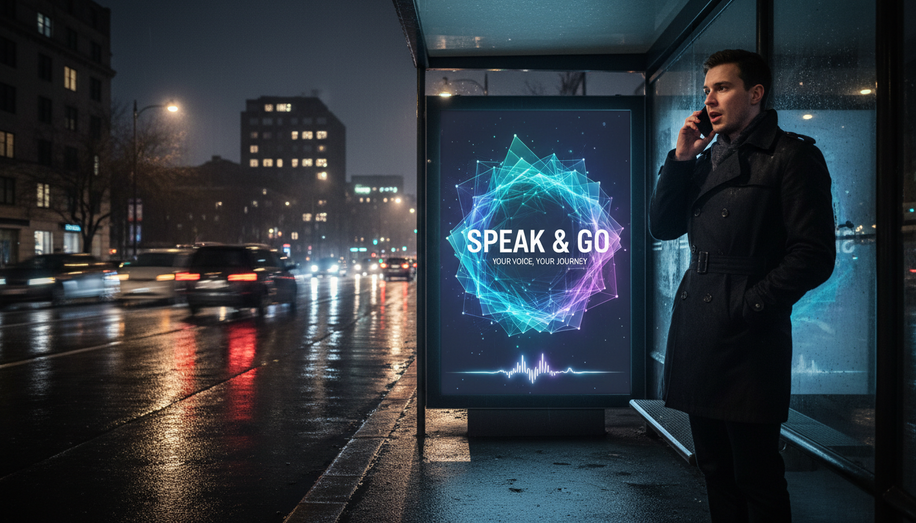

In the bustling streets of urban centers, where towering digital billboards flicker with vibrant messages, a quiet revolution is unfolding. Out-of-home (OOH) advertising, long the domain of static visuals and fleeting glances, is forging dynamic partnerships with voice-activated AI devices. This integration transforms passive displays into interactive gateways, bridging the physical world of billboards with the conversational interfaces of smart speakers like Amazon Echo and Google Nest, prompting users to act, learn, or extend campaigns seamlessly into their homes.
Imagine a commuter rushing past a digital OOH screen promoting a new fitness app. The billboard doesn’t just flash a QR code; it broadcasts a tailored audio cue detectable only by nearby smart devices: “Hey Google, tell me more about this workout challenge.” The voice assistant responds instantly, pulling campaign details from a linked server, reciting personalized tips, or even booking a trial session. This isn’t science fiction—it’s the emerging reality of OOH synced with voice AI, leveraging geofencing and AI-driven content generation to create hyper-localized experiences.
Brands are already pioneering these hybrids. PODS, the storage and moving container company, harnessed AI in digital OOH (DOOH) campaigns to optimize messaging in real time, resulting in a 60% surge in website visits and a 33% uptick in quote requests within a single week—the company’s largest year-over-year gain ever. While not explicitly voice-linked, this AI optimization laid groundwork for voice extensions, where billboards could trigger smart home queries like “Alexa, what’s the best PODS deal near me?” driving an additional 517% boost in unaided brand awareness and 8% sales growth.
The mechanics are elegantly simple yet powerfully effective. OOH displays equipped with sensors or AI facial recognition detect passersby and their devices, then emit ultrasonic signals or NFC beacons that smart assistants interpret as voice commands. For instance, a billboard for a pet food brand could mimic the Hau-Hau Champion campaign in Finland, where AI-powered vending machines used facial recognition to dispense kibbles to dogs via sound, smell, and taste triggers. Extend this to voice AI: the display barks a high-frequency audio cue that nearby Echo devices translate into “Play fetch with Hau-Hau—order now,” guiding users to purchase through conversational commerce.
This bridge extends campaigns beyond the street. A luxury travel billboard might display stunning visuals of tropical escapes, prompting “Siri, book a Luxury Escapes deal like this one.” Drawing from conversational AI successes, such as bots that tripled conversion rates through personalized retargeting, voice integration could generate tens of thousands of home-based interactions, funneling OOH impressions into sustained digital engagement. In high-traffic areas, dynamic DOOH screens already showcase QR codes for app downloads; pairing them with voice AI eliminates scanning friction, allowing hands-free responses that pull real-time data like weather-adjusted promotions or event tie-ins.
Privacy and technical hurdles remain, but advancements in 2026 are smoothing the path. Voice AI agents, now capable of autonomous automation and real-time assistance in contact centers, integrate effortlessly via APIs from platforms like Retell AI, enabling billboards to “call” leads or schedule follow-ups through smart devices. A fitness app campaign in urban hubs, for example, could display dynamic content on DOOH panels while whispering voice prompts that assistants expand into guided workouts at home, boosting app downloads and retention.
Creative execution amplifies impact. Simplicity reigns, as proven by Netflix’s “Binge Responsibly” billboards near gyms—minimal words for maximum recall. Infuse voice AI, and it evolves: the display shows the tagline while cueing “Alexa, recommend Netflix shows for my gym recovery.” Spotify and Burger King have similarly thrived with witty, context-aware OOH; voice extensions could let users query “Hey Google, playlist like this Spotify ad” or “Order Whopper details,” turning awareness into immediate action.
For advertisers, the metrics are compelling. AI-optimized DOOH already lifts purchase intent by 27% and consumer consideration by 33%; layering voice AI promises exponential returns by personalizing the handoff from public space to private sphere. Campaigns gain longevity: a street sighting sparks a home conversation, retargeting users across days via voice queries that reference the original OOH creative.
Challenges like signal interference in noisy environments or data compliance under evolving regulations demand careful design. Yet, as voice AI matures—handling everything from gamified sales to 3D integrations—OOH stands to reclaim relevance in a digital-first world. Agencies like TBWA are leading with experiential twists, proving physical displays can “speak” directly to devices and dogs alike.
The payoff? OOH evolves from interruption to invitation. A billboard no longer shouts; it converses, whispering possibilities into ears at home. As smart devices proliferate, this fusion heralds a new era where physical advertising lives on through voice, driving deeper connections and measurable results. Brands ignoring it risk fading into the background noise.