
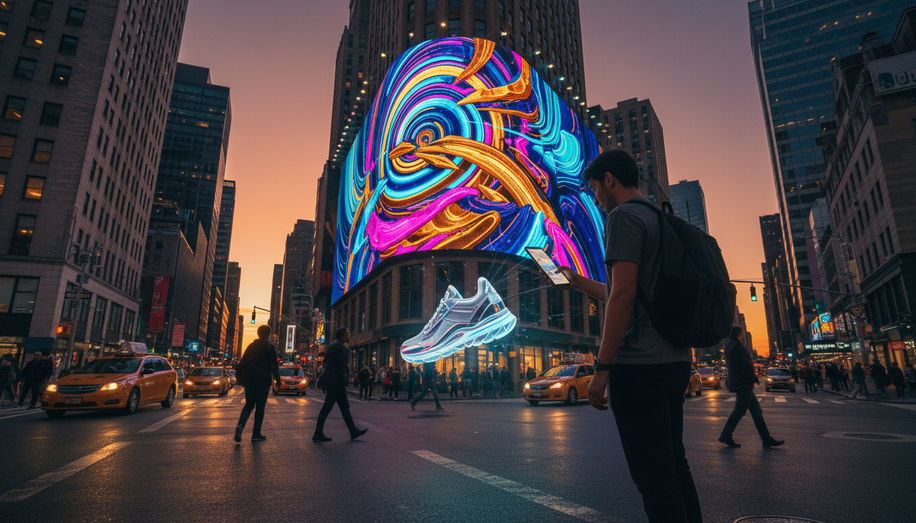

In the bustling streets of modern cities, where digital billboards flicker against the skyline, a quiet revolution is unfolding. Augmented reality overlays are transforming these static giants into portals of interactivity, inviting passersby to point their smartphones and unlock immersive experiences that blend the physical world with digital wonder. No longer mere spectacles of light and color, these billboards now respond to scans via QR codes, erupting into 3D animations, games, and virtual interactions that captivate audiences on the spot.
This fusion of out-of-home (OOH) advertising and AR technology marks a pivotal shift. Traditional billboards have long relied on bold visuals to seize fleeting attention amid urban chaos, but AR elevates them into participatory encounters. Viewers scan a code, align their phone camera with the board, and suddenly, computer vision kicks in—overlaying lifelike 3D models that leap from the screen into reality. Brands like Vodafone pioneered this in Germany with eight interactive billboards, where scans triggered AR games offering prizes. The campaign reached 50 million people, drove 40% of engaged users to stores, and sparked 17,000 minutes of active interaction, alongside hundreds of thousands of social shares and measurable lifts in brand perception.
The mechanics are deceptively simple yet profoundly effective. A QR code serves as the gateway, leveraging widely adopted mobile tech—post-pandemic familiarity with scanning has made entry frictionless. Once activated, AR uses the phone’s camera to anchor digital elements precisely to the billboard’s real-world position, creating illusions of depth and motion. Digital billboards amplify this further, syncing real-time content changes with AR overlays for dynamic, location-specific messaging. Coca-Cola Zero’s 2023 TakeATasteNow campaign exemplified this: billboards in high-traffic zones let users rotate virtual bottles or tweak backgrounds in real time, turning casual glances into hands-on explorations.
Such innovations yield tangible results beyond vanity metrics. AR fosters deeper engagement by converting passive observers into active participants, boosting emotional connections and recall. Vodafone’s effort not only excited 82% of participants—81% craving more AR ads—but also converted buzz into foot traffic and social amplification. Burger King’s cheeky “Burn That Ad” campaign took rivalry to AR extremes: users scanned competitors’ ads, like McDonald’s, to watch them virtually ignite, earning a free Whopper as reward. This gamified provocation generated massive shares and store visits, proving AR’s power to entertain while driving action.
Even public service messaging benefits. The UK’s National Health Service deployed AR billboards depicting real patients pleading for blood donations. Scanners “connected” virtual IVs to their own arms, filling digital blood bags in a poignant simulation that humanized the call to action and spurred sign-ups. Meanwhile, BON V!V Spiked Seltzer placed QR-linked murals in Los Angeles and San Diego, summoning tappable 3D vending machines into users’ environments—perfect for impulse-driven categories like beverages.
The versatility spans formats, from towering highway boards to street-level murals. AR breathes life into any OOH canvas, whether static print or LED displays, by overlaying animations that respond to user gestures. Pizza Hut’s Super Bowl tie-in scanned packaging to unleash PAC-MAN in AR, selling 10.6 million units and earning 741 million impressions—hinting at AR’s scalability from billboards to everyday touchpoints. In busy public spaces, these experiences cut through clutter, enhancing visibility and loyalty as users co-create the ad narrative.
Challenges persist, of course. Technical hurdles like lighting variations or device compatibility demand robust platforms, often WebAR solutions that bypass app downloads for instant access. Yet adoption surges as smartphones become ubiquitous AR enablers—nearly everyone carries one. Measurement has evolved too, tracking scans, dwell time, and downstream behaviors like store visits or shares, validating ROI in ways static OOH once struggled to prove.
Looking ahead, AR overlays signal OOH’s next era: hyper-personalized, measurable immersion. As digital billboards proliferate, expect real-time adaptations—weather-tied promotions or geo-fenced exclusives—further blurring digital-physical boundaries. Brands that master this won’t just advertise; they’ll orchestrate unforgettable encounters, turning cityscapes into shared playgrounds. In an attention economy starved for novelty, AR isn’t just enhancing billboards—it’s redefining how the world sees ads altogether.