
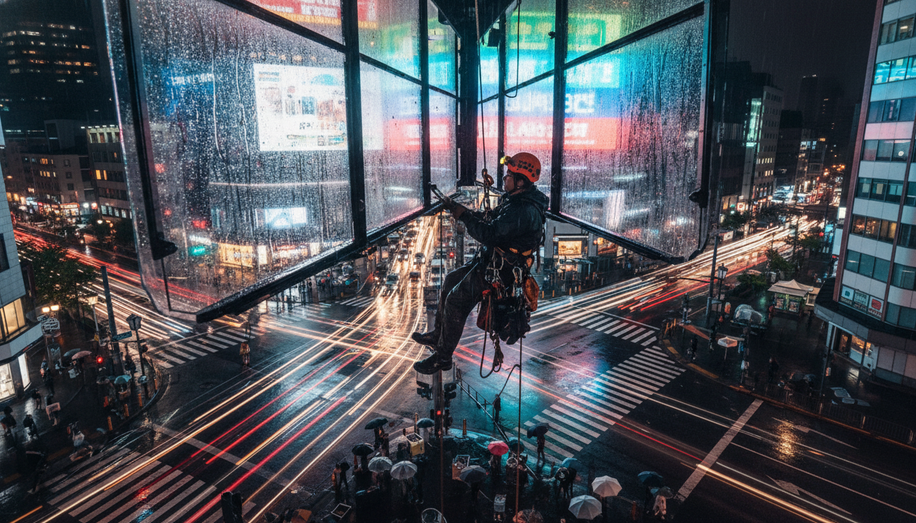

Behind every commanding billboard and dynamic digital display lies a complex web of engineering, logistics, and specialized expertise that most consumers never witness. The out-of-home advertising industry faces significant operational hurdles that extend far beyond creative conception, with capital intensity and technical complexity creating barriers that fundamentally shape how campaigns are deployed and maintained across the globe.
The financial burden of OOH infrastructure represents perhaps the most immediate challenge facing media owners. Unlike digital platforms where content can be distributed instantly at minimal incremental cost, physical advertising requires substantial upfront investment in equipment, installation, and ongoing maintenance. A billboard or digital screen must be purchased, transported, and professionally installed—operations that demand significant capital before a single advertisement ever appears. This capital-intensive nature creates a cascading effect throughout the industry: when OOH accounts for only around 4% of global ad spend while digital media captures approximately 65%, carving out sufficient budget to test innovative approaches becomes nearly impossible. Testing a new concept might consume such a small percentage of total OOH budgets that the dollar amount becomes functionally infeasible, effectively throttling experimentation and innovation.
The logistical complexities intensify dramatically depending on installation environment. Media owners deploying screens in elevators face particularly acute challenges, as elevator technicians must be certified and elevators must be shut down for any maintenance work. Some elevator screens can only be accessed once annually, forcing operators to plan service schedules months in advance and coordinate with building management to minimize operational disruption. These aren’t merely inconveniences—they represent genuine safety imperatives that create legitimate constraints on how frequently and easily equipment can be serviced, updated, or replaced.
The standardization deficit compounds these operational difficulties across markets. OOH operates as fundamentally local medium, with each nation maintaining separate measurement standards, impression definitions, and technical specifications. Many OOH operators still lack unique identifiers for individual screen faces, making campaign planning and performance reporting unnecessarily complicated. Creative teams face thousands of different screen format combinations—varying aspect ratios, orientations, resolutions, ad durations, and file types—many of which are bespoke installations. Production houses must invest considerable time and resources simply fulfilling basic technical requirements before creative work can even begin, disincentivizing agencies from testing new formats or taking creative risks.
Despite these formidable challenges, the industry continues advancing its technical capabilities. Measurement methodologies are evolving, with innovative approaches like geo experimentation beginning to crack the code on quantifying OOH effectiveness. Data-driven strategies are enabling more precise audience targeting, while event-based advertising platforms leverage location intelligence to identify where target audiences congregate. Digital transformation continues reshaping the landscape, with automation increasingly managing campaign logistics and deployment across multiple sites simultaneously.
The real power of OOH, however, extends beyond its technical infrastructure. These installations create physical anchors that ground digital engagement, extending brand narratives into shared public spaces where emotional resonance transcends what pixels alone can achieve. Interactive installations have demonstrated remarkable engagement potential, with audiences not merely viewing content but actively participating and sharing experiences across their professional and personal networks. This human dimension—the ability to bring people together in real-world environments—remains OOH’s most irreplaceable asset.
As the industry moves forward, success increasingly depends on engineering teams and media owners who can navigate this complex landscape. Those who master the intricate choreography of logistics, standardization, and technical maintenance while leveraging emerging data capabilities will unlock OOH’s distinctive potential. The unseen work of installation crews, certified technicians, and logistics coordinators creates the foundation upon which impactful campaigns are built, reminding the industry that behind every compelling outdoor advertisement stands a sophisticated apparatus of human expertise and technical precision.