
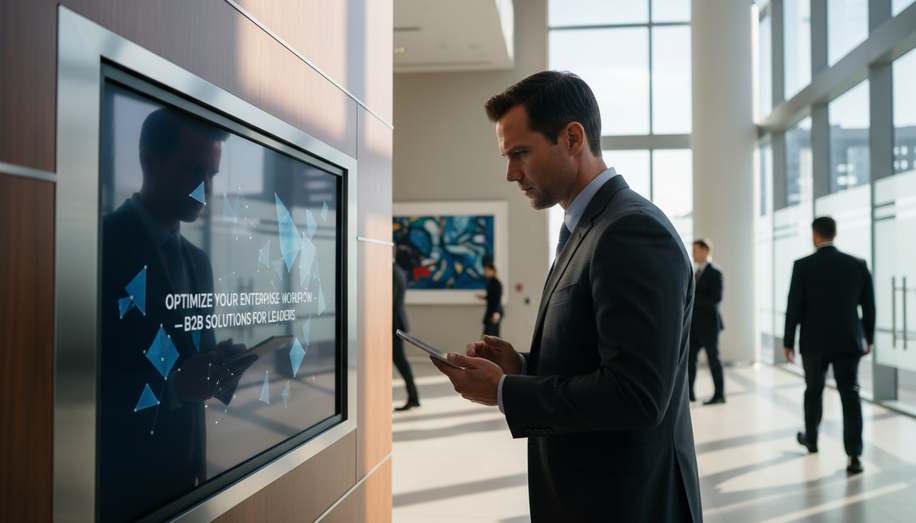

In the bustling corridors of financial districts and along packed commuter routes, out-of-home (OOH) advertising is emerging as a potent weapon for B2B marketers aiming to capture the attention of elusive decision-makers. Far from the scattershot approach of traditional media, strategic OOH placements in business hubs, executive lounges, and key transit paths allow companies to intersect professionals precisely where they work, travel, and think about their next big move. This hyper-targeted tactic not only builds awareness but drives measurable actions, from online searches to qualified leads, challenging the notion that B2B success hinges solely on digital channels.
Business decision-makers lead mobile lives, commuting daily to offices, jetting between meetings, and gathering in high-value spots like airports and professional venues. Unlike consumer audiences stumbling upon ads by chance, these professionals represent concentrated pools of qualified prospects, making OOH an ideal channel for influence. Consider the finance sector in New York or London’s Canary Wharf: billboards towering over major highways catch executives en route to headquarters, embedding brand messages into their morning routines. One HR firm leveraged digital OOH (DOOH) in such areas, activating ads only during peak traffic to ensure exposures reached relevant viewers, slashing waste and amplifying impact.
Indoor “place-based” OOH takes this precision further, infiltrating the daily grind. Ads in office elevators, executive lounges, and vending areas place brands directly in the workspaces of target accounts, fostering familiarity without overt sales pressure. SAP’s campaigns exemplify this, using single-frame storytelling to evoke emotional connections and peer validation—crucial since 67% of B2B buyers prioritize recommendations over pitches, and over 93% shun hard sells. Near company HQs, these placements even boost employee morale while signaling intent to prospects, as media agencies map employee patterns to secure prime spots.
Commuter routes amplify reach exponentially. In tech hubs like San Francisco or Austin, eye-catching billboards along dense thoroughfares ensure repeated visibility during drives to and from work. Succinct messaging and bold graphics are key, as commuters absorb info in seconds. Programmatic DOOH elevates this, enabling real-time tweaks based on time, weather, or audience data—transforming static billboards into dynamic tools. B2B advertisers integrate first-party data and location intelligence to time ads for maximum resonance, shifting OOH from branding play to performance driver.
What sets OOH apart in B2B is its proven lift on behavior. Nielsen data reveals 33% of B2B audiences search for advertisers post-exposure, a testament to its search-triggering power. Mobile tech tracks impressions, views, and CTAs, while retargeting follows viewers online for seamless nurturing. QR codes on transit ads bridge physical and digital, inviting scans for ebooks or webinars—content B2B pros crave amid risk-averse buying cycles. At industry events, “surround sound” OOH reinforces account-based marketing (ABM), filling top-of-funnel gaps to prime bottom-funnel closes.
Cost-effectiveness seals the deal. While consumer OOH chases millions of impressions, B2B prioritizes quality: 50,000 exposures to decision-makers often yield more leads than mass blasts. OOH spending rose 7.7% in Q2 2019 versus prior year, signaling sustained momentum, now supercharged by data-driven DOOH. Critics once dismissed it as unmeasurable, but myths crumble under modern metrics—footfall data, geo-fencing, and attribution prove ROI.
Yet success demands strategy. B2B firms must audit commuter patterns, layer audience insights, and craft narratives that resonate with professional pain points—think efficiency gains or peer-endorsed solutions. Agencies like those partnering with Transit Ads or AdQuick help navigate this, from highway dominance to lounge dominance. For lead generation, pair OOH with ABM: target ideal accounts via HQs and routes, then retarget digitally.
The evidence is clear—OOH isn’t supplementary for B2B; it’s essential. As professionals navigate packed districts and commutes, savvy marketers meet them there, turning ambient moments into opportunities. In a digital-saturated world, this tangible presence cuts through, influencing decisions where they form and fueling pipelines with precision. B2B leaders ignoring it risk ceding ground to rivals already dominating the skyline.