
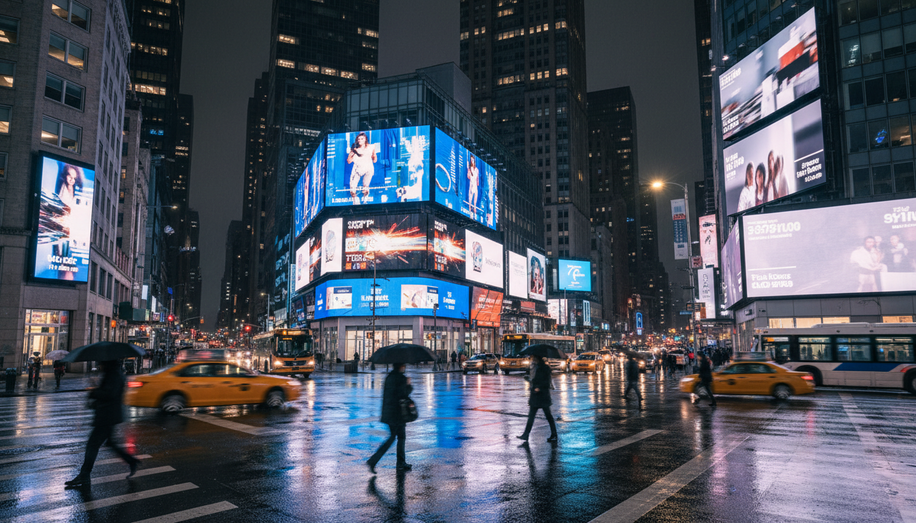

In the fast-paced world of digital out-of-home (DOOH) advertising, where screens flicker in urban landscapes from bustling billboards to gym televisions, content creation demands a precision that marries artistry with science. Unlike static billboards or digital web ads, DOOH content must captivate passersby in mere seconds, accounting for viewing distances that can stretch from intimate bus shelters to distant highway panels, all while navigating the blur of motion and environmental chaos. Creative quality drives 75% of an ad’s effectiveness, making the canvas of these screens a battlefield where legibility, brevity, and visual punch determine victory.
The foundation of compelling DOOH design begins with understanding the audience’s fleeting encounter. Viewers rarely linger; dwell times vary dramatically by venue, from split-second glances at high-speed urban panels to minutes at mall displays or gym screens. For short-dwell environments, creators must strip messaging to essentials: fewer words, larger fonts, and oversized branding that dominates the frame. Heavyweight typefaces, placed prominently at the top, ensure instant recognition even from afar, while high-contrast colors—think bold blacks against vibrant yellows—cut through glare and ambient light. In longer-dwell spots, there’s room to layer in storytelling, but the rule remains: prioritize readability over complexity. Human brains process images 60,000 times faster than text, so high-quality product visuals become the hero, forging immediate brand associations without verbose explanations.
Motion graphics elevate DOOH from passive posters to dynamic lures, but their deployment requires restraint calibrated to context. Simple animations or partial motion on static backgrounds snag attention in low-dwell zones like street-level panels, where full videos might overwhelm and obscure key messages. For extended views, such as bus shelters, embrace looping videos of 6 to 10 seconds that build narrative rhythm without repetition fatigue. Timing is critical; align motion bursts with the ad’s core reveal, ensuring no vital info vanishes mid-frame. Overly frenetic effects risk disorienting viewers hurtling by at 40 miles per hour, so test creatives at simulated distances to confirm they land legibly from 50 to 200 feet away.
Environmental harmony amplifies impact, transforming ads from intrusions into seamless extensions of the surroundings. Match color palettes to the venue’s backdrop—vibrant hues pop against concrete jungles, while softer tones suit upscale retail interiors—to avoid visual clashes that dilute recall. Contextual messaging seals the bond: a coffee ad glowing at dawn on commuter screens evokes warmth, whereas an evening beer spot with frosty condensation taps into wind-down vibes. Dayparting takes this further, dynamically swapping content via programmatic tech to reflect time, weather, or events, like a March Madness tie-in that pulses with game-day energy but expires post-event to maintain freshness.
Branding demands unapologetic generosity in DOOH’s ephemeral arena. Logos aren’t afterthoughts; integrate them boldly into visuals and copy, granting them prime real estate to combat the “blink-and-miss” reality. This counters the medium’s brevity, where consumers catch mere fragments, yet it boosts sales impact nearly twofold when paired with cohesive omnichannel storytelling. Extend this logic to interactivity: QR codes, countdowns, or location-triggered messages bridge screen to smartphone, turning passive views into actions without cluttering the canvas.
Repurposing assets from traditional OOH or digital campaigns accelerates production, but adaptation is non-negotiable. Static prints gain life through subtle animations, yet fonts must scale for DOOH’s pixel densities, and whites avoided to prevent washout under sunlight. Programmatic DOOH adds agility, enabling real-time tweaks for optimal relevance across diverse screen inventories.
Ultimately, the craft of DOOH content thrives on iteration and empathy. Audit venues for dwell time, audience demographics, and sightlines; prototype with motion mocks viewed from vehicles or walkways. Collaborate across creative, media, and tech teams to fuse aesthetics with data-driven targeting. In this canvas of constant motion, where rapid consumption reigns, mastery lies in distilling brand essence into unforgettable glances—legible, lively, and laser-focused on the human eye racing past.