
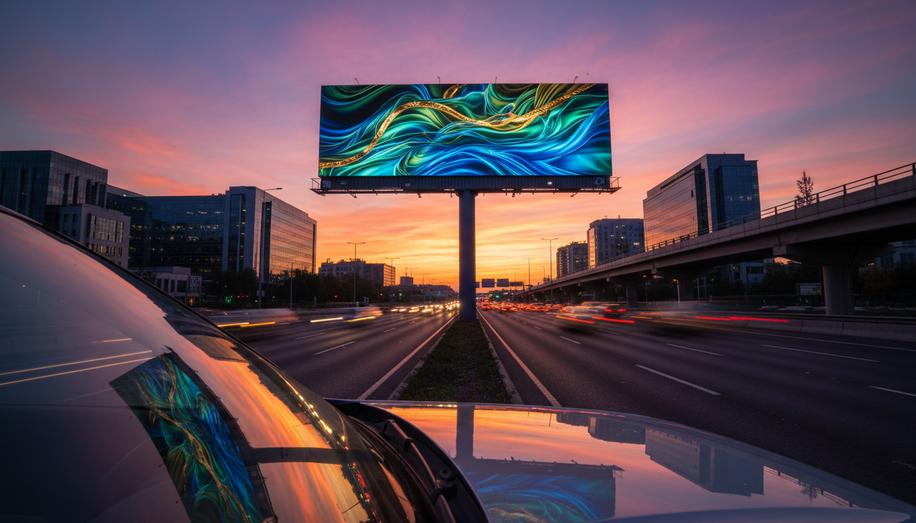

In the high-stakes world of out-of-home advertising, placing a digital billboard is far more than pinning a screen to a promising spot on a map. Strategic optimization hinges on a meticulous evaluation of viewing angles, traffic flow, line of sight, and environmental factors, transforming a static display into a dynamic engagement engine that captures fleeting glances and drives measurable action. Advertisers who master these elements report impressions soaring by up to 30 percent compared to haphazard placements, as data from platforms like Blip Billboards reveals through real-time analytics on traffic patterns and cost per thousand impressions.
Consider traffic flow first, the lifeblood of billboard efficacy. High-traffic corridors—urban arterials, highway interchanges, or bustling transit hubs—deliver the raw volume of eyeballs needed for scale. Yet volume alone falls short; the cadence of movement matters profoundly. Locations where vehicles decelerate, such as intersections or highway exits, afford viewers up to 10 seconds to absorb messaging, enough time for a brand’s core value to register amid the rush. On faster thoroughfares exceeding 45 mph, the window shrinks to mere seconds, demanding ruthless prioritization of bold fonts, high-contrast visuals, and minimal text to pierce the blur of motion. A tech company’s product launch campaign, for instance, targeted train stations and airports with high foot traffic and extended dwell times, yielding spikes in online engagement and pre-orders through precisely timed dynamic content.
Viewing angles emerge as the next critical lever, dictating how universally a billboard commands attention. Optimal placements ensure readability from multiple perspectives, avoiding the pitfalls of skewed sightlines that render half the audience blind. Billboards positioned perpendicular to primary traffic lanes maximize this, offering a full-frontal assault on drivers’ peripheral vision regardless of lane position. In dense urban settings, where multi-directional flow prevails, elevated structures or those angled slightly toward converging roads prevent obstructions from adjacent buildings or overpasses, ensuring equitable exposure. Industry experts at SeeBlindspot emphasize designing for “optimal visibility from all angles and distances,” factoring in traffic speed to calibrate artwork scale—large, uncluttered imagery that snaps into focus even from afar.
Line of sight, often the silent saboteur, demands forensic scrutiny. Obstructions like trees, utility poles, or rival signage can slash visibility by 50 percent, turning prime real estate into wasted inventory. Pre-placement audits, bolstered by tools like Blip’s interactive maps and GPS tracking, quantify clear lines by simulating driver perspectives at varying speeds and distances. For digital formats, this extends to dwell analysis: how long eyes linger before distraction pulls them away. Surveys and focus groups corroborate these metrics, revealing whether a placement motivates action or evaporates into noise. Strategic offsets—positioning boards a short distance from entry points in lobbies or plazas—preserve flow while anchoring sightlines, as Visix’s digital signage playbook illustrates in high-traffic venues.
Environmental factors seal the optimization trifecta, accounting for the unpredictable theater of light, weather, and urban rhythm. Sun glare, a diurnal nemesis, demands screens with anti-reflective coatings and brightness calibration exceeding 5,000 nits for midday punch, while nighttime visibility requires adaptive dimming to combat light pollution without blinding oncoming traffic. Rain-slicked roads or fog-shrouded mornings test resilience; durable enclosures and high-refresh-rate LEDs maintain legibility when static rivals falter. Peak-hour synchronization amplifies this: morning commutes from 7 to 9 a.m. and evening rushes until 7 p.m. align ads with captive audiences, per Blip’s performance dashboards that track impressions hour-by-hour. Seasonal shifts, from leaf-obscured sightlines in fall to snow-glared winters, necessitate agile reallocation, underscoring the value of flexible platforms for real-time swaps.
Data analytics elevates these considerations from art to science. Platforms integrate traffic counts, demographic overlays, and A/B testing to benchmark placements, revealing, for example, that slower intersections outperform high-speed straights by 2.5 times in recall rates. Robinson Outdoor’s ROI frameworks advocate iterative testing—strong calls-to-action in varied environments—to refine messaging, ensuring a billboard not only sees but compels. In one case, mobile LED trucks navigating event vicinities boosted brand awareness 30 percent over fixed installs, blending placement fluidity with targeted routing.
Ultimately, peak visibility blooms from holistic synthesis: a billboard that anticipates the driver’s gaze, anticipates the light’s caprice, and rides the traffic’s pulse. Advertisers wielding these tools—data-driven audits, angle-optimized positioning, and environmentally resilient tech—don’t just illuminate screens; they ignite consumer connections in an era where every second counts. As cities densify and commutes evolve, those who treat placement as strategy will dominate the skyline, turning infrastructure into influence.