
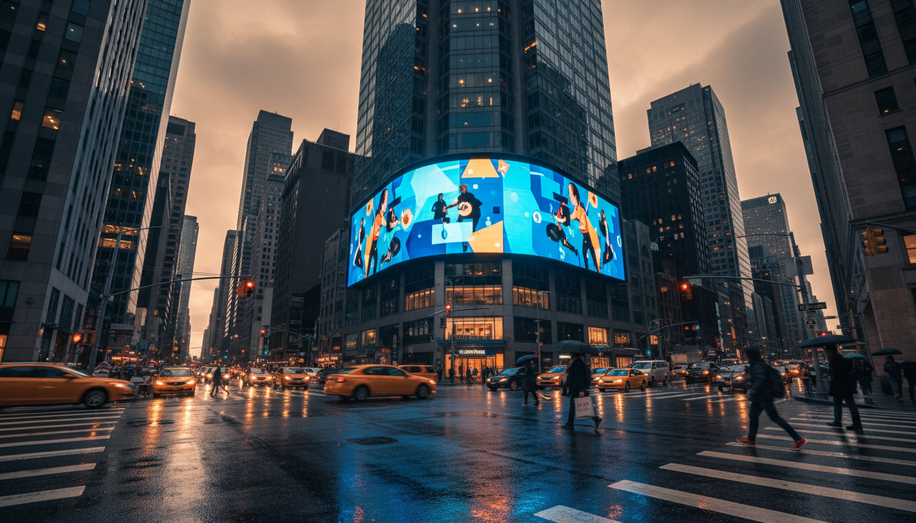

In the competitive landscape of out-of-home (OOH) advertising, selecting the optimal site for ad placements has evolved from intuition and historical traffic counts to a sophisticated, data-driven science. Advanced analytics, powered by location intelligence, enable media buyers to pinpoint physical locations that maximize audience reach and relevance, transforming campaigns from broad blasts into precision strikes.
At the heart of this shift lies location intelligence, which integrates movement data, audience data, and spatial data to decode consumer behavior in real time. Movement data, drawn from anonymized mobile location signals, maps daily journeys, commutes, and visits to points of interest, revealing high-traffic corridors where visibility peaks—such as rush-hour highways or bustling retail hubs. For instance, commuter traffic analytics provide granular details on peak travel hours, vehicle counts, dwell times at specific billboards, and origin-destination patterns, overlaying these with demographic profiles like age, income, and lifestyle interests. This allows planners to prioritize sites not just for volume, but for alignment with target audiences, ensuring ads intercept consumers at moments of high receptivity.
Audience data takes this further by layering demographic and behavioral insights onto mobility patterns. By combining digital identifiers with interests, brand affinities, purchase intent, and online behaviors, advertisers create precise segments—think luxury car buyers clustering near upscale shopping districts or fitness enthusiasts around gyms. Tools like audience scoring assign index values to compare target group concentrations around potential OOH sites, quantifying penetration and exposure rates to guide selections. In one practical application, transactional data from partners such as Coles360 or Westpac DataX identifies category-specific buyers, enabling placements that drive a reported 2.3x sales uplift compared to non-targeted efforts. Privacy remains paramount; all data must be consent-based and anonymized to build consumer trust while complying with regulations.
Spatial data, meanwhile, contextualizes these insights by tying offline environments to ad moments. It links geo-spatial information to weather conditions, census demographics, neighborhood indicators, and nearby points of interest, ensuring placements resonate locally—for example, tailoring airline promotions with weather-triggered messaging at urban airports. Advanced mapping tools visualize these layers, allowing buyers to compare sites side-by-side: one billboard might boast high footfall but low relevance to young professionals, while another excels in audience density for that demographic. Platforms like AdQuick exemplify this by selecting OOH units based on zip code insights, audience data, and availability, delivering strategic inventory that guarantees impact.
This data triad empowers best practices in site selection, starting with effective segmentation. Media buyers analyze movement patterns and intent signals to map audience concentrations, avoiding underperforming “white spots” and favoring high-impact zones. Real-time optimization follows: as campaigns launch, footfall attribution and mobile geofencing track post-exposure behaviors, such as store visits or web traffic, enabling swift adjustments. Geofencing draws virtual boundaries around sites to capture device IDs, then measures conversions like app downloads or purchases, closing the loop from impression to action. JCDecaux, for instance, pioneers “mass personalization” in OOH by blending geo-fencing with omnichannel retargeting, extending physical exposure into digital follow-ups without compromising privacy.
The payoff is measurable ROI. Dashboard tools monitor daily visits, return frequencies, and postcode-level catchment areas, informing not just current performance but future planning. StreetMetrics and similar platforms enhance this with robust attribution, proving data-driven OOH boosts targeting, personalization, and creativity while lifting overall returns. Effortless Outdoor Media’s strategies, for example, layer commuter data with performance tracking to scale regionally, ensuring every dollar yields verifiable results—whether building awareness or driving foot traffic.
Yet challenges persist. Data quality varies, and integrating disparate sources demands robust platforms. Buyers must navigate privacy laws like GDPR while scaling insights across markets. Still, the consensus is clear: forward-thinking agencies are ditching guesswork for certainty. Adsquare’s location intelligence, for one, refines creative optimization by geo-contextualizing content, while Adnoxy emphasizes audience segmentation and conversion tracking as core to success.
As OOH merges with digital ecosystems, data-driven site selection stands as the linchpin. By harnessing movement, audience, and spatial analytics, media buyers don’t just place ads—they position brands at the intersection of consumer lives, amplifying reach, relevance, and resonance in an increasingly fragmented media world. This approach not only elevates campaign effectiveness but redefines OOH as a cornerstone of modern marketing precision.