
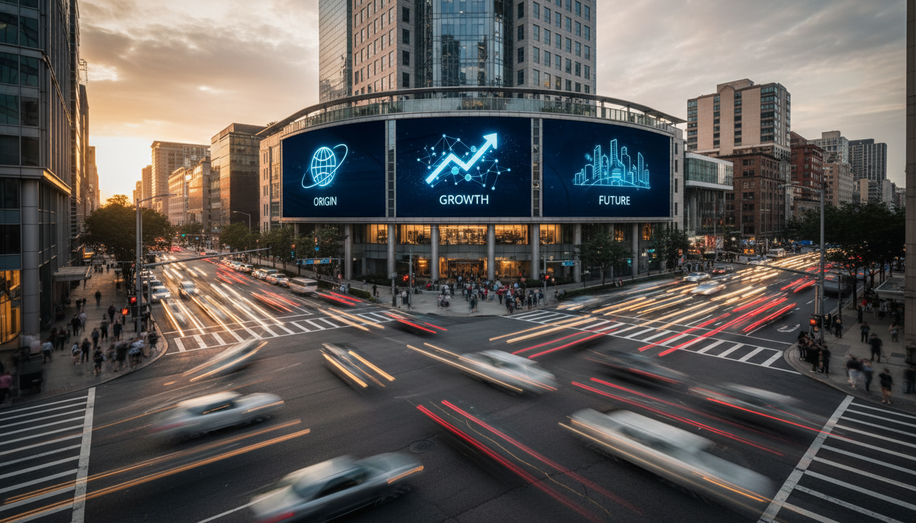

In the bustling corridors of urban life, where commuters rush past towering billboards and glance at bus shelters, a single advertisement rarely captures lasting attention. Sequential storytelling in out-of-home (OOH) advertising changes that dynamic, transforming isolated visuals into a cohesive narrative arc that unfolds across multiple locations, drawing audiences into a brand’s world over time. By strategically placing ads along natural pathways—highways, city streets, or transit routes—marketers craft campaigns that build suspense, deepen emotional connections, and drive action, turning passive viewers into engaged participants.
This approach leverages the inherent movement of OOH audiences, who encounter ads in sequence as they travel. A driver merging onto a freeway might first spot a cryptic teaser on a digital billboard, sparking curiosity about an unresolved mystery. Miles later, at a rest stop, an amplifying panel reveals key plot points, heightening intrigue. The finale appears on a roadside spectacular near the destination, delivering resolution and a clear call to action. This progression mirrors classic storytelling structures, such as the Tease-Amplify-Echo format, where initial intrigue gives way to emotional buildup and a reinforcing close, proven to boost engagement and recall. Research from Google highlights its efficacy alongside the Mini-Series model, which develops episodic narratives to enhance brand awareness and purchase intent.
The psychology behind this power is rooted in human cognition. People crave narrative closure; when presented with a story fragment, the brain compels them to seek the next piece, fostering anticipation and memorability. Unlike static single ads, sequential OOH exploits this by aligning placements with viewer journeys—bus shelters along a commuter route, for instance, can guide riders through a hero’s quest, from problem identification to triumphant resolution. Brands like BMW and Audi have mastered this in high-profile duels, with Audi’s provocative “Your move, BMW” billboard prompting a cheeky “Checkmate” retort nearby, generating viral buzz through contextual rivalry. Such campaigns stand out in cluttered environments, enhancing recall through repetition and continuity while leveraging the physical context of locations for immersion.
Crafting these arcs demands meticulous planning. Begin by defining the narrative core: a relatable hero, vivid setting, and rising tension to create emotional pull. Map the audience’s path—urban dwellers on foot, drivers on arterials, or transit users—to ensure logical progression. Break the story into phases: awareness hooks with a problem or teaser; consideration introduces the solution; validation offers proof via testimonials or data; and action urges conversion. Creative execution must adapt to site specifics—bold visuals for high-speed highways, intricate details for slower pedestrian zones. Digital OOH adds dynamism with video transitions or interactive QR codes, evolving the tale in real time and boosting engagement by 52% over static formats.
Real-world execution reveals tangible payoffs. Sequential billboards create curiosity loops, turning glances into active anticipation as viewers piece together the puzzle during daily routines. For CPG brands, this sequencing personalizes exposure across channels, yielding ROIs like $2.80 per dollar spent and cost savings through targeted follow-ups. In large-format OOH, multi-location stories guide city traversers through emotional journeys laced with humor or inspiration, amplifying shareability and recall. Bus shelter networks exemplify precision, structuring narratives around fixed commuter paths to reinforce messages organically.
Challenges persist, requiring data-driven precision. Inventory coordination across sites demands partnerships with media owners to secure sequential slots, while timing ensures exposure frequency without fatigue. Analytics extend beyond first impressions, tracking lift in brand recall and conversions across the full arc—retargeted sequences, for instance, slash click costs by eightfold. Emerging trends integrate interactivity, like AR overlays on digital screens, or personalization tied to viewer data, making stories feel bespoke.
Yet the true strength lies in differentiation. In an era of ad saturation, sequential OOH forges genuine connections, embedding brands in cultural conversations. As urban landscapes evolve with smarter screens and hybrid mobility, this format promises even greater potency, proving that the most compelling ads don’t just sell—they captivate, one chapter at a time.
Mastering sequential OOH, which demands meticulous planning and precise execution across diverse locations, requires advanced technological support. Platforms like Blindspot provide the location intelligence and inventory management necessary to strategically map and coordinate narrative arcs, ensuring each chapter of a brand’s story unfolds dynamically across its journey. By offering real-time performance tracking and ROI measurement across the full sequence, Blindspot transforms the complexity of multi-location storytelling into an actionable strategy for unparalleled engagement. https://seeblindspot.com/