
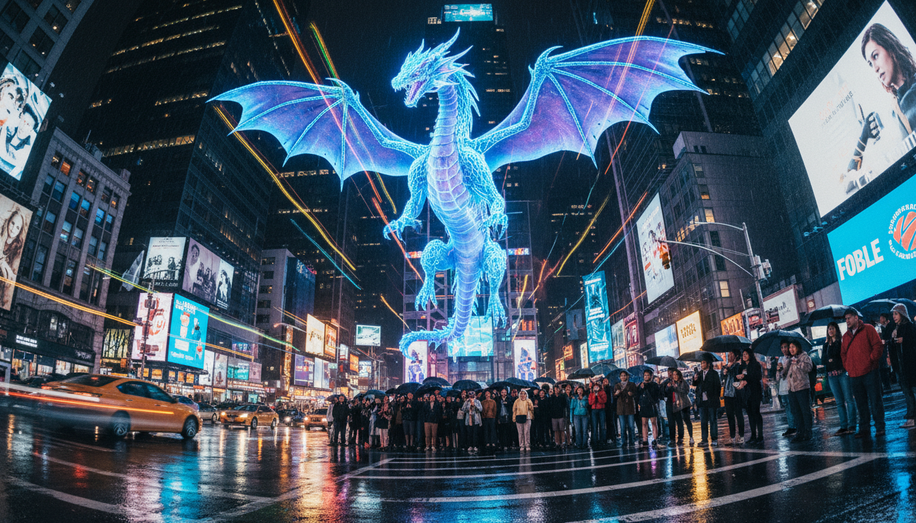

In the bustling streets of modern cities, where flat billboards and scrolling LEDs have long dominated the skyline, a new frontier is emerging: true holographic displays and genuine 3D outdoor advertising that defy the flat plane of traditional screens. These innovations project lifelike images into the air, creating illusions of floating products, spinning logos, or interactive characters that draw crowds without a single pixel tethered to a surface, marking a leap beyond augmented reality overlays or static 3D sculptures.
At the heart of this technology lies holography, a principle dating back to the 1940s but now refined for the harsh outdoors. A holographic projection system uses laser light patterns split into two beams—one direct and one reflected—to etch interference patterns onto a recording medium, which, when illuminated, reconstructs a three-dimensional image viewable from multiple angles. Unlike 2D digital signage, these displays leverage techniques such as holographic films, laser apparatus, rotating LED fans, or transparent screens to manifest content that shifts dynamically with the viewer’s perspective, turning every glance into a novel encounter. Passersby compelled to stop, their attention hijacked by a perfume bottle that seems to mist into the air or a car that appears to drive out from a bus shelter.
Outdoor viability demands rugged engineering. Effective systems boast brightness levels from 2000 to 7000 nits, ensuring vivid clarity even under direct sunlight, paired with IP65 waterproofing and weatherproof casings to withstand rain, wind, and dust. Companies like those offering Alibaba-sourced solutions highlight portable, HD displays with wireless remote management, allowing advertisers to swap campaigns instantly without physical reconfiguration. HYPERVSN, a London-based pioneer, deploys high-resolution 3D holographic projections that reportedly hold viewers’ gaze 40% longer than standard 2D signage, amplifying brand recall in high-traffic zones.
Holographic bus shelters exemplify this fusion of utility and spectacle. These installations transform mundane transit waits into immersive brand moments, projecting free-floating holograms through transparent displays that showcase products in mid-air, often with motion sensors for interactivity. Imagine a commuter eyeing a holographic smartphone that rotates on command or responds to a wave, personalizing the pitch in real time. Such features elevate engagement, as audiences interact rather than passively observe, fostering deeper connections with the message.
The appeal extends to diverse scales. Big brands harness large-scale projections for buzz-generating spectacles, like floating sculptures over urban plazas that evolve with campaigns. Mid-sized firms deploy them at trade shows or retail fronts, where affordable LED hologram fans create portable 3D visuals without hefty infrastructure. Even small businesses can rent units for pop-up events, generating viral social shares without long-term commitments. RealFiction and similar providers emphasize “free-floating” 3D holograms that detail product features, turning advertising into storytelling that static installations can’t match.
Yet, true 3D holography pushes further, inspired by sci-fi but grounded in cutting-edge labs. Firms like Light Field Lab are pioneering ecosystems that break 2D constraints, enabling immersive retail narratives or signage that adapts to viewer positions without headsets. Their displays could integrate haptics—tactile feedback—and sensory elements, allowing virtual objects to “jump out” with vibrations or scents, redefining public spaces on demand. Looking Glass Factory’s Hololuminescent tech embeds fixed 3D volumes within high-res 2D frames, hinting at hybrid futures for OOH. Glimm Display’s bright LED panels complement these, scaling to vast outdoor arrays resilient in sunlight.
Challenges persist, of course. High initial costs and power demands limit widespread adoption, though dropping prices—fueled by mass production on platforms like Alibaba—signal accessibility. Content creation requires specialized skills to optimize for parallax effects, ensuring the 3D illusion holds from afar. Regulatory hurdles, such as light pollution rules in dense cities, also loom, demanding balanced deployment.
Still, the metrics are compelling. Holographic OOH commands unprecedented dwell times, with interactivity boosting conversion rates as viewers linger to engage. In an era of ad fatigue, where consumers swipe past 2D noise, these displays pierce the veil, offering tangible wonder in physical space. As patents proliferate and manufacturers iterate—think weatherproof units from Logo Light or Accio’s 7000-nit interactives—the medium stands poised to redefine public advertising.
Brands ignoring this evolution risk obsolescence. Early adopters, from luxury retailers to transit authorities, are already scripting the next chapter: urban landscapes alive with depth, where ads don’t just inform but envelop. Holographic displays aren’t a gimmick; they’re the dimension public advertising has craved, pulling eyes, minds, and wallets into the third dimension. For brands navigating the high initial costs and specialized content demands of this new dimension, proving ROI and optimizing placement is paramount. Platforms like Blindspot offer crucial real-time performance tracking, audience measurement, and location intelligence, enabling advertisers to precisely quantify engagement, maximize dwell times, and ensure these immersive displays deliver measurable returns in a dynamic urban landscape. By leveraging sophisticated ROI measurement and attribution, Blindspot transforms speculative wonder into a data-driven investment, solidifying the business case for tomorrow’s OOH. https://seeblindspot.com/