
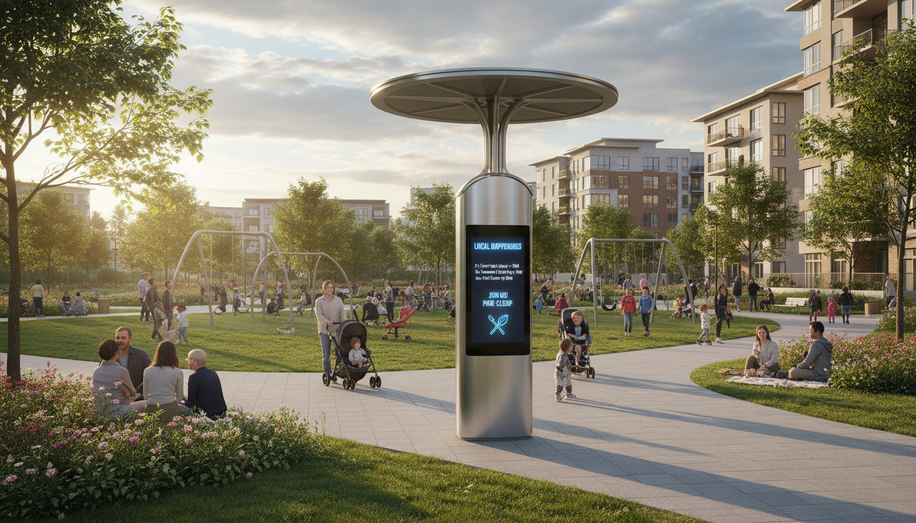

Out-of-home advertising has evolved far beyond the simple task of capturing passing eyes on a billboard. In 2026, hyperlocal OOH campaigns represent a sophisticated approach to community engagement that goes deeper than traditional foot traffic metrics, allowing brands to forge meaningful connections with neighborhoods while driving precise, targeted consumer action.
Hyperlocal OOH advertising refers to the practice of designing advertisements with specific geographic areas, neighborhoods, or individual locations in mind. This shift represents a fundamental change in how marketers think about outdoor media. Rather than casting a wide net across entire cities or regions, brands now can focus their resources on areas where they’re most likely to yield results, creating a more cost-efficient and targeted approach. The appeal lies in relevance and precision—by delivering content to consumers in specific locations, businesses capture attention more effectively while building a sense of community and belonging.
The mechanics of this strategy rely on two critical factors: precise geo-targeting technology and locally resonant creative content. Geofencing technology allows businesses to define virtual boundaries around specific geographic areas, triggering location-based actions such as advertisements or notifications when mobile devices enter or exit these zones. This capability enables brands to target events, festivals, or conventions related to their industry, reaching highly engaged audiences already interested in their products or services. Meanwhile, dynamic creative optimization allows advertisers to automatically switch messaging depending on the time of day, weather conditions, or foot traffic patterns, ensuring that community members see ads that speak directly to their immediate circumstances and needs.
What distinguishes contemporary hyperlocal OOH from earlier iterations is the emphasis on community connection rather than mere transactional engagement. When individuals encounter advertisements that resonate with their local culture or events, they’re more likely to share them on social media, discuss them with friends and family, and remember them. This creates a multiplier effect, extending campaign reach through organic community conversation. Brands can tailor their messaging to mention local landmarks, community events, or neighborhood-specific interests, creating ad content that feels authentically rooted in the places where it appears.
Retailers and service providers have discovered that hyperlocal campaigns generate particularly strong consumer responses. Billboards and other OOH strategies generate consumer responses 38 to 86 percent of the time, and when combined with location-based mobile technologies, these figures improve further. Pay-per-click advertising targeting local search terms can be tailored to specific budgets, with expenses based on the number of consumers who click, making the approach accessible to businesses of various sizes.
The implementation of hyperlocal OOH campaigns requires strategic planning. Brands must first define their target location using geolocation tools to set specific radii or areas for their campaigns. They should then select platforms offering hyperlocal targeting options, such as Google Ads, Facebook Ads, or programmatic networks, while crafting localized messages that resonate with the specific audience. Setting time-based parameters increases relevance—scheduling ads to run during lunch hours for restaurants or peak shopping times for retail, for instance—ensures that messaging reaches audiences when they’re most receptive. Continuous monitoring and optimization of campaign performance allows brands to adjust radius, timing, and messaging based on real engagement data.
For businesses seeking to integrate mobile technologies into their hyperlocal campaigns, the possibilities expand considerably. Modern OOH advertising leverages mobile location technologies to serve relevant ads in high-traffic local areas, reaching consumers not just in a certain town, but on a particular block. Digital out-of-home (DOOH) campaigns can transform traditional advertising into interactive experiences that increase local traffic and sales.
The future of OOH advertising increasingly centers on this hyperlocal, community-focused approach. As consumers continue to value local businesses and community connections, brands that invest in genuine neighborhood engagement—rather than pursuing only immediate foot traffic—are positioned to build lasting customer loyalty and authentic community presence. This evolution reflects a maturing understanding that the most effective advertising speaks not to broad audiences, but to the specific people in the specific places they call home.