
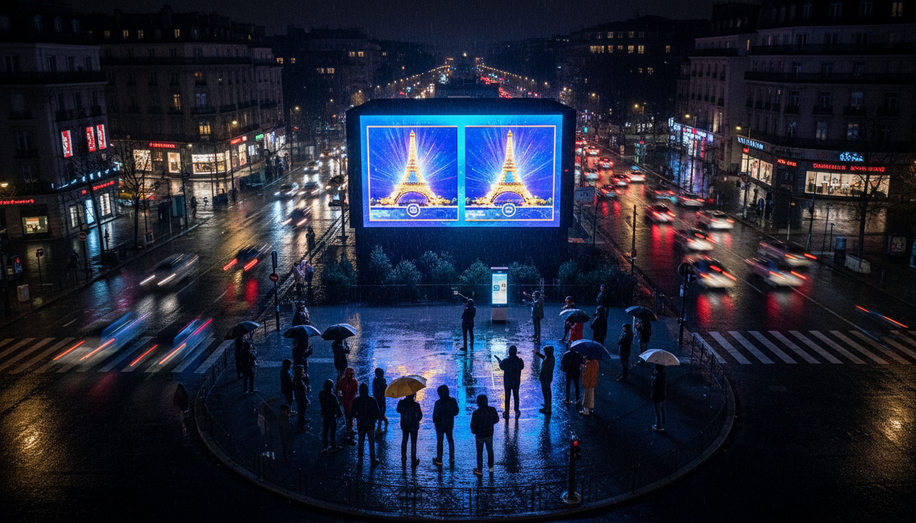

In the bustling streets of New York City, passersby paused mid-stride to scan QR codes on LinkNYC screens, virtually digging for white truffles in a Shake Shack campaign that turned a simple billboard into a citywide treasure hunt. This “White Truffle Hunt” didn’t just advertise a new menu item; it transformed advertising into play, drawing crowds to strategic locations and sparking social media buzz as participants shared their virtual hauls. Such gamified out-of-home (OOH) experiences mark a shift from passive viewing to active participation, where brands leverage interactive challenges to forge deeper connections with audiences overwhelmed by digital noise.
Gamification in OOH fuses game mechanics—think challenges, rewards, leaderboards, and competition—with physical displays like digital billboards, posters, and screens. Traditional static ads rely on visibility alone, but gamified versions demand engagement, turning commuters into players. By incorporating touchscreens, motion sensors, QR codes, or augmented reality (AR), these campaigns create “phygital” moments that bridge offline environments and mobile devices. A financial literacy drive by RCBC in Bonifacio Global City, Philippines, exemplifies this: an interactive digital OOH ad invited users to test their knowledge through quizzes, dispensing prizes like casino dinner vouchers to winners. The result? Passersby lingered longer, their curiosity piqued by immediate feedback and the thrill of potential victory.
The psychology behind this approach is potent. Humans crave achievement and anticipation, and gamified ads tap directly into that wiring. Interactive elements provide instant responsiveness—a swipe, a scan, a gesture yields results—reinforcing participation and building emotional ties to the brand. Studies and campaign data underscore the impact: interactive OOH outperforms static formats in engagement time, with users spending minutes rather than seconds. Brands like those using motion-based games, where hand waves “catch” virtual objects on a sensor-equipped display, report heightened recall because fun experiences embed deeper in memory. In one setup, a billboard puzzle unlocks discount codes only after solving, driving foot traffic while collecting user data for refinement.
Real-world executions amplify these benefits. Citywide QR hunts scatter codes across neighborhoods, prompting exploration and local partnerships while funneling players to apps or stores. AR scavenger hunts overlay virtual items on urban landscapes, discoverable via smartphones, blending the physical world with digital quests. Even simpler mechanics, like leaderboards on digital screens displaying top scores, foster competition and repeat visits. Shake Shack’s hunt not only boosted product awareness but extended reach online as players posted victories, creating user-generated amplification. Similarly, RCBC’s quiz fostered long-term loyalty by associating the brand with rewarding education, turning one-off interactions into emotional bonds.
Beyond buzz, gamified OOH delivers measurable returns. It drives action: “scan to win” prompts store visits or app downloads, with trackable metrics linking plays to sales. Enhanced brand recall keeps logos top-of-mind amid distractions, while data from interactions—participation rates, demographics, behaviors—enables precise targeting. For younger demographics, who shun passive ads, these playful formats resonate broadly, building loyalty through positive associations. Marketers gain efficiency too; campaigns can adapt in real-time, syncing with social media or inventory updates for omnichannel synergy.
Implementing gamification requires strategic choices. Start with the platform: interactive digital billboards for touch or motion, QR/NFC on static assets for mobile links, or AR for immersion. Keep games simple—quick quizzes or swipes avoid frustration—while layering in rewards like discounts or exclusives. Promote via social teasers to build anticipation, ensuring the ad becomes a destination. Challenges must balance fun with branding; overly complex mechanics deter, but the right incentives naturally spur shares and advocacy.
Critics might question scalability in budget-constrained markets, yet the versatility shines: from high-tech urban screens to low-cost QR hunts in suburbs. As technology evolves—AI for personalized challenges, seamless smartphone integration—gamified OOH promises even greater potency. Brands ignoring this risk fading into the background, while pioneers like Shake Shack and RCBC demonstrate how play redefines visibility.
Ultimately, gamification outdoors doesn’t just capture eyes; it ignites participation, turning fleeting glances into lasting impressions. In a world where attention is the ultimate currency, these interactive campaigns prove that the most effective ads are the ones people can’t resist joining. By making OOH a playground, brands don’t advertise—they invite, reward, and win loyalty one playful interaction at a time.