
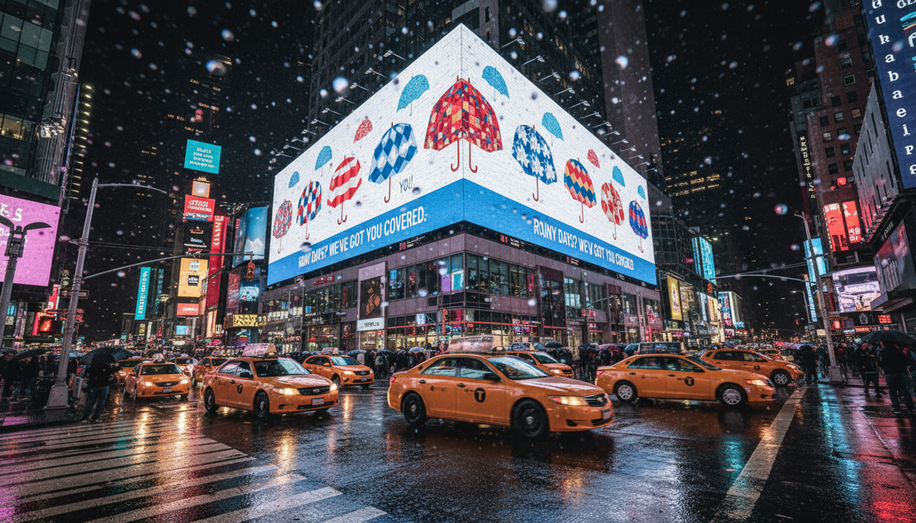

The digital out-of-home advertising landscape has undergone a fundamental transformation with the rise of dynamic content strategies that leverage real-time data to deliver hyper-relevant messaging across screens. Rather than displaying static advertisements for the duration of a campaign, modern digital billboards and screens now adapt instantly to changing conditions, audience contexts, and external triggers, fundamentally reshaping how brands connect with consumers in physical spaces.
At its core, dynamic DOOH content uses data to create more impactful and relevant experiences by changing what appears on screen based on preset conditions or triggers. A restaurant, for example, can promote breakfast menus in the morning and pivot to dinner specials by evening on the same physical screen—something entirely impossible with traditional print billboards. This flexibility allows advertisers to maximize the value of their media inventory while ensuring their messaging remains contextually appropriate throughout the day.
The effectiveness of dynamic approaches is supported by compelling research. Full-motion DOOH campaigns deliver impact 2.5 times greater than static displays, offering emotional experiences comparable to television advertising at a fraction of the cost. Furthermore, DOOH screens achieve a 2.2 times recall advantage over traditional billboards, driven largely by these dynamic capabilities. More impressively, research demonstrates that dynamic campaigns can boost sales and advertisement recall by up to 80%, with some networks reporting retail sales lifts exceeding 10 percent for high-ticket products.
The technological infrastructure enabling these capabilities has become increasingly sophisticated. HTML5 media, for instance, allows audience data to inform real-time changes to campaign text, images, and animation based on contextual triggers. Programmatic DOOH technology, when combined with digital inventory, enables real-time campaign executions capable of generating thousands of unique creative renderings, each tailored to specific conditions or moments. Multi-screen synchronization further amplifies impact, allowing brands to coordinate messaging across multiple displays simultaneously, as demonstrated by the Times Square takeover for Harry Potter and the Cursed Child.
The range of available triggers is essentially limitless. Weather data represents one of the most intuitive applications—a hot chocolate advertisement for Starbucks might appear during cold, rainy conditions, shifting to an iced coffee promotion the moment the sun emerges. Sports data enables real-time score updates and stat integration into promotional messaging, while location-based triggers can calculate distance to stores or destinations. Time-based triggers power countdown clocks and urgency-driven messaging, as evidenced by concert tour campaigns that featured live countdowns to show dates with flashing alerts when tickets neared sellout, driving significant last-minute sales spikes.
Interactive capabilities extend dynamic DOOH beyond passive viewing. Touchscreen elements, QR codes, social media integration, and augmented reality experiences transform billboards into engagement platforms rather than one-way communication channels. Coca-Cola’s Share a Coke campaign exemplified this potential, displaying personalized names on digital billboards and creating shareable moments that extended the campaign’s reach far beyond the physical location.
Successful dynamic DOOH deployment requires strategic thinking about data sources and creative templates. Marketers must establish clear decision trees defining which creative variations appear under specific conditions, then continuously test and optimize these variations using A/B and multivariate testing methodologies. Real-time engagement data collection during campaign flights enables cross-referencing to understand which variations resonate most effectively with target audiences.
The convergence of sophisticated data integration, flexible technical infrastructure, and proven performance metrics has made dynamic DOOH an increasingly essential component of modern advertising strategies. By ensuring brand messages remain relevant, timely, and compelling in response to real-world conditions, dynamic content strategies deliver dramatically improved effectiveness compared to their static predecessors. For advertisers willing to embrace these technologies, the opportunity to reach consumers with precision-targeted, contextually appropriate messaging at scale represents a paradigm shift in out-of-home advertising effectiveness.