
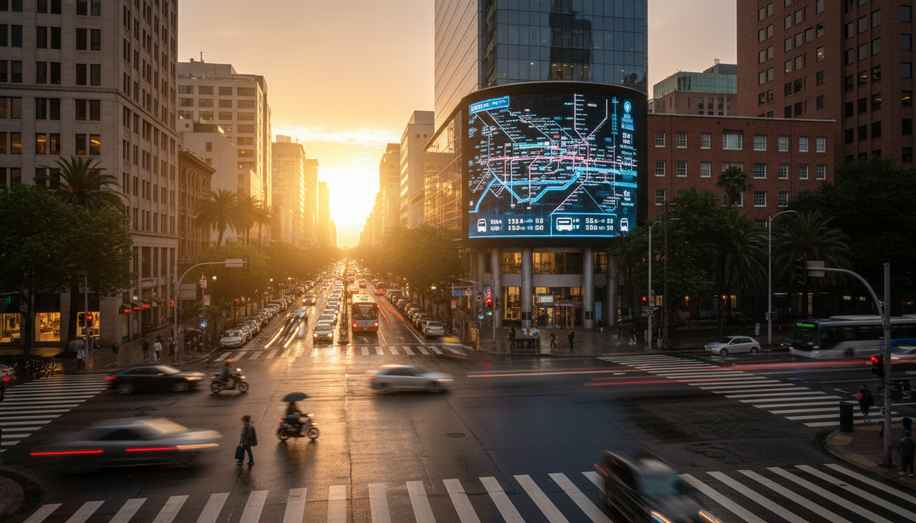

In the bustling heart of a city intersection, a digital billboard flickers to life, its message shifting seamlessly from a sunny beach promotion to a steaming hot coffee ad as rain begins to patter down. This is no coincidence but the power of dynamic creative optimization (DCO) in digital out-of-home (DOOH) advertising, where screens respond instantly to real-world data like weather, traffic, time of day, and inventory levels to deliver hyper-relevant content. What was once a static medium has evolved into a living canvas, transforming passive glances into active engagements and redefining out-of-home as a pinnacle of contextual precision.
At its core, DCO leverages programmatic technology to update ad creatives in real time based on predefined triggers and live signals. Advertisers start with a master creative—a high-quality video or image embodying the brand’s core message—which is then modularized into interchangeable elements like headlines, images, and calls to action. These templates pull from data streams to assemble the optimal variation for each moment. For instance, during rush hour gridlock, a ride-sharing service might display a “Stuck in traffic? Get picked up now” message with live ETA estimates, while easing congestion prompts a general brand awareness spot. Platforms integrate inputs such as audience behavior, environmental conditions, location, and even sports scores or current events, ensuring the ad resonates exactly when and where it matters most.
Weather emerges as one of the most potent triggers, with studies showing contextually matched content boosting brain response by 32% over generic ads. Imagine a frozen yogurt chain whose DOOH screens near shopping districts swap icy treat visuals for warm soup promotions when temperatures drop below 50 degrees Fahrenheit, or a retailer flashing “Beat the heat—20% off AC units” amid a heatwave. This isn’t guesswork; real-time APIs feed meteorological data directly into the system, automating swaps without human intervention. Similarly, time-of-day optimization capitalizes on daily rhythms: morning commuters see productivity apps or breakfast deals, while evening screens target nightlife or delivery services, aligning with viewer mindset for up to 40% higher engagement.
Traffic data adds another layer of sophistication, turning congestion into opportunity. In high-traffic zones, ads can highlight nearby alternatives—think quick-service restaurants for delayed drivers or fuel station discounts during peak snarls. Inventory levels provide a supply-chain edge; a grocery chain might promote surplus avocados on screens near stores when stock peaks, preventing waste while driving foot traffic. Broader signals like audience demographics, detected via anonymized device data or computer vision, further personalize: family-oriented content for school-run hours, professional pitches for business districts.
The mechanics rely on a seamless ecosystem. Programmatic DOOH platforms like those from Perion or Vistar enable marketers to set targeting criteria upfront—say, “Show winter gear if temperature 50 mph”—then let algorithms handle the rest. Real-time A/B and multivariate testing runs in the background, cross-referencing engagement metrics such as dwell time or impressions to refine performance mid-campaign. Underperforming creatives swap out automatically, budgets shift to high-impact regions, and even reactions to live events like rain or game scores adjust on the fly. This continuous optimization streamlines production, slashing the need for myriad static assets and accelerating time-to-market.
The results speak volumes. Research from Clear Channel UK indicates that contextually relevant DOOH messaging lifts effectiveness by 17% on average, while Analytic Partners found dynamic creatives deliver 2.5 times higher returns on investment. Campaigns using DCO report efficiency gains through precision targeting, with higher engagement stemming from that “just for me” feel. A GMC Sierra campaign exemplifies this: a single master asset morphed into tailored versions across DOOH, social, and CTV, adapting to local weather or events for cohesive storytelling. As personalization surges across advertising, DCO positions DOOH not as a blunt hammer but a scalpel, cutting through ad fatigue.
Challenges persist, of course. Data privacy regulations demand careful handling of signals, favoring aggregated, anonymized inputs over personal tracking. Integration across fragmented DOOH networks requires robust platforms, and creative teams must design flexible masters that scale across screen sizes and placements. Yet, as AI automates more—building infinite variations from first-party data or real-world triggers—these hurdles shrink.
Looking ahead, DCO heralds a future where DOOH anticipates needs before they’re voiced. Picture screens tallying local inventory in real time, promoting flash sales on overstocked items, or syncing with traffic apps to ease urban flow with timely diversions. For advertisers, it’s about mastering resonance: not shouting louder, but speaking directly to the moment. In an era of fleeting attention, this real-time alchemy turns screens into silent salespeople, proving that relevance isn’t just king—it’s the entire kingdom.