
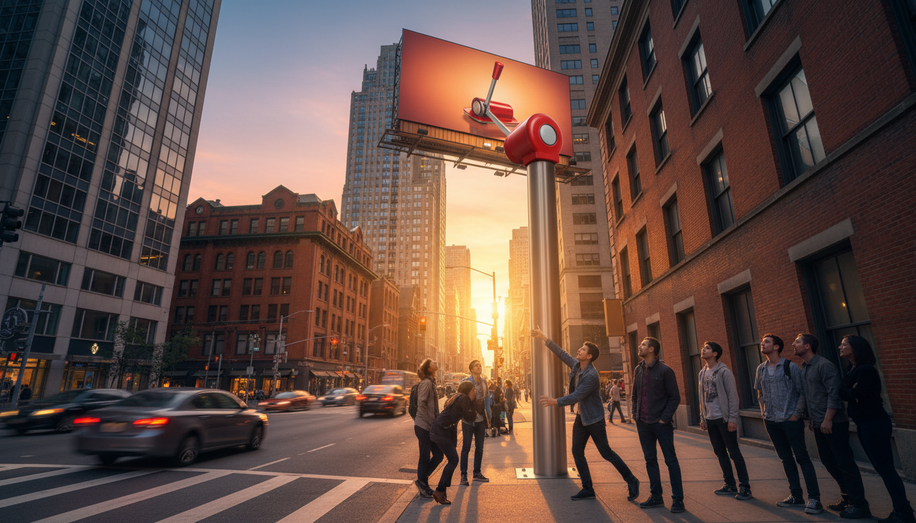

In the bustling streets where traditional billboards once silently commanded attention, a quiet revolution is underway. Static out-of-home (OOH) advertising, long dismissed as a passive medium, is evolving through clever integrations of physical prompts and low-tech interactivity that demand real-world engagement. These innovations prove that even without glowing screens or embedded sensors, a simple call to action can transform a fleeting glance into a memorable interaction, bridging the gap between observer and participant.
Consider the power of the QR code, a staple in modern OOH that turns a static poster into a portal for personalization. Coca-Cola’s interactive billboard campaign invited passersby to scan a code and generate custom bottle labels on their phones, instantly downloadable or shareable on social media. The reward was immediate and personal—a digital keepsake that extended the brand’s reach far beyond the street corner. This approach works because it pairs a bold visual hook with a frictionless payoff, encouraging scans in high-traffic zones where curiosity peaks. Similarly, Tata Coffee Gold’s immersive installation in New Delhi used a QR code to let users input their name and selfie, generating AI-powered latte art they could save and pair with a complimentary hot cup. The static elements—a 3D anamorphic screen depicting beans roasting—drew crowds, but the physical tasting sealed the sensory memory.
Beyond digital bridges, kinetic and tactile elements invite hands-on participation, making static OOH feel alive. KitKat’s touch-activated billboard took its “Have a break, have a KitKat” slogan literally, installing vibration panels that delivered free massages to anyone who pressed against them. Passersby didn’t just see the ad; they felt it, snapping photos to share the unexpected delight. This tactile twist thrives in pedestrian-heavy areas, where the physical sensation creates shareable moments without relying on apps or electricity. Kraft Heinz celebrated the Shard’s 10th birthday with a towering static display that incorporated a QR code linking to an AR filter, projecting a giant head onto the real world via Instagram. Users shared their augmented selfies, amplifying the campaign organically across social feeds.
Strategic placement and timely triggers amplify these interactions, syncing static creatives with real-world rhythms. QR hunts or polls in event zones, like match days or festivals, turn billboards into participatory games, where each scan or vote co-creates the brand story. High-footfall spots near retail or social hubs maximize dwell time, as seen in campaigns blending weather data prompts—imagine a static ad offering coupons only “activated” by a sunny day, directing eyes to a nearby store. Jack in the Box drove 1.3 million customers using static and video OOH with clear directional calls to action, placed at indoor and outdoor venues to guide foot traffic seamlessly.
These tactics succeed by keeping interactions bold, glanceable, and rewarding. A pourable product might feature a static cutout mimicking a twist-off cap, urging a photo-op; entertainment releases could use 3D illusions that pop under natural light, prompting selfies tagged with a hashtag. The key is simplicity: loops of motion implied through layered graphics land in under 15 seconds, while CTAs point unmistakably to the next step—scan here, twist there, share now. Legal readiness, pre-approved templates, and moment-marketing kits ensure brands can react swiftly to live events, like syncing messaging to sports scores via updated static vinyls.
Critics might argue that true interactivity demands digital infrastructure, yet these examples reveal static OOH’s unique edge: universality. No batteries, no connectivity glitches—just pure, physical engagement accessible to all. In high-dwell environments like bus shelters or malls, where Coca-Cola’s Singapore GIF creators posed for filtered photos and redeemed free drinks via QR vouchers, the barrier to entry vanishes. Gymshark and Reebok have similarly leveraged interactive billboards for fitness challenges, where static prompts led to on-site workouts or scans for virtual coaching, fostering community without screens.
Looking ahead, hybrid strategies will dominate, marrying static durability with AR overlays or NFC tags for the tech-savvy subset. Yet the core lesson endure: engagement stems from invitation, not imposition. By embedding physical cues—vibrations, scents, or scannable surprises—static OOH doesn’t compete with digital; it complements it, powering deeper connections in the physical world. Brands that master this alchemy don’t just advertise; they activate, turning streets into stages where every passerby plays a starring role.
To truly harness this evolution and demonstrate the tangible impact of these creative, interactive static OOH campaigns, precise measurement and strategic optimization are essential. Blindspot empowers brands with sophisticated audience measurement and analytics, revealing who engages with these innovative prompts and quantifying their reach. Furthermore, its robust location intelligence and site selection capabilities ensure these interactive experiences are placed in environments where they can maximize dwell time and drive verifiable ROI, transforming fleeting glances into measurable business outcomes. Learn more at https://seeblindspot.com/