
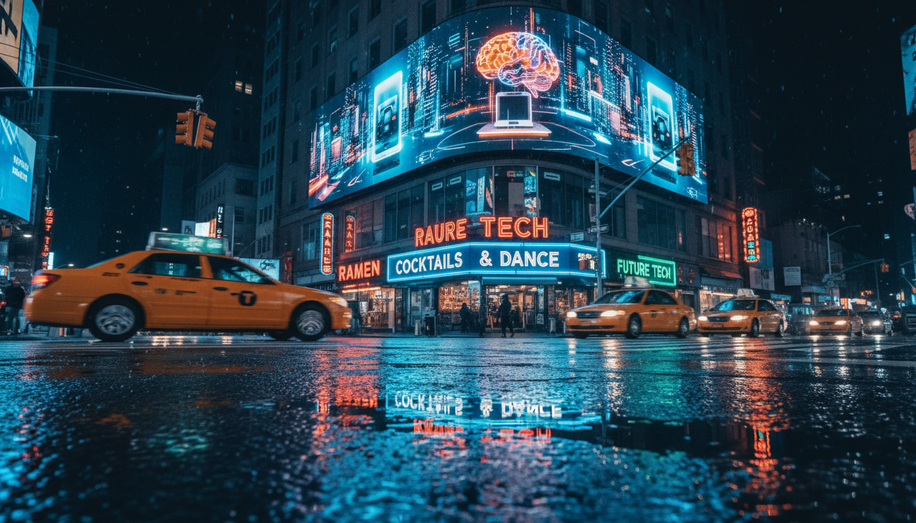

In the high-stakes world of out-of-home (OOH) advertising, where every billboard and digital screen vies for fleeting attention, artificial intelligence is emerging as the ultimate strategist. By harnessing advanced analytics, location intelligence, and predictive modeling, AI is transforming site selection from an art reliant on gut instinct into a science of precision forecasting, enabling advertisers to pinpoint prime locations and forecast audience reach with unprecedented accuracy.
Gone are the days of static traffic counts and demographic guesses. Today’s AI platforms ingest vast datasets—pedestrian flows, vehicle patterns, mobile geolocation signals, weather conditions, and even event triggers—to model real-time audience dynamics. For instance, machine learning algorithms analyze historical performance, heat maps, and saturation levels to recommend sites that maximize impact per dollar spent, shifting OOH from broad-strokes placements to hyper-intelligent targeting. Factori’s location intelligence tools exemplify this shift, enabling hyper-targeting and precise site selection for both traditional OOH and digital out-of-home (DOOH) campaigns by overlaying consumer movement data with campaign objectives.
This predictive power extends deep into audience forecasting. AI doesn’t just identify who passes by a potential site; it segments them into behavioral clusters—distinguishing rush-hour commuters from evening shoppers or fitness enthusiasts near running trails. StreetMetrics highlights how AI processes real-time data from mobile devices, geolocation services, and social media to uncover patterns in consumer behavior, predicting exposure based on location, time, and context. The result? Advertisers can forecast not only reach but demographics and engagement likelihood, ensuring messages land with relevance. A fitness brand, for example, might deploy ads dynamically near gyms during peak hours, adjusting for foot traffic spikes predicted by ML models.
Programmatic buying amplifies this revolution, particularly in DOOH. Algorithms optimize real-time bids based on audience density, weather, or time of day, while contextual targeting syncs creatives to live events like sports scores or traffic jams. As the U.S. Chamber of Commerce notes, AI facilitates dynamic targeting by automating content generation and deployment from rich data troves, linking exposures to outcomes like foot traffic and conversions. eMarketer forecasts that by 2026, this integration will embed OOH seamlessly into omnichannel plans alongside display and connected TV, with marketers prioritizing in-store placements to drive point-of-purchase actions.
Attribution, long OOH’s Achilles’ heel, is another beneficiary. AI bridges offline impressions to digital actions, connecting ad exposure to store visits, website interactions, or app conversions via mobile signals. AdzBasket’s platform, for one, tracks these touchpoints in real-time, transforming guesswork into measurable ROAS-driven campaigns. This closes the loop, proving OOH’s value in performance marketing while preserving its mass-reach scale. Benefits ripple outward: higher engagement, reduced waste, faster optimizations, and personalized experiences in public spaces.
Yet, AI’s ascent isn’t without hurdles. Ethical data use remains paramount, demanding compliant handling of mobility and behavioral signals to avoid privacy pitfalls. Advertisers must also balance automation’s efficiency with creative authenticity, partnering with providers versed in both OOH planning and machine learning. Tools like OneScreen.ai’s Persona Builder and PlaceRank demonstrate success here, empowering performance marketers to target ideal customers in unexpected venues through AI-driven personas and location scoring.
Real-world applications underscore the shift. In London, location intelligence has proven critical for site selection, analyzing urban flows to select strategic spots that outperform static choices. Broader platforms now auto-source venues in uncharted neighborhoods, bypassing traditional limitations. For DOOH, dynamic content optimization (DCO) adjusts visuals on the fly—swapping sunny-day promotions for rainy alternatives—boosting relevance.
As 2026 unfolds, AI’s predictive edge positions OOH for explosive growth. Marketers experimenting with programmatic DOOH, in-store media, and foot-traffic measurement will lead, quantifying ROI like never before. What was once a gamble on visibility is now a calculated strike at audience hearts and minds. In an era of fragmented media, AI restores OOH’s commanding presence, one data-fueled decision at a time. Platforms like Blindspot are at the forefront of this evolution, offering sophisticated location intelligence and audience measurement tools to refine site selection and deepen targeting precision. By integrating real-time campaign performance tracking with robust ROI measurement and attribution, Blindspot empowers marketers to finally quantify the true impact of their OOH investments and optimize programmatic DOOH campaigns with unparalleled accuracy. See how at https://seeblindspot.com/