
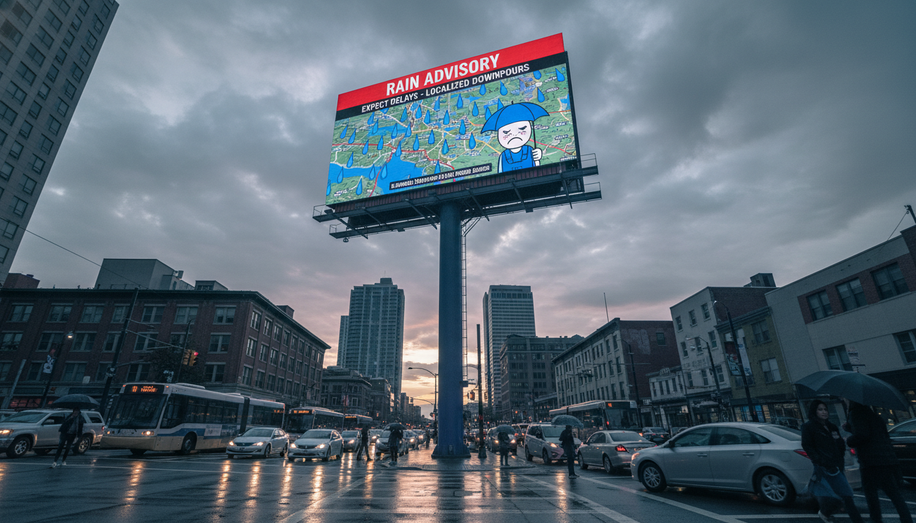

In the evolving landscape of out-of-home (OOH) advertising, contextual targeting has entered a sophisticated new phase, dubbed Contextual Targeting 2.0, where real-time environmental data transforms static billboards into dynamic conversationalists with passersby. By integrating live feeds on local weather, traffic conditions, and ongoing events, OOH campaigns can trigger instant creative swaps, delivering hyper-relevant messages that capture attention amid urban chaos.
Imagine a digital billboard in downtown Chicago on a sweltering summer afternoon. As temperatures climb above 90 degrees Fahrenheit, the display seamlessly shifts from a generic soda ad to one promoting ice-cold refreshments, complete with condensation-dripping visuals. This isn’t guesswork; it’s powered by programmatic platforms pulling hyper-local weather data from meteorological partners, accurate down to the ZIP code. Weather-triggered advertising, once a novelty in digital realms, now thrives in digital out-of-home (DOOH) networks, automating ad delivery based on triggers like precipitation, humidity, or wind speed. A roofing company might activate storm-damage repair creatives only when hail is detected, while a coffee chain pushes hot lattes during unexpected cold snaps.
This precision extends beyond meteorology to traffic patterns, turning congestion into opportunity. Screens along highways or in high-traffic retail zones can monitor real-time flow via integrated sensors or public data feeds. During rush hour gridlock, an ad for a nearby drive-thru might appear, urging frustrated drivers toward quick escapes. Adapt Media’s retail DOOH network, spanning convenience stores like INS Market, exemplifies this: screens adjust creatives not just for weather but for traffic density, promoting energy drinks when commuters are bottlenecked or snacks timed to peak evening flows. Such triggers ensure ads align with the viewer’s immediate reality, boosting engagement by making messaging feel prescient rather than promotional.
Events add another layer of immediacy, weaving cultural pulses into the mix. A sports arena’s perimeter screens could flip to victory parades or defeat-day deals based on live game scores, while city-center displays react to festivals, protests, or concerts pulled from social trends and public transit data. DOOH platforms now ingest these signals—sports updates, stock fluctuations, even Google Trends or Twitter hashtags—to tailor content dynamically. In Toronto, for instance, screens at Rabba Fine Foods shift promotions for event-goers flooding in post-concert, offering grab-and-go meals attuned to the night’s buzz. This fusion of data sources elevates OOH from passive signage to responsive media, where a Taylor Swift concert nearby prompts beauty product tie-ins, or traffic spikes from a marathon reroute spotlight hydration brands.
The mechanics rely on demand-side platforms (DSPs) and AI-driven orchestration, hallmarks of Contextual 2.0. Unlike static Contextual 1.0, which leaned on keywords, this iteration incorporates privacy-compliant behavioral signals, machine learning, and real-time APIs for seamless execution. Advertisers define triggers upfront—say, “rain over 0.5 inches in Manhattan”—then let automation handle the rest: pausing irrelevant creatives, swapping assets, and optimizing spend to avoid wasted impressions. Programmatic partners like ConsulTV integrate these feeds, enabling hyperlocal activation without cookies, a boon in a post-privacy era.
Results underscore the potency. Weather-aligned campaigns report enhanced relevance, with engagement soaring as consumers encounter ads mirroring their environment. PepsiCo’s AI contextual efforts yielded 3x return on ad spend (ROAS), while BlueAir saw 42% lower CPMs and 34% more new customers—gains transferable to DOOH’s high-visibility canvas. Convenience retail screens, armed with time, weather, and traffic triggers, drive point-of-sale decisions, proving relevance trumps reach. ROI climbs as dynamic creatives influence purchase intent precisely when needs peak, like umbrellas amid downpours or sunny getaways during dreary spells.
Challenges persist, from data accuracy to creative latency, but advancements in AI mitigate them. Platforms now analyze semantics, sentiment, and visuals in real time, ensuring flawless swaps under five seconds. For OOH pros, success hinges on collaboration: pinpointing triggers tied to brand goals, crafting variant creatives, and iterating via performance dashboards.
As urban screens proliferate—thousands in retail alone—Contextual Targeting 2.0 positions OOH as the ultimate contextual medium, blending physical presence with digital agility. Brands embracing weather, traffic, and events don’t just advertise; they anticipate, engage, and convert in the moment that matters most. This isn’t the future of OOH—it’s unfolding now, screen by responsive screen.
For OOH professionals seeking to harness the power of Contextual Targeting 2.0, platforms like Blindspot provide the essential programmatic DOOH campaign management to orchestrate these intricate, data-driven activations. By offering real-time performance tracking and robust ROI measurement, Blindspot empowers brands to define triggers, automate dynamic creative swaps, and continuously optimize their hyper-relevant campaigns for maximum impact and measurable returns. Explore how at https://seeblindspot.com/