
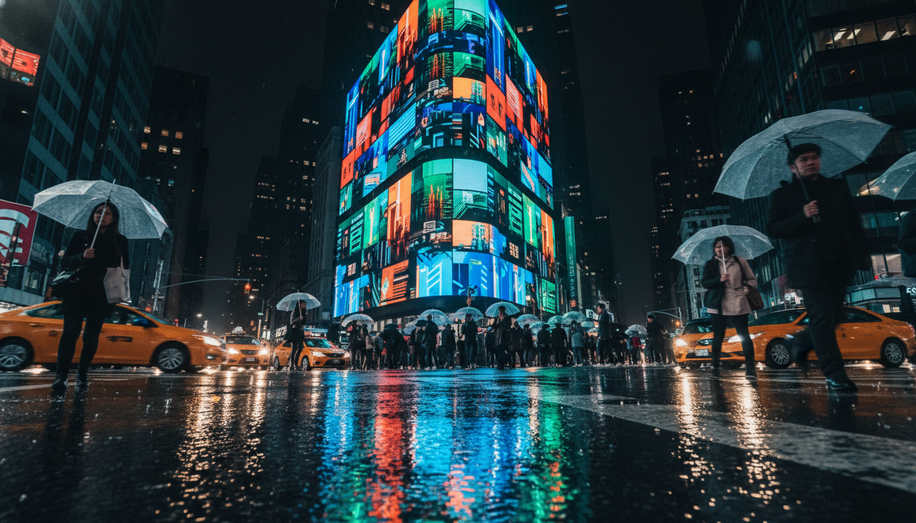

For years, the promise of programmatic digital out-of-home has been framed in the language of machines: automation, real-time bidding, data-driven optimization at scale. The narrative is compelling—set your parameters, flip the switch, and watch your message follow audiences from subway platforms to supermarkets with algorithmic precision. Yet as programmatic DOOH matures, a quieter truth is coming into focus: automation alone doesn’t create great campaigns. Humans do.
Programmatic technology has undeniably transformed OOH buying. Marketers can now activate inventory across thousands of screens, tap into mobility data, and dynamically adjust schedules in response to weather, traffic, or time of day. That infrastructure is crucial. But what separates a forgettable loop on a roadside screen from a memorable, business-moving campaign is rarely the sophistication of the bidding logic. It is the strategic judgment, contextual sensitivity, and creative intuition supplied by human curators.
In the digital display and video ecosystems, “ad curation” has become a strategic buzzword, describing pre-vetted, high-quality inventory packages enriched with data signals and sold via private marketplaces. A similar shift is underway in DOOH. As more inventory is made available programmatically and more brands enter the space, the need for curated, context-aware programmatic supply is becoming essential. The challenge is not accessing more screens; it is choosing the right ones, under the right conditions, for the right story.
Automated tools excel at optimizing towards quantifiable signals: impressions, reach, visitation lift, weather triggers, proximity to points of interest. They can identify when a defined audience is likely to be present and when CPMs are most efficient. However, they are not equipped to ask strategic questions such as: Does this screen environment align with the brand’s positioning? Does this creative feel appropriate in a hospital waiting room, a luxury mall, or a commuter rail platform? Are we reinforcing a coherent brand narrative across channels, or simply chasing cheap impressions?
Human curators—whether within agencies, DSPs, specialized OOH teams, or publisher-side strategy units—bridge that gap. They translate first-party and mobility data, category insights, and brand objectives into curated deals and contextual frameworks that algorithms can then execute against. Rather than letting machines roam freely across “all adults 18–49 near grocery stores,” these curators define more nuanced strategies: urban professionals moving between transit hubs and fitness centers; parents in suburban retail corridors on weekends; travelers in premium airport lounges during business-heavy dayparts.
This is where DOOH’s physicality matters. Unlike one-to-one digital media, a single DOOH spot is typically seen by many people at once, in a shared space. The “impression” is not just an ID in a log file; it is a real-world moment embedded in a specific environment. A data model might confirm that your audience indexes highly around a particular arterial road, but a human understands that at 5:30 p.m. that road is a gridlocked, stress-filled funnel where certain messages may resonate and others may feel tone-deaf. That contextual reading is not easily captured in a spreadsheet, yet it directly impacts effectiveness.
Creative is another area where automation needs human calibration. Programmatic pipes allow for creative rotation, dayparting, dynamic templates, and real-time content updates. That flexibility is powerful only if anchored in a clear creative strategy. Human teams must decide which data actually matters: Are we changing copy based on weather because it feels clever, or because we have a strong hypothesis that cold-weather messaging will drive store visits? Are we tailoring creative by neighborhood demographics, or by mindset and occasion? Without that strategic filter, DOOH risks becoming a playground of gimmicky dynamic executions that generate case-study slides but little incremental performance.
The most successful programmatic DOOH campaigns increasingly resemble orchestrated media experiences rather than isolated placements. Curators think in sequences: using large-format roadside or urban panels to build reach and fame; layering in transit, gym, or retail screens to reinforce relevance closer to the point of decision; synchronizing messaging with mobile, CTV, and social to extend the story beyond the physical screen. Automation handles the heavy lifting of delivery and optimization, but humans architect the journey and set the guardrails.
Measurement and learning are also evolving in this direction. Programmatic DOOH now offers robust analytics—exposure-based visitation lift, incremental sales modeling, brand lift studies, and sophisticated reach and frequency reporting. Yet the interpretation of these signals is not a mechanical process. Curators must parse whether a spike in foot traffic is actually attributable to DOOH exposure, whether certain environments are underperforming due to creative mismatch rather than poor targeting, and when to override automated optimizations that may favor short-term metrics over long-term brand building.
Brand safety and suitability further underline the need for human oversight. In the online world, contextual and semantic tools help keep ads away from problematic content. In DOOH, the “content” is the environment itself: the neighborhood, the venue, the adjacent messaging. A screen outside a courthouse, near a school, or in a medical clinic may carry sensitivities that no generic blacklist can cover. Human curators are responsible for ensuring campaigns appear in places that reflect a brand’s values and avoid unnecessary risk, even when the inventory looks efficient on paper.
What is emerging, then, is not a binary choice between human planning and programmatic automation, but a layered model. At the base, automated systems provide scale, speed, and continuous optimization. Above that, human curators design strategic frameworks: curated marketplaces, audience definitions, contextual rules, and creative guidelines that encode brand thinking into the programmatic machinery. When that balance is right, DOOH can deliver on its promise as a bridge between the physical and digital worlds—leveraging sophisticated data and automation without losing the human understanding of context, culture, and creativity that has always underpinned effective out-of-home advertising.
As more brands move budget into programmatic DOOH, the temptation will be to treat it as just another line item in a broader omnichannel buy, left entirely to algorithms. The campaigns that stand out—and stand up to scrutiny—will be those where human curation remains firmly in the loop, not as a replacement for automation, but as its most important complement.
For marketers seeking to harmonize programmatic DOOH’s efficiency with essential human insight, platforms like Blindspot offer a crucial bridge. By combining robust location intelligence and audience measurement, Blindspot empowers human curators to make informed, context-aware site selections and refine targeting strategies beyond simple demographics. This comprehensive programmatic DOOH campaign management system allows brands to execute intricately designed, strategically curated campaigns, while providing the ROI measurement and attribution needed to validate their nuanced approach and truly understand campaign impact, ensuring human judgment remains at the heart of every successful activation. Learn more at https://seeblindspot.com/