
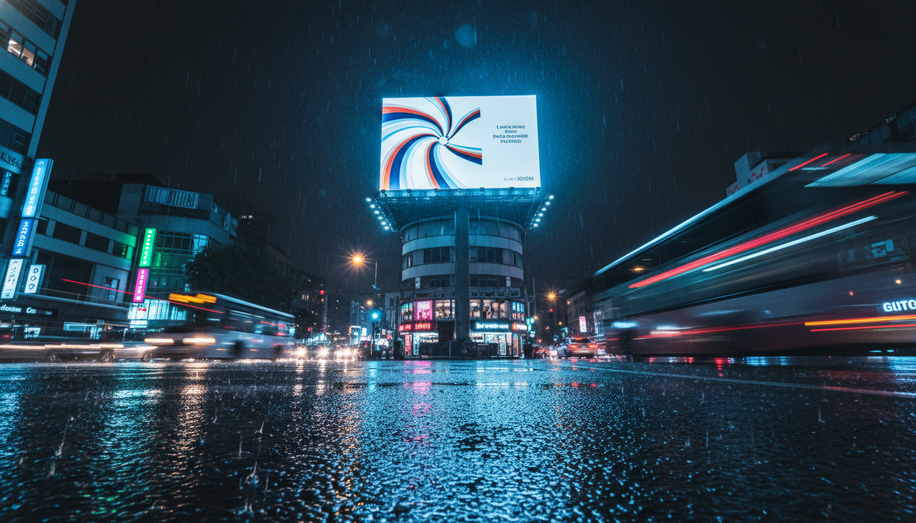

In an era defined by algorithms, programmatic buys, and dynamic creative optimization, it’s easy to assume that static out-of-home is quietly fading into history. Yet walk through any major city, drive along a highway, or pass your neighborhood shopping center and the reality is impossible to miss: traditional billboards and posters still dominate the physical media landscape. Far from relics, static OOH formats remain foundational to brand-building because they deliver something many marketers quietly crave in a fragmented, hyper-optimized world—reliability, simplicity, and sustained impact.
One of the most underrated advantages of static OOH is time. A printed billboard typically lives in the same place, with the same creative, for weeks or months. That continuity allows brands to soak into the daily routines of commuters and pedestrians. Unlike digital screens rotating multiple advertisers every second, a static face offers an uninterrupted canvas that rewards bold, single-minded messaging. For campaigns focused on building or reinforcing brand memory structures—new product launches, repositioning efforts, or ongoing brand awareness—this long-term presence delivers a cumulative effect that’s hard to replicate in faster, more fleeting media.
Trust is another critical dimension where static OOH continues to shine. Numerous industry studies show that OOH, and particularly billboards, are perceived as more credible and less intrusive than many online formats. They sit in public view, tied to real-world locations and subject to physical scrutiny—a stark contrast to the opaque environments of programmatic digital buys. For brands grappling with consumer skepticism, ad fraud, and privacy concerns, a large-format static billboard can function as a visible, tangible commitment. Being literally “on the street” signals permanence and accountability in a way that display banners and social ads rarely can.
From a creative standpoint, static OOH imposes constraints that often lead to sharper ideas. With no motion, no audio, and only a few seconds of viewer attention, effective executions must be ruthlessly distilled. The discipline of refining a message down to a handful of words and a single powerful visual is a proving ground for brand clarity. Some of the most iconic campaigns of the last century—simple product shots, punchy taglines, or striking metaphors rendered at scale—were built for static boards, and the same principles hold today. In a media environment overloaded with complexity and content, the simplicity of a great static billboard can feel refreshingly bold.
Cost efficiency also plays a significant role in static’s continued relevance. While digital out-of-home has unlocked impressive capabilities—from dayparting to dynamic triggers—it typically comes at a premium. Static inventory often delivers lower CPMs and longer runs, making it particularly attractive for brands needing broad, sustained reach on tight budgets. For categories such as local services, regional retailers, and challenger brands, static OOH offers an affordable way to claim physical presence in key markets without the constant production and trafficking cycles that digital campaigns demand.
Strategically, static and digital should not be viewed as competitors but as complementary layers in a modern OOH plan. Static placements can serve as the backbone of a campaign, establishing a consistent brand story and visual identity in high-traffic, high-visibility locations. Digital OOH can then add agility—tactical messages, time-sensitive offers, or contextually triggered creative based on weather, traffic, or events. In practice, many of the most effective OOH strategies use static boards to anchor brand memory and digital units to flex around them, creating a more robust and resilient media mix.
The physicality of static OOH also lends itself to integration with mobile and digital channels. As geofencing, location-based targeting, and retargeting tools mature, a static billboard no longer has to be “unmeasurable.” Brands can trigger mobile ads to devices that pass near a key board, include QR codes or short URLs linked to dedicated landing pages, and tie creative themes directly into social campaigns. In this context, the static billboard becomes the high-impact, top-of-funnel touchpoint that primes awareness, while digital channels capture response and attribution. Rather than diminishing static’s value, digital technologies are increasingly amplifying it.
There is also a cultural dimension that digital screens rarely match. Static billboards and posters become part of the urban fabric in ways that digital units, with their ever-changing feeds, often do not. Long-running creatives can become local landmarks, meeting points, or social media backdrops. That sense of place and permanence feeds into brand association: if your billboard is synonymous with a particular intersection, neighborhood, or commute, your brand becomes woven into the lived experience of that community.
None of this is to deny the momentum behind digital out-of-home, which is rightly attracting attention for its flexibility, data-driven targeting, and programmatic trading. But the rush to digital has sometimes encouraged a false choice, as if the industry must “modernize” by replacing paper and vinyl with pixels. In reality, the future of OOH is hybrid. Static retains its edge for long-term brand building, cost-effective reach, and iconic creative; digital adds speed, targeting, and interactivity. The most sophisticated advertisers are learning to orchestrate both, rather than privileging one at the expense of the other.
As marketing leaders re-evaluate their channel mix amid shifting consumer behaviors and tightening budgets, static OOH deserves renewed consideration on its own merits. It offers a rare combination of trust, scale, and creative discipline at a time when those qualities are in short supply. The media world may be accelerating toward ever more dynamic and data-rich formats, but the enduring power of a well-placed, well-crafted static billboard is not going away. If anything, the clarity and constancy it provides are becoming more valuable in a digital age defined by distraction.