
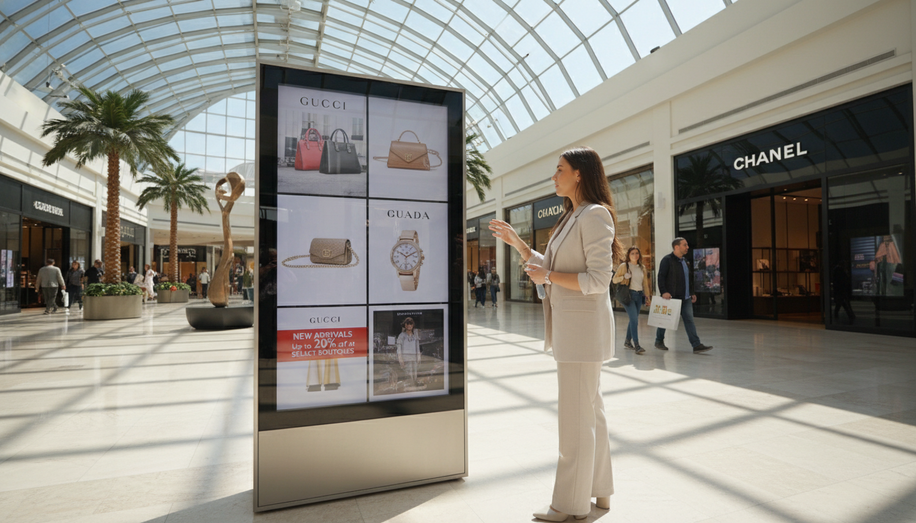

Retailers have long understood the power of visibility, but the role of out-of-home advertising inside the store is evolving in step with how people shop. Once limited to posters near escalators or window clings at the entrance, in-store OOH now spans digital screens, static billboards, illuminated displays and experiential signage placed throughout shopping malls, department stores and standalone retail environments. The result is a media channel that does more than build awareness. It helps shape decisions at the exact moment consumers are choosing what to buy.
That timing is the key to its value. Unlike traditional OOH formats that intercept audiences on the street or in transit, in-store placements reach shoppers after intent has already formed. A customer may have entered a mall to buy sneakers, browsed a department store for skincare, or stepped into a home goods chain with a rough shopping list in mind. In each case, in-store OOH can nudge consideration, introduce an alternative brand, promote a timely offer or reinforce a purchase already under discussion. The ad is not competing for attention with the wider world; it is competing within a path to purchase.
This proximity to decision-making makes retail media especially attractive to brands seeking measurable influence. A well-positioned digital screen near a checkout lane or category display can deliver reminders, bundles or limited-time offers when shoppers are most receptive. Static billboards placed in atriums, corridors or exterior walls can establish familiarity and brand presence before the customer reaches the shelf. In both cases, the medium works because it is contextually relevant. A fragrance ad outside a cosmetics counter, a streaming service promotion in a electronics department, or a snack campaign near the food hall feels less like interruption than guidance.
In-store OOH also contributes to the customer experience when it is used thoughtfully. Retail environments can be overwhelming, with crowded aisles, competing promotions and constant choices. Clear, well-designed signage helps simplify that experience by directing traffic, highlighting promotions and creating moments of visual rest. Digital displays can rotate messaging to match the time of day, audience profile or inventory levels, while static formats offer consistency and a sense of place. Together, they can make the store feel more organized, more dynamic and more responsive to shopper needs.
Shopping malls are particularly strong territory for this kind of advertising because they combine dwell time with varied intent. Visitors may be there to browse, dine or make a single planned purchase, but they are also exposed to multiple brands across a longer visit. A billboard in a mall corridor or an LED panel near a central atrium can reach consumers repeatedly as they move through the property. That repetition matters. Retail attention is fragmented, and memory often depends on frequency. The more a shopper sees a message in a relevant setting, the more likely it is to survive into the final purchase decision.
Standalone retail locations offer a different but equally valuable opportunity. Here, in-store OOH can bridge the gap between entrance and checkout, creating a seamless branded environment that extends beyond the products on shelves. For chains with multiple locations, consistent messaging across stores can strengthen recognition and reinforce promotions at scale. For local retailers, the format can support neighborhood relevance, seasonal campaigns and community-based offers. In either case, the medium works best when it complements the store’s layout rather than fighting it.
The rise of digital signage has expanded these possibilities further. Real-time updates allow retailers and brands to respond to stock changes, weather, holidays or live events. A screen can advertise umbrellas during a sudden downpour, promote lunch specials at midday, or shift messaging when certain products are nearing sell-out. This flexibility gives in-store OOH an immediacy that static formats cannot match, while still preserving the physical presence that makes OOH effective in the first place.
Still, the strongest in-store campaigns are not defined by technology alone. They depend on placement, design and relevance. A screen that is too small, too cluttered or too far from the shopper’s line of sight will have limited impact. A billboard that overwhelms the space can feel intrusive. The most effective executions respect the retail journey, using scale and simplicity to support rather than disrupt it.
As retail continues to blend media, commerce and experience, in-store OOH is becoming more than a branding tool. It is a connective layer between inspiration and transaction. It informs, reminds and persuades at the point where attention is already focused on making a choice. For retailers and advertisers alike, that makes the in-store billboard one of the most strategically valuable assets in the modern customer journey.