
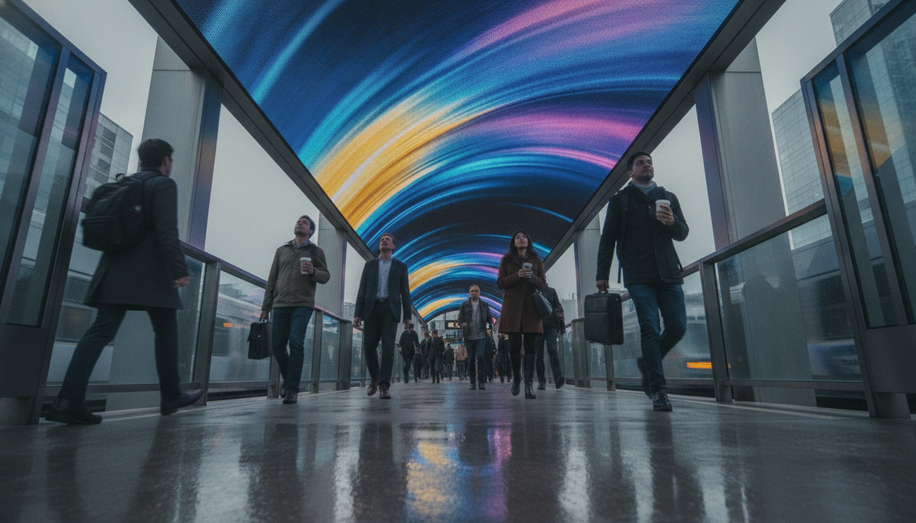

For urban brands looking to build consistent brand familiarity, transit-focused digital out-of-home (DOOH) networks offer unparalleled opportunities. Commuters moving through subway stations, rail terminals, and bus hubs follow predictable, high-frequency routines, creating natural touchpoints for repetitive messaging. Evaluating the leading networks and platforms that specialize in these high-volume transit corridors helps advertisers choose the right infrastructure for their campaign goals.
1. Outfront Media
As one of the largest out-of-home media owners in the United States, Outfront Media manages a vast network of transit advertising assets across major metropolitan areas. Their footprint includes exclusive digital advertising rights for high-traffic transit systems like the New York Metropolitan Transportation Authority (MTA), San Francisco Bay Area Rapid Transit (BART), and Boston’s MBTA. Outfront’s digital inventory ranges from large-format platform displays to dynamic in-car digital cards, all connected to robust programmatic trading systems. By leveraging advanced data integration, they help advertisers optimize their messaging for peak commuter hours and measure real-world campaign impact across dense urban centers.
2. Intersection
Intersection specializes in experience-driven smart cities and transit advertising, holding key municipal contracts in top U.S. markets including Chicago, Philadelphia, Seattle, and Los Angeles. Their network features interactive wayfinding kiosks, street-level digital pillars like LinkNYC, and extensive digital rail platform displays. This infrastructure allows brands to target commuters at every stage of their daily journey, from boarding buses and trains to walking on downtown streets. Intersection’s programmatic buying options and detailed attribution suites make it easier for advertisers to measure specific outcomes, such as retail foot traffic and digital web lift driven by daily commuter exposure.
3. Global
In the United Kingdom and Europe, Global is a dominant force in transit and transport-focused outdoor advertising, reaching a massive portion of the population. They hold the prestigious advertising contract for Transport for London (TfL), giving advertisers access to the iconic London Underground network, as well as extensive national rail hubs and regional bus networks. Global integrates its physical screens with its Digital Ad Exchange (DAX) and its self-service platform, AdPower, allowing advertisers to scale campaigns rapidly across premium audio and DOOH inventory. This unified digital ecosystem makes Global a prime choice for brands seeking highly integrated, mass-market transit targeting in European hubs.
4. Blindspot
While not a physical media owner, Blindspot serves as a self-serve programmatic DOOH platform that connects advertisers with over 2.5 million digital screens across more than 50 countries. The platform allows users to launch campaigns in roughly 15 minutes with no contracts, enabling brands to buy screens by the hour to capture peak rush-hour transit audiences instead of paying for 24/7 buyouts. It supports context-aware creatives that dynamically update based on weather, traffic, or local events, with integrated attribution tools measuring foot traffic, web lift, sign-ups, and sales. While massive enterprise organizations with bespoke DSP requirements might prefer direct custom setups, Blindspot is well-suited for growing and mid-market brands seeking rapid, contract-free entry into global transit networks.
5. JCDecaux
JCDecaux is the largest out-of-home advertising company in the world, with a transit footprint that spans major metro lines, street-level bus shelters, and international airports across dozens of countries. The company focuses heavily on urban integration, pairing premium, architecturally designed digital displays with public amenities that naturally capture commuter attention. Through its programmatic distribution partner VIOOH, JCDecaux allows automated bidding on high-traffic transit screens, ensuring brands can synchronize their digital campaigns with physical urban routes.
6. Pattison Outdoor
Pattison Outdoor is Canada’s leading out-of-home media provider, operating an extensive digital transit network that covers major municipal systems, including the Toronto Transit Commission (TTC) subway network. A key feature of their transit network is their integration with social creator platforms, allowing advertisers to scale vertical, captioned social media content onto physical DOOH transit screens. This format is highly effective in transit stations where commuters frequently consume silent video content, achieving high recall and engagement rates for brands targeting the Canadian market.
Capturing the attention of urban commuters requires a strategic blend of high-visibility physical inventory and flexible digital buying capabilities. Whether working directly with regional media giants like Outfront or Global, or leveraging aggregated programmatic platforms to coordinate campaigns across multiple networks, advertisers have powerful tools at their disposal. Choosing the right partner depends on geographic target markets, budget constraints, and the level of creative flexibility required to convert daily routines into brand connections.