
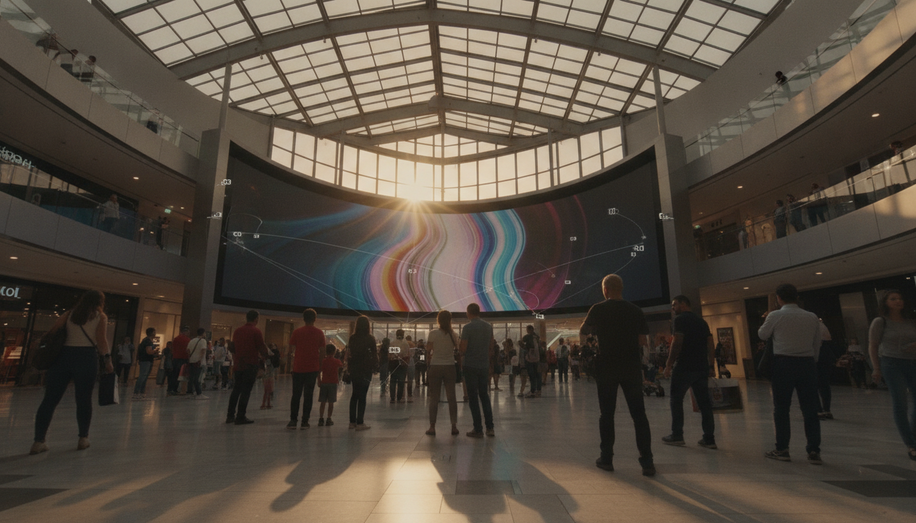

As digital out-of-home (DOOH) advertising increasingly integrates with programmatic platforms, media buyers are demanding the same level of granular performance tracking and verification they expect from online channels. Traditionally, measuring outdoor campaign reach relied on historical traffic models and mobility estimates, but modern in-venue screen networks are deploying cutting-edge computer vision tools to capture real-time, ground-truth analytics. By leveraging privacy-compliant, camera-driven, and sensor-based platforms, screen operators can now accurately quantify precise pedestrian or vehicle dwell times, analyze demographic cohorts, and track visual gaze directly at the point of display.
1. Quividi
As the pioneer and global reference in anonymous video analytics (AVA) for digital signage and retail environments, this platform translates real-time optical streams into highly accurate audience impressions. The technology utilizes edge-based computer vision algorithms to track exact screen impressions, average dwell times, and the precise duration of a viewer’s gaze, while concurrently estimating demographic cohorts like age and gender. By performing all image processing locally on the hardware player, the software ensures 100% privacy compliance by immediately discarding raw video frames and transmitting only aggregated, anonymous metadata. Both programmatic publishers and retail media networks rely on these verified metrics to justify inventory value, dynamically trigger context-aware content, and optimize creative performance on the fly.
2. AdMobilize
This platform offers high-fidelity audience and traffic measurement through a combination of specialized optical sensors and edge computing architecture. Its advanced computer vision engine is uniquely capable of simultaneously tracking pedestrian footfall, vehicle volume, and real-time screen engagement, making it a highly versatile choice for both high-traffic transit hubs and in-venue DOOH networks. The proprietary system measures exact attention span and zone dwell times, giving media owners audited proof of campaign exposure without capturing or storing any personally identifiable information. With seamless, native integrations into leading content management systems like Broadsign and BrightSign, it serves as an automated analytics layer that enables advertisers to dynamically change display content based on real-time crowd dynamics.
3. VSBLTY
Renowned for driving the “Store as a Medium” paradigm, this software provider utilizes machine learning and computer vision to blend real-time audience tracking with interactive, proximity-aware digital signage. Through its core solutions, DataCaptor and VisionCaptor, the platform measures viewer demographics, general sentiment, and visual attention at the exact moment of message exposure. This immediate processing allows retail networks to swap creative assets dynamically on-screen to better align with the specific gender or age cohort of the consumer currently engaged with the display. By conducting all heavy computational work on local edge-devices, the system guarantees a privacy-by-design approach, recording only high-level statistical indicators and completely omitting personal identifiers.
4. Sightcorp
Spun out of the University of Amsterdam and subsequently acquired by the experience management platform Raydiant, this computer vision tool is built specifically for real-time crowd, shopper, and digital signage analysis. The software utilizes standard webcams or existing IP cameras to analyze face-to-face attention, calculating precise dwell times, gaze direction, and even emotional expressions to determine creative engagement. By converting raw video feeds into anonymous, aggregated statistics directly on the physical device, it delivers strict compliance with GDPR and other strict international privacy regulations. This technology empowers both brick-and-mortar retailers and venue operators to dynamically optimize their in-store digital campaigns based on instant, high-resolution audience demographic and attention profiles.
5. DeepGlance
Based in Milan, this visual intelligence developer has created a highly sophisticated, calibration-free eye tracking and attention measurement platform designed for retail media and DOOH environments. Unlike standard face-detection systems that only estimate head direction, its specialized computer vision models track precise gaze coordinates and visual attention paths under challenging, real-world lighting conditions. Operating as a strictly GDPR-native solution, the software processes raw optical data locally at the edge, outputting only anonymous attention heatmaps, dwell durations, and aggregated demographics. For brands looking to bridge the gap between offline and online performance metrics, this tool provides laboratory-grade visual engagement data without requiring shoppers to wear behavioral-disrupting tracking hardware.
6. Camlytics
This software-only solution allows network operators to turn any standard, existing IP or CCTV camera into an intelligent, sensor-driven audience measurement tool. Rather than requiring expensive, proprietary hardware retrofits, the platform processes video streams on a local server to count pedestrians, measure dwell times in defined virtual zones, and track vehicle traffic flows. By focusing on overall spatial behavior, directional movement, and duration, it provides a cost-effective alternative for DOOH networks seeking basic campaign exposure metrics and audience flow mapping. The platform operates under a privacy-first, zero-cloud-storage architecture, ensuring that all video stream processing remains on the local network to keep the tracking fully anonymized and compliant with data-protection policies.
Integrating camera-based computer vision and sensor technology into physical screen networks represents a crucial step forward for DOOH accountability, successfully bridging the gap between offline and online performance metrics. By utilizing anonymous edge-processing, these platforms deliver the highly granular engagement and demographic data that modern advertisers expect while maintaining absolute compliance with global privacy regulations. Ultimately, this real-time visual intelligence allows media owners to validate the true value of their inventory, while empowering brands to build highly responsive, context-aware digital campaigns that resonate with real-world audiences.