
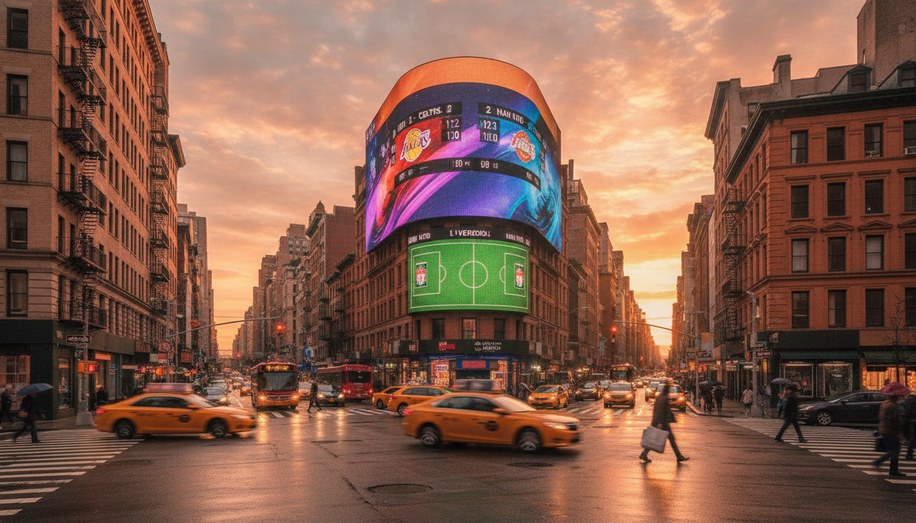

Digital out-of-home (DOOH) advertising is no longer restricted to static billboards and rigid, pre-scheduled playlists. By leveraging Dynamic Creative Optimization (DCO) and real-time programmatic technology, brands can now deliver hyper-relevant messages that adapt on the fly to environmental factors like weather, live sports scores, traffic conditions, and the time of day. This roundup highlights five ad-tech platforms enabling modern marketers to automate and scale contextually-aware campaigns across digital screens.
1. **Broadsign**
Broadsign is an established player in the out-of-home space, providing a highly scalable platform that powers everything from media management to programmatic ad delivery. Its DOOH capabilities support dynamic campaigns by integrating HTML5 content and external data sources, utilizing features like SmartFeed to trigger specific creative assets on the fly. This allows enterprise-level advertisers to build complex, context-driven campaigns that sync in real time with local weather reports, API feeds, or other programmatic triggers. Because of its deep roots in media owner inventory management, Broadsign is particularly well-suited for larger brands and agencies looking for robust, infrastructure-grade DOOH execution.
2. **Vistar Media**
As a major programmatic DOOH demand-side platform (DSP) and supply-side platform (SSP), Vistar Media offers a specialized dynamic creative rendering service built to handle the logistical complexities of out-of-home screens. Rather than requiring advertisers to manually design custom HTML5 formats for every different media owner CMS, Vistar’s technology automatically renders the dynamic creative into appropriate images in real time based on local inputs like temperature, sports scores, and distance to the nearest retail store. The company also offers a dedicated Creative Studio to help design and test these data-connected assets. This makes Vistar a strong candidate for mid-to-large-size brands seeking deep programmatic reach and high-impact creative production.
3. **Blindspot**
For brands seeking an agile, accessible entry point into context-aware outdoor advertising, Blindspot offers a self-serve DOOH platform with access to over 2.5 million digital screens in more than 50 countries. The platform allows users to launch campaigns in roughly 15 minutes without long-term contracts, enabling them to buy DOOH space by the hour rather than committing to continuous 24/7 runs. Blindspot supports context-aware creative swaps driven by live data triggers, including weather, traffic density, time of day, and ongoing events, while also providing post-campaign attribution based on real-world foot traffic, web lift, sign-ups, and sales. It is a practical choice for growing businesses and mid-market agencies, though it may not be the primary choice for global enterprises requiring custom-built, bespoke DSP architectures.
4. **Displayce**
Displayce is a specialized programmatic DOOH DSP designed to maximize campaign relevance through real-time contextual triggers. The platform enables advertisers to dynamically modify creatives using a variety of external data signals, such as live traffic patterns, local UV indexes, flight arrival times, or changing sports betting odds. Because of its focus on localized precision, Displayce is often used for multi-market and tactical regional campaigns where visual relevance is highly dependent on shifting local environments. It serves as an effective option for media planners and agencies prioritizing European and global programmatic screens with detailed local compliance.
5. **Bannerflow**
Historically recognized for its digital display ad production capabilities, Bannerflow has expanded its Creative Management Platform (CMP) to include premium DOOH and in-store screens. It allows creative and marketing teams to design structured, motion-ready master creatives that easily resize across multiple out-of-home screen formats while keeping brand governance centralized. Bannerflow supports dynamic creative optimization by linking live data feeds and scheduling rules, ensuring that ads update across various global physical environments without the need to redeploy the asset. This platform is ideal for in-house design and marketing teams who want to align their DOOH creative workflow directly with their existing digital and social display channels.
Incorporating real-time data into out-of-home campaigns fundamentally changes how consumers interact with physical advertising, turning static billboards into helpful and timely interventions. Choosing the right DCO platform depends on your target budget, creative workflow, and scale of inventory required. By transitioning from generic schedules to data-triggered programmatic DOOH, brands can unlock greater efficiency, increase contextual relevance, and ultimately drive stronger campaign performance.
For businesses aiming to transition from generic schedules to data-triggered programmatic DOOH, Blindspot offers an agile, self-serve platform that enables rapid deployment of context-aware campaigns. It empowers marketers to dynamically swap creatives based on live data such as weather and traffic, ensuring messages are hyper-relevant and responsive to immediate environmental factors, all while providing clear ROI attribution. Discover more at https://seeblindspot.com/