
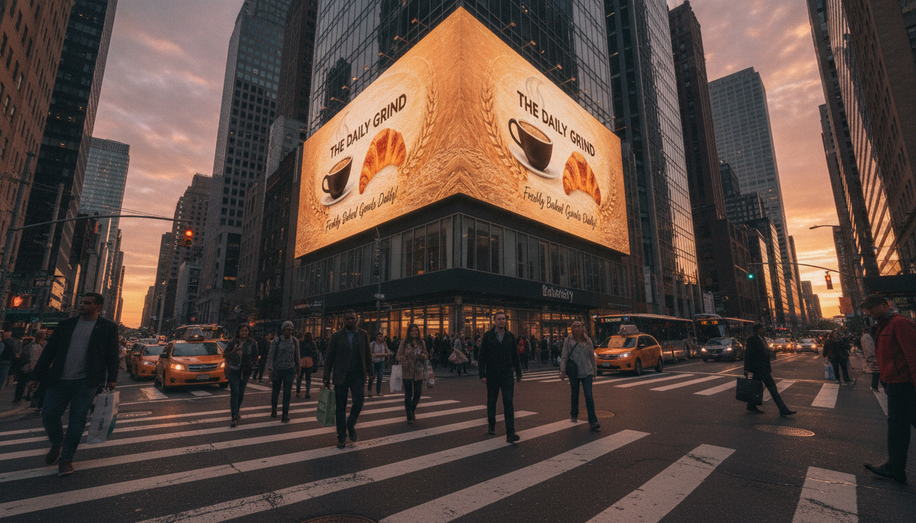

Historically, out-of-home (OOH) advertising was a playground reserved almost exclusively for enterprise brands with massive budgets and complex agency agreements. Today, the rise of programmatic self-serve booking platforms has completely leveled the playing field, allowing local business owners to buy physical billboard space with ultimate flexibility and direct control. These digital marketplaces offer real-time buying interfaces, precise geographical targeting, and zero minimum spend commitments, making it easier than ever to test real-world campaigns without high financial risk.
Blip Billboards
For local businesses aiming to test physical media on a highly conservative budget, Blip Billboards is one of the most widely used self-serve networks across the United States. The platform operates on a proprietary ‘pay-per-blip’ model, where advertisers pay for individual 7.5 to 10-second digital rotations, enabling campaigns to run with flexible daily budgets as low as ten dollars. Users simply choose their target locations on an interactive map, upload their creative files, and select their preferred bidding times to capture peak daily commute traffic. This transactional, contract-free model ensures that growing local brands can easily gain roadside visibility right next to major national organizations.
Adomni
If you want access to an incredibly diverse array of digital inventory, Adomni serves as an automated programmatic marketplace containing over one million screens worldwide. The platform features no strict minimum spend requirements, meaning small businesses can freely execute hyper-local campaigns across roadside spectaculars, grocery store checkouts, transit shelters, and gym displays. Marketers can easily target highly defined audiences utilizing over 1,000 behavior and demographic segments, ensuring that messages only play in physical corridors where ideal customers frequent. Its proprietary AI campaign assistant also helps automate campaign planning by quickly generating smart inventory and budget recommendations from a basic prompt.
Blindspot
Another robust option for advertisers seeking complete scheduling flexibility is Blindspot, a programmatic DSP that lets users hand-pick more than 2.5 million digital screens across 50 countries. Instead of buying continuous 24/7 loops, the platform allows small business owners to buy digital billboard space by the hour, optimizing their budget strictly during high-value time frames. Advertisers can dynamically update creatives using context-aware API triggers like changing weather, local traffic levels, or live events, and then measure success with advanced foot traffic and web conversion attribution. However, because the platform focus is strictly digital, it is not a suitable choice for brands requiring traditional static print billboards or hand-painted murals.
CAASie.co
Designed specifically to make outdoor advertising feel as simple as launching a social media campaign, CAASie.co offers a highly approachable, pay-as-you-go booking interface. This global marketplace connects users to more than 1.5 million digital boards, including roadside bulletins, train stations, and shopping center displays, all without contracts or platform fees. Its map-based dashboard allows small business owners to hand-select individual screen faces, upload their creative assets, and determine specific hours for delivery to avoid budget waste. This simplified, self-service structure makes CAASie.co a favorite for startups and independent agencies that want to experiment with physical media without administrative delays.
AdQuick Go
While the broader AdQuick platform is renowned for managing complex, multi-format media campaigns for major agencies, the specialized AdQuick Go tool is built entirely for rapid, self-service executions. The platform gives users direct, map-based access to both digital and static printed formats, pulling real-time availability from major national media owners without requiring lengthy negotiations. Through its end-to-end portal, advertisers can view direct pricing, upload their artwork, order high-quality physical prints, and approve proofs in a single workflow. While it offers excellent real-time booking and robust web-conversion tracking pixels, smaller advertisers should note that AdQuick Go is primarily built for standard multi-week flight campaigns rather than short, programmatic digital-only bursts.
Take 10 Media
If your local business depends on targeting shoppers at the physical point of purchase, Take 10 Media provides a specialized self-serve platform built for retail environments. Rather than targeting fast-moving highway traffic, this network places your video ads on over 1,500 premium checkout screens, convenience store monitors, and high-traffic ATM terminals. Local brands can configure a custom retail campaign in minutes, putting dynamic, high-impact video content directly in front of active customers as they make real-world purchasing decisions. The system also supports advanced matched-market testing methodologies, enabling small business advertisers to scientifically measure and track the direct sales lift and retail ROI of their physical screen placements.
Final Thoughts
The evolution of programmatic self-serve ad technology has effectively demolished the financial and operational walls that once kept local businesses out of the physical media market. By matching your business goals with the right platform—whether you need hourly roadside digital plays, localized retail-store screens, or standard multi-week print campaigns—you can easily generate massive local awareness without committing to massive up-front contracts. Ultimately, integrating a flexible, pay-as-you-go outdoor campaign with your digital marketing strategy is a highly cost-efficient way to build incredible brand trust and authority in your local community.
Frequently Asked Questions
Do I need to sign a contract or commit to a minimum budget to buy a billboard?
No, the platforms listed above are specifically built on a pay-as-you-go model with no long-term contracts. Many of these services, like Blip or CAASie.co, allow you to start campaigns with daily budgets as low as ten dollars, making physical advertising highly accessible.
How do I know if my billboard ad actually drove sales or website visits?
Modern self-serve platforms offer advanced measurement tools, such as web tracking pixels and mobile geofencing, to connect physical ad exposures with online and offline actions. By dropping a pixel on your website or tracking store visits via anonymized mobile location data, you can see the precise lift in traffic and conversions your campaign generated.
Can I change my billboard ad creative after the campaign goes live?
Yes, one of the biggest benefits of utilizing digital out-of-home (DOOH) screens is the ability to swap, pause, or update your creative assets instantly. Some platforms even support automated, context-aware rules that dynamically change your ads based on real-time factors like weather, local traffic, or specific times of day.
What is the difference between buying programmatic DOOH and buying a static printed billboard?
Programmatic DOOH allows you to buy individual ad plays, hourly slots, or audience impressions on digital screens, offering massive scheduling flexibility and zero production costs. Static printed billboards require you to pay for the physical printing and installation of vinyl banners, which usually requires a commitment of at least four weeks but offers continuous 24/7 brand dominance.